






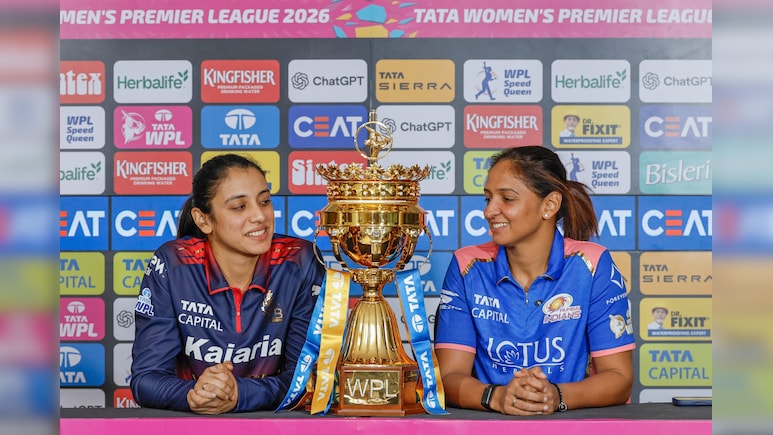
Watching a Women's Premier League (WPL) match in the ongoing season is a very interesting exercise. After all, everything has changed for the Indian cricketers and by extension for their respective franchises. If you thought you were imagining things when you saw the likes of Harmanpreet Kaur, Deepti Sharma, Smriti Mandhana, Jemimah Rodrigues, Shafali Verma and others have an extra spring in their steps, don't fret, you are not the only one. What you saw is probably real. After all, this is the first edition of the WPL that the Indian cricketers have entered as world champions. They could be forgiven for thinking that they can walk on water - such was the enormity of their achievement last year. So, another very interesting angle that has now been added to WPL viewership, thanks to the added lens of the World Cup triumph, is that of assessing just how far the able-bodied Indian women's game has come.
Historically, most Indian fans, even those who followed cricket closely, would be able to name maybe two or three prominent Indian female cricketers. The likes of Diana Edulji, Shantha Rangaswamy, Anjum Chopra, Jhulan Goswami and Mithali Raj would usually make that cut. However, in the run-up to WPL 2026, along with the "star names", many people have also been curious about the likes of Shree Charani, Richa Ghosh, Sneh Rana, Pratika Rawal, Harleen Deol, Amanjot Kaur, Kranti Gaud, Radha Yadav and others. All of them might not have become household names just yet, but they are being followed by virtue of being World Cup winners. And the WPL is giving them the opportunity to catapult themselves into that category - much like the IPL did for the likes of Ravindra Jadeja, Jasprit Bumrah, Hardik Pandya, Rishabh Pant, Suryakumar Yadav and others.
Meanwhile, every single field movement of the World Cup "stars" like Jemimah, Deepti, Harman, Shafali and Smriti is being put under the microscope, reviewed, analysed, dissected, criticised, commented on and sometimes appreciated. It wouldn't be unfair to point out that perhaps for the first time in the history of Indian women's cricket, the star able-bodied female cricketers are being viewed through the same fan lens as the male stars. For years, the likes of Sachin Tendulkar, Sourav Ganguly, Rahul Dravid, Yuvraj Singh, Virat Kohli, Rohit Sharma, Jasprit Bumrah, and many other former and current male cricketers have been "idols" for the women's teams. Now, the female "stars" find themselves sharing the same celebrity boat. The biggest indicator that the women's game is becoming more and more popular in India is the largely packed stadiums for the India games, as we saw at the World Cup. It wouldn't be a surprise if the WPL 2026 numbers break all previous records for in-stadia numbers and Television TRPs plus online viewership.
The spike in interest though is not just from the fans. In fact, well before fan interest in the WPL saw a fresh surge, a rather influential cluster had honed in on this group as the next Indian cricketing gold mine and drawn up water-tight sales and marketing plans - the money bags, i.e., sponsors. For them, the World Cup win last year finally saw the women's game in the country make the transition
from "something we need to keep an eye on" to "let's bank on them big time". The World Cup heroes, after all, are now "bankable" properties. People want to see them, hear their stories, know about their struggles, meet their families, find out what food they like, where they prefer to vacation, what music they like to listen to and who their favourite movie stars are. As Harmanpreet Kaur and co. have found out, winning a World Cup as an Indian cricketer will change your life overnight. Their lives are no longer just theirs; their own personal worlds are now a thing of the past. They are suddenly on multiple magazine covers, on TV and radio shows, on billboards and hoardings. They are the topics of living room conversations and fan polls. Such was the impact of India's inaugural women's World Cup title triumph that, according to news reports, the overall brand value of the team went up by almost 30%. India's able-bodied women cricketers were suddenly brand darlings. Player endorsement and appearance fees zoomed as more and more brands, including those from industries like automobiles, wellness, FMCG, tech & gadgets, etc., queued up to sign the big names. The Mumbai Indians WPL team, which is captained by the World Cup-winning skipper, Harmanpreet, added the likes of De Beers Group and BKT Tyres to their sponsor list. According to reports, the Delhi Capitals franchise in the WPL, buoyed by the Indian team's recent success and the news of World Cup semi-final hero Jemimah Rodrigues being handed captaincy, saw a huge jump in sponsor interest. It's pretty much the same story across all five franchises. Existing sponsors want to stay put, while those who have so far not boarded the WPL bandwagon are more than interested in getting on board. For the sponsors, the WPL ecosystem has expanded. They are starting to feel more and more confident in the overall, long-term vision of the BCCI - that the WPL can well and truly do for the women's game in India what the IPL did for the men's. Women's cricket in India and by extension the WPL are now very much a part of the economics of cricket conversation. And no one wants to miss the bus.
Thankfully, while the women are finally enjoying a piece of the pie that was so far almost exclusively reserved for the men, no one is grudging them their success. We see it happen all the time in the men's game, with fans pointing out just how much money the star male cricketers are making, especially when they fail. The logic behind spending sums often equivalent to the price of a sprawling four-bedroom house in an ultra-luxury locality in Gurgaon or even Mumbai on acquiring the services of one player for one season at an IPL player auction is often questioned. While the female cricketers are not paid anywhere in the same vicinity as their male counterparts, just yet (Smriti Mandhana, Nat Sciver-Brunt and Ashleigh Gardner were retained for a record Rs 3.5 crore by their franchises, while in the IPL, Virat Kohli was retained by RCB for Rs 21 crore ahead of the 2025 mega auction), we must also not forget that the WPL is only four years old so far. Will there come a time when we see the same scathing questions that the men have to face today being levelled at the women cricketers? As of now, at least, the whole country seems to be enjoying and encouraging the women's team's newfound fame and popularity, which brings with it all kinds of riches and opportunities. And that is a very heartening thing to see.
But, make no mistake, with continued success and popularity will come more scrutiny. Which is why the female cricketers must know that they have to continue to up their game. As they keep climbing up the rungs, they will find that the space on each level keeps shrinking. They have to be the best of the best - to continue to be part of the Indian team and to keep their WPL team spots. Thanks to the success of the WPL and overall Indian women's cricket, what will percolate down to the grassroots is the knowledge that an abundance of riches now lies waiting for the best of the best of female cricketers in the country, too. And that should boost competition at the domestic level, which will, in the long run, strengthen Indian women's cricket across categories.
In December last year, this author interviewed members of the Indian team which won the inaugural women's T20 World Cup for the blind. While talking to one prominent member of the team who had a big role to play in the final, I learnt that the likes of Jemimah Rodrigues and Harmanpreet Kaur, who had recently won a very special trophy for India themselves, had been in regular touch with the Indian women's blind cricket team and were constant sources of support and encouragement - something that not only went a long way in terms of boosting the confidence of this team, but also gave its members the inspiration they really needed. They too wanted to be World Cup winners, just like 'Jemimah didi' and Harman didi'. This team too needs all the support it can get if 'women's cricket in India', as a whole, is to be promoted.
For decades, the women's game in India was an afterthought, often a post-script. A separate conversation for women cricketers was just not part of fan consciousness. Yes, there were the torchbearers, but they were always talked about singularly. The first Indian women's team Test match was played in 1976, the first ODI in 1978. Almost half a century has passed, and Indian women's cricket seems to be finally finding its place under the sun and in the hearts and minds of the fans.
(The author is a former sports editor and primetime sports news anchor. He is currently a columnist, features writer and stage actor.)
Disclaimer: These are the personal opinions of the author

