Blog | Iran To Venezuela, Why Does Trump Prefer To Attack Only On Weekends?
It's not just a coincidence. Here's why Trump avoids bombings on weekdays.

The United States and Israel conducted pre-emptive military strikes on Iran, attacking the latter's capital, Tehran, Isfahan, Bandar Abbas and several other locations around the capital. Iran responded fiercely, and since February 28 - a Saturday - the entire Middle East has been at war with Iran.
Before the outbreak of war, the United States and Iran were engaged in nuclear deal negotiations, with a deadline set for Friday, February 27. The talks failed, and on the weekend, the US attacked. Interestingly, on January 3, 2026 - a Saturday - the US intervened in Venezuela and captured its President, Nicolas Maduro, and airlifted him to New York. Similarly, on December 25, 2025 - a national holiday - President Donald Trump approved an attack on the Islamic State in Nigeria. On June 22, 2025 - again a Sunday - the US launched airstrikes on Iran, hitting its nuclear facilities.
All the attacks have one thing in common: they occurred on a weekend. While this might seem coincidental, there are multiple underlying reasons Trump chooses to avoid bombings on weekdays.
The 'Flight To Safety' Zone
Global stock market indices such as the US S&P 500, the UK FTSE 100, the Nikkei 225 in Japan, the CAC 40 in France, or the BSE Sensex in India operate from Monday to Friday, with no trading over the weekend. If a military action takes place on Monday, investors would react to the news in real-time, causing a sudden sell-out of stocks, with no room for gradual repricing, a phenomenon with step-by-step readjustment to market realities and the ongoing developments in a conflict.
Several studies have been conducted to examine the abnormal effects of war on the stock market. Existing literature has proved that there is a direct impact of global conflicts or big world events on stock markets, with research even analysing the impact of major events during World War II, such as Japan's attack on Pearl Harbour, the fall of Warsaw, the failed assassination attempt on Hitler, the death of US President Roosevelt or the atomic bombings in Japan. Such events are called 'blips', with a direct impact on stock markets.
Global conflicts, which cause such brief disruptions, affect stock market performance. But when there is a 48-hour market silence over a weekend, it forces investors to speculate. On the first trading day - usually a Monday - there is a sudden sell-off of "risky" assets, which leads to investors buying less risky assets such as gold or treasury bonds. In a 2019 study published in The Review of Financial Studies, the authors defined such events as 'Flight To Safety' days - that is, days when equity returns are negative, and bond returns are positive.
Following two days of intense attacks across the Gulf, US stocks initially experienced a sudden sell-off when markets opened on Monday. However, they managed to recover by the close of the trading day. The predictable increase in the value of US Treasury Bonds reflected investors' preference for safe havens, such as gold and bonds.
Why Investors Move To Gold
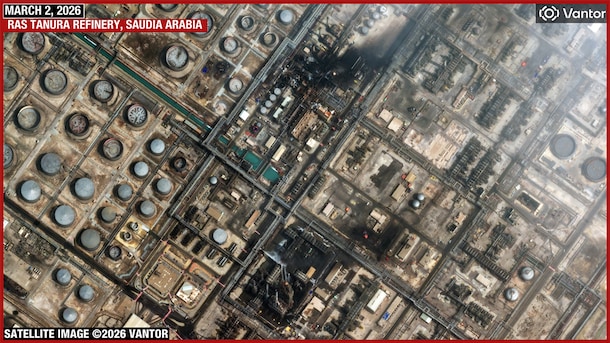
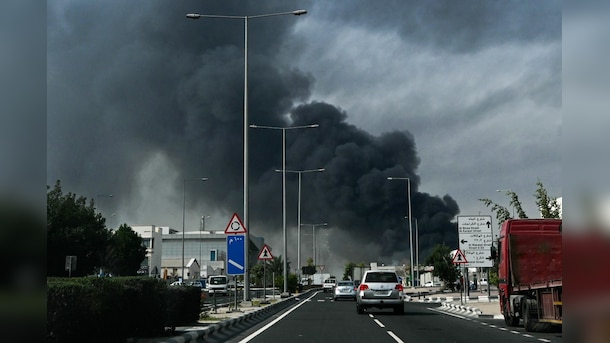
If a conflict strikes oil-producing countries in the Gulf region, oil prices are the first to react to any development. QatarEnergy has immediately stopped LNG production, and the Saudi Aramco oil refinery was in flames after a drone strike. However, all countries have been cautious about attacking energy infrastructure. On Monday, the oil market absorbed the weekend shock. A barrel of Brent crude oil was trading at about $79 by lunchtime in London, up about $6 or 8.5% on the day. As the price of oil increases, so does inflation, since fuel-dependent sectors such as airlines and transportation face the brunt.
Short-term spikes do not have a profound impact because markets expect some persistence. However, should the Gulf conflict persist for several weeks, the rising costs will ultimately be passed on to the common citizen. During such events, investors prefer safe havens like gold, which acts as a hedge against inflation. When the purchasing power of currencies falls, gold acts as a reserve, and its price increases. Countries carry out trade in US dollars since it is a global reserve currency. Therefore, central banks buy US dollars and use gold as reserves.
Similarly, purchasing a US Treasury bond benefits the American economy. These bonds are essentially a loan offered to the US government, where, in return, an investor is paid by the US government. Through these bonds, the US government finances programmes like road-building, school-funding, and support for veterans through revenue sources such as taxes. It could also use these to raise funds for defence; during WWII, the US government issued "War Bonds" and raised $185 billion from 85 million Americans.
Bond-buying represents risk aversion and panic among investors. It is not a sign of strengthening of the US economy, since several factors play a role in deciding that.
Respite is not likely soon in the current crisis in West Asia. And the lack of a unified objective - Trump's thin casus belli for striking Iran - may end up prolonging the conflict for both the US and Israel. Expect more trade disruptions - at least in the near future.
(Divyam Sharma was a journalist at NDTV. He is currently studying Terrorism, Security and Society at King's College London, with a specialisation in wargaming and OSINT. Debanish Achom is a Senior Editor at NDTV.)
Disclaimer: These are the personal opinions of the author
-
Opinion | The Eerily Familiar Game Behind China's Silence On Iran

What looks like a setback for Beijing in West Asia might actually be more leverage - a chance to build long-term capital without firing a single shot.
-
Satellite Pics Show Extent Of Damage By Iran Drones At Saudi Aramco Refinery
Iran Supreme Leader Ayatollah Ali Khamenei was killed on Day 1 of the US-Israel attacks and his death has further complicated an already tense geopolitical situation.
-
Blog | How Did Indians Become So Central To Dubai's Rise? It Goes Deeper Than Oil
The ease with which Indians have made the UAE, particularly Dubai, their home is a familiarity the two nations shared even before the oil boom of the 1970s, or the real estate boom later.
-
Opinion | How America Is Quietly Profiting Off The Oil Chaos In Gulf
In 2008, the high oil prices had helped kickstart the shale oil industry in the US. Something similar may be happening now.
-
From Aircraft To Lives: Why "Friendly Fire" Can Be Such A Big Enemy
There is not even a millimetre of room for error in judgment - and this is one of the biggest contributors to friendly fire incidents
-
Opinion | Gulf Confronts An Ugly Truth About Aligning With America
That Iran is attacking bases and other sites in the UAE, Qatar, Bahrain, Saudi Arabia - even Oman - has caused disillusionment in these countries, which thought that they were protected by the US. They are now learning they're not.
-
Cheap Drones, Claude AI, Cyberattacks: Behind US-Israel's 'New' War On Iran
Cyber warfare, Claude, cheap drones - as the US and Israel jointly pound Iran, and Tehran hits back by dragging West Asia into a regional war, are these the backbone of a new kind of military conflict?
-
Opinion | How Khamenei's Killing Is Doing Exactly The Opposite Of What US-Israel Wanted
What Israel and the US have done is make Khamenei, who was running a country dealing with extreme economic hardships, protests and internal strife, a martyr. His killing has united Shias and Sunnis across the globe in anger.
-
NDTV Explainer: How Is A Supreme Leader Chosen, Who Will Succeed Khamenei
Khamenei, who ruled for 36 years, built Iran into a powerful anti-United States force, projecting military influence across the Middle East while suppressing repeated domestic unrest with force.