






Recent developments surrounding Meta's content amplification practices have raised serious questions about the role of global technology platforms in shaping political discourse in India. Admissions made by the company, coupled with Parliamentary scrutiny, have intensified concerns over whether certain campaigns received artificial amplification far beyond their organic reach.
If political visibility is determined not by genuine public engagement but by opaque algorithmic intervention or paid amplification, it fundamentally alters the democratic information ecosystem. The issue is no longer about social media marketing; it is about transparency, accountability, and the possibility of foreign influence over India's political processes.
Questions Meta Must Answer
Several critical questions remain unanswered.
- Why did Meta allegedly fail to disclose when content linked to the CJP campaign was being amplified, despite concerns reportedly raised before the Parliamentary Committee?
- What are the internal criteria that determine when Meta boosts political content? Who authorises such interventions?
- If amplification is linked to commercial arrangements, who funded these campaigns, and what safeguards exist to prevent financial influence over political narratives?
- If Meta's recommendation systems disproportionately amplified narratives targeting the elected Modi Government, was this merely an automated outcome, or did it reflect conscious editorial or algorithmic choices?
These are not merely technical questions. They go to the heart of whether a private multinational platform can influence political opinion without transparency or accountability.
Parliamentary Scrutiny Has Intensified
The matter has already moved beyond public debate into institutional scrutiny.
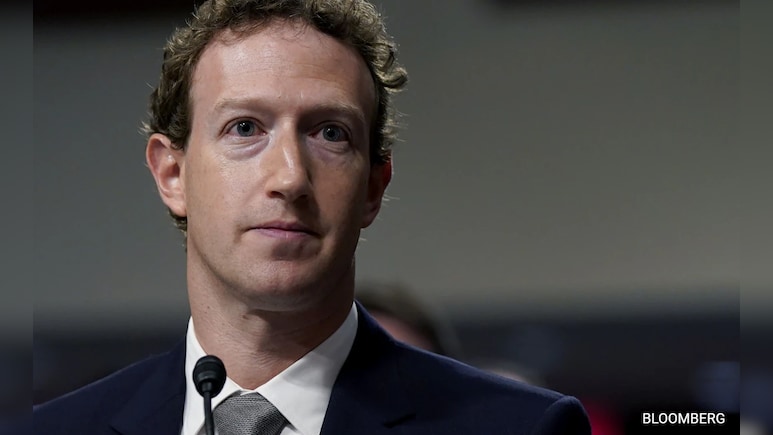
Meta was previously summoned by the Ministry of Electronics and Information Technology (MeitY) over the takedown of a video involving Prime Minister Narendra Modi. Since then, the Parliamentary Committee has reportedly escalated the matter by seeking a personal apology from Mark Zuckerberg within a stipulated timeframe and warning that continued non-compliance could invite a review of Meta's Safe Harbour protections.
If such protections are revisited, platform executives could potentially face direct legal liability under Indian law for content moderation decisions and platform conduct.
Equally significant is what Meta has not explained. Questions surrounding the functioning of its recommendation systems and the criteria governing political amplification reportedly remain unanswered before the Parliamentary panel. That silence only deepens concerns over how political content is prioritised and whether external commercial or institutional influences play any role.
A Global Pattern of Algorithmic Concerns
The questions confronting Meta today are not unique to India.
Across several countries, the company has faced allegations that its systems have selectively amplified some political narratives while suppressing others. In Vietnam, Amnesty International alleged that Facebook censored criticism of the Government following requests from state authorities. In Germany, researchers studying political advertisements during the 2021 federal election found that Meta's advertising delivery system provided greater reach to advertisements from populist parties than to those of competing parties. In Poland, government ministers accused Facebook of suppressing right-wing political expression, while in Malaysia, the Government alleged discriminatory censorship after posts by Prime Minister Anwar Ibrahim concerning Palestinian political leaders were repeatedly removed, actions Meta later attributed to operational errors.
None of these instances establishes the allegations surrounding the CJP campaign in India. They do, however, illustrate that concerns regarding Meta's opaque content moderation and algorithmic distribution have surfaced repeatedly across different countries, governments, and political ideologies. The recurring nature of these controversies strengthens the case for greater transparency whenever a platform's algorithms appear capable of influencing political discourse.
Amplification Is Only One Side of the Story
If algorithms can artificially amplify a campaign, they can also quietly suppress opposing viewpoints.
Across Facebook and Instagram, users have frequently reported what is commonly described as "shadow banning", a sudden and unexplained collapse in reach despite no apparent change in posting frequency, content quality, or compliance with platform rules. Their posts are not formally removed, but allegedly become significantly less visible, disappearing from recommendations, searches, and the feeds of non-followers, while competing narratives continue to receive substantial visibility.
These concerns cannot simply be dismissed as dissatisfaction over declining engagement. There have also been repeated allegations that Meta has arbitrarily suspended or restricted accounts perceived to be sympathetic to the government or the BJP, without providing clear or credible explanations.
This naturally raises another important question. Were accounts questioning the CJP campaign, supporting the government or challenging protest-related narratives also subjected to reduced algorithmic distribution? Were they quietly excluded from recommendations or made less discoverable while competing campaigns continued to receive extraordinary visibility?
Without meaningful account-level transparency and independent auditing of recommendation systems, users have no way of knowing whether a decline in reach reflects genuine audience behaviour or an invisible platform intervention.
The Foreign Influence Question
The Parliamentary Committee's inquiry reportedly extends beyond algorithms. It also examines the broader issue of foreign links involving digital platforms, placing Meta's conduct within a wider national security framework rather than treating it as a purely technological issue.
Committee Chairman Nishikant Dubey has publicly alleged that foreign forces and anti-national elements sought to support the CJP-led protests, referring to statements made by banned Khalistani extremist Gurpatwant Singh Pannun and other external actors.
These developments naturally raise larger questions. If foreign actors openly support campaigns aimed at destabilising an elected government, and if a global digital platform simultaneously amplifies the same narratives, the public deserves complete transparency about whether these developments were entirely independent or whether there was any convergence of interests.
Similar concerns regarding foreign funding and external coordination have surfaced since the earliest phases of the protests. While allegations alone do not establish wrongdoing, they underscore the need for a thorough and transparent examination of the ecosystem through which political narratives gain extraordinary digital traction.
Why This Matters
The core issue is not whether political campaigns should use social media. Every political movement does.
The real concern arises when a foreign technology company possesses the ability to invisibly shape the digital public square, by selectively amplifying one campaign while simultaneously reducing the visibility of another through opaque algorithms that are neither publicly disclosed nor independently audited. Such power effectively enables a private corporation to influence public opinion, manufacture public outrage, shape political narratives and potentially affect democratic outcomes without public accountability.
In any sovereign democracy, citizens have the right to know whether political momentum reflects genuine public sentiment or invisible algorithmic intervention.
Transparency is therefore not optional; it is essential.
If Meta engaged in preferential distribution, undisclosed boosting, or non-transparent algorithmic amplification of political content, the issue transcends platform policy. It becomes a question of democratic integrity, national sovereignty and the influence that multinational technology companies can exercise over India's political information ecosystem.
India deserves clear answers. Parliament deserves full disclosure. And citizens deserve confidence that the nation's democratic conversation is being shaped by the people, not by opaque algorithms operating behind closed doors.
(Malviya is the national head of BJP's Information & Technology department and co-incharge of West Bengal)
Disclaimer: These are the personal opinions of the author

