






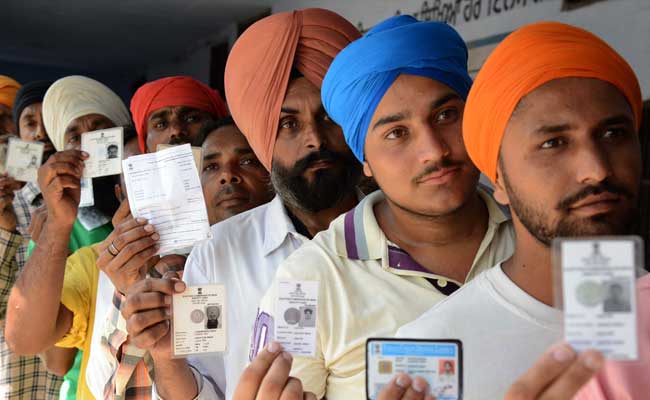
The question of why Punjab has never had a Hindu Chief Minister after the 1966 reorganisation of the state is rooted not merely in numbers, but in the intersection of history, identity, religion, caste, agrarian power, and electoral politics. Although Hindus constitute nearly 38.9% of Punjab's population, political power in the state has remained overwhelmingly concentrated in the hands of Sikhs-particularly the Jatt Sikh community. Since the reorganisation of Punjab on linguistic lines, every Chief Minister of Punjab has been Sikh, and most (except two) have belonged to the dominant Jatt Sikh agrarian caste. This political pattern reflects deep structural realities rather than a simple arithmetic of population.
The first major reason lies in the very basis of Punjab's reorganisation in 1966. The Punjabi Suba movement, led primarily by Sikh political forces such as the Shiromani Akali Dal, demanded a Punjabi-speaking state. However, language and religion became deeply intertwined. Many Punjabi Hindus, especially in urban areas, declared Hindi rather than Punjabi as their mother tongue during census exercises due to fears of Sikh political domination. As a result, the eventual creation of Punjab was widely perceived as the formation of a Sikh-majority state. This historical context shaped the political psychology of Punjab permanently. The office of the Chief Minister gradually became symbolically associated with Sikh representation and Sikh political aspirations.
Secondly, the Hindu population in Punjab is not a homogeneous political bloc. Punjab's Hindus are divided along caste, regional, linguistic, and economic lines. Urban trading communities, Dalit Hindus, Brahmins, Khatris, Aroras, OBC groups, and migrants from other states often have differing political priorities. Unlike Jatt Sikhs, who possess a relatively strong rural and agrarian identity, Hindus in Punjab lack a unified socio-political platform capable of producing a statewide leadership consensus. Their votes are fragmented among national parties such as the Indian National Congress and the Bharatiya Janata Party rather than being consolidated behind a specifically Hindu regional political movement.
Another critical factor is the dominance of Jatt Sikhs in Punjab's agrarian and rural structure. Although Jatt Sikhs constitute only around one-fifth to one-fourth of Punjab's total population, they historically own a disproportionate share of agricultural land. Land ownership in Punjab has translated directly into social influence, economic strength, and political mobilisation. Rural Punjab remains the decisive electoral battleground because a large number of assembly constituencies are rural or semi-rural in nature. Jatt Sikh leaders, therefore, possess extensive control over village institutions, cooperative societies, religious bodies, transport networks, and agricultural unions. This rural dominance has enabled them to shape the political leadership of nearly every major party in Punjab.
The role of Sikh religious institutions has also significantly influenced Punjab politics. Bodies such as the Shiromani Gurdwara Parbandhak Committee and major gurdwaras carry immense social influence among Sikhs. Political legitimacy in Punjab often requires symbolic acceptance within the Sikh religious sphere. Leaders who can project themselves as defenders of Sikh identity gain a major political advantage. This naturally benefits Sikh leaders, particularly Jatt Sikhs who dominate both religious and rural institutions. A Hindu leader would find it difficult to command the same symbolic authority in a state where religion and politics remain closely intertwined.
The electoral structure of Punjab has further reinforced this trend. Political parties in Punjab often calculate that a Sikh Chief Minister is necessary to maintain rural Sikh support, especially among influential peasant communities. Even national parties have largely accepted this political reality. The Congress, despite being a national and ostensibly secular party, consistently projected Sikh leaders such as Partap Singh Kairon, Amarinder Singh, and Charanjit Singh Channi. Similarly, the Akali Dal's entire political foundation revolves around Sikh representation. Thus, the emergence of a Hindu Chief Minister has never been electorally prioritised.
The rise of Sikh political consciousness during periods such as the Anandpur Sahib Resolution movement, militancy in the 1980s, and post-Operation Blue Star politics also reinforced the idea that Punjab's political leadership should remain Sikh. During times of communal tension, political parties became even more cautious about leadership choices, fearing backlash or accusations of undermining Sikh identity.
Additionally, Punjab's Hindus historically aligned themselves more with Indian nationalism than Punjabi regionalism. Many urban Hindus viewed themselves as culturally North Indian rather than exclusively Punjabi. This reduced the emergence of a distinct "Punjabi Hindu political identity" capable of challenging Sikh-led regional politics. In contrast, Sikh politics successfully combined Punjabi regional pride, agrarian interests, and religious identity into a powerful electoral narrative.
Importantly, the absence of a Hindu Chief Minister does not necessarily imply complete exclusion of Hindus from Punjab's power structure. Hindus remain influential in trade, business, administration, industry, and urban politics. However, the symbolic and electoral centre of Punjab politics continues to be dominated by rural Sikh leadership, especially Jatt Sikhs.
Punjab's Hindu population is largely concentrated in urban areas such as Ludhiana, Jalandhar, Amritsar, and Pathankot, whereas rural Punjab remains predominantly Sikh. Since Punjab politics is heavily influenced by rural and agrarian constituencies, urban Hindu voters have not translated into equivalent political dominance. Unlike the Jatt Sikhs, Hindus in Punjab are socially and politically fragmented across castes and communities. There has also been no single charismatic or mass-based Hindu leader capable of uniting Punjab's Hindu electorate at the state level. As a result, Punjab's political leadership has continued to remain dominated by Sikh, particularly Jatt Sikh, leaders.
Ultimately, the question is less about why Punjab "cannot" have a Hindu Chief Minister and more about why Punjab's political structure has consistently produced Sikh leadership. Historical reorganisation, fragmented Hindu demographics, Jatt Sikh agrarian dominance, religious institutions, and identity politics together created a political ecosystem where Sikh-particularly Jatt Sikh-leadership became the norm. Until a broader cross-community political identity emerges in Punjab that transcends caste, religion, and rural-urban divisions, this pattern is likely to continue.
(Rajiv Tuli is an independent columnist and commentator)
Disclaimer: These are the personal opinions of the author

