




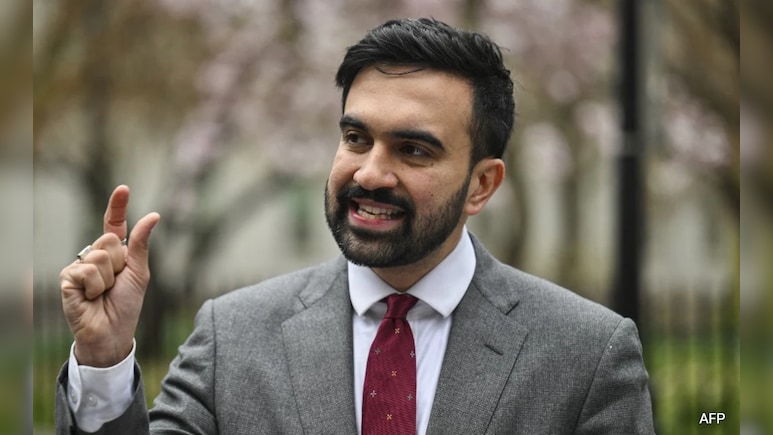
As New York City's newly elected mayor, Zohran Mamdani shoulders the immense responsibility of governing a metropolis of over 8 million people, tackling issues like housing shortages, public safety, and infrastructure. Yet, strikingly, he has chosen to immerse himself in the minutiae of Indian politics, exhibiting a peculiar obsession with Umar Khalid, a jailed activist accused of masterminding the 2020 Delhi riots that left 53 dead and hundreds injured. This dissonance-an American local leader fixated on foreign judicial matters far removed from NYC's streets-highlights a troubling misalignment of focus, where global ideological crusades overshadow pressing municipal duties.
Mamdani's affinity for Khalid traces back to his time as a junior legislator in the New York State Assembly. In June 2023, he publicly read excerpts from Khalid's prison diary at an event protesting Indian Prime Minister Narendra Modi's US visit, portraying Khalid as a "scholar and former student activist" unjustly persecuted. This support persisted into his mayoralty, culminating in a handwritten letter dated December 2025, delivered via Khalid's parents: "Dear Umar, I think of your words on bitterness often... We are all thinking of you." Shared online by Khalid's partner, the note sparked controversy in India, with BJP leaders questioning Mamdani's interference in their judicial system. Such gestures, while framed as solidarity, ignore the weighty evidence against Khalid. Indian courts have charged Khalid under the Unlawful Activities (Prevention) Act for conspiracy in the riots, citing inflammatory speeches and coordination via groups like the Jamia Coordination Committee. Protected witnesses and call records implicate him in planning mob violence that targeted communities, leading to arson, killings, and widespread chaos.
In January 2026, India's Supreme Court denied his bail, affirming "prima facie" evidence of his pivotal role. By championing Khalid without addressing these facts, Mamdani not only overlooks the bloodshed but also exemplifies a broader pattern of selective narrative-building that distorts reality to suit his worldview.
This tendency toward factual elasticity is evident in Mamdani's public statements. During his campaign, he falsely claimed Muslims were "eradicated" from Gujarat in the 2002 riots, stating "people don't even believe we exist anymore". Census data refutes this: Gujarat's Muslim population stood at nearly 10%, or over 6 million, in 2011, and has since grown. Opposition figures like Congress's Abhishek Manu Singhvi dismissed it as a "blatant lie". More recently, in January 2026, Mamdani claimed he was "briefed" on US strikes in Venezuela, decrying them as imperial aggression. As mayor, he receives no such national security briefings; his domain is local, not geopolitical.
This grandstanding highlights the absurdity of his position. While commenting on world events, his real job is ensuring garbage trucks run on schedule, and the city's 10,000 daily tons of trash are collected. One X user summed it up: his core task is "scheduling trash service", not foreign policy. The gap between his ambitions and his actual authority exposes a leader more interested in symbolic gestures than New York's practical needs.
His privileged upbringing only sharpens the contradiction. Born to filmmaker Mira Nair and scholar Mahmood Mamdani, he landed a role in Disney's "Queen of Katwe" through family connections, openly admitting "nepotism and hard work go a long way". Former Governor Andrew Cuomo, in an October 2025 debate, accused him of having "never had a job", underscoring his lack of real-world experience beyond politics. Yet he rails against capitalism's "rugged individualism" while preaching the superiority of collectivism from a life of unearned privilege. As strategist Hank Sheinkopf put it, Mamdani grew up with "three silver spoons in his mouth" - making his lectures on equality profoundly hypocritical. His critics, by contrast, personify the self-made success he disparages. Former mayor Eric Adams rose from Brooklyn poverty, overcoming dyslexia and police brutality, and called Mamdani a "snake oil salesman" who "will say and do anything to get elected". Rapper 50 Cent, who escaped street life to build a fortune, criticised Mamdani's tax increases on high earners, warning they would "run the big money out of the city". Elon Musk labelled him a "charismatic swindler" whose agenda risks lowering living standards.
Mamdani's rhetoric often escalates into provocation, further alienating communities. He has defended the chant "globalise the intifada", framing it as advocacy for Palestinian rights rather than a call to violence. The term evokes the deadly Palestinian uprisings, which claimed over 1,000 Israeli lives in the 2000s, and has been decried as incitement. Over 850 rabbis condemned his stance in a letter, viewing it as endangering NYC's Jewish population.
This extremism shows in appointments, too. He named avowed communist Cea Weaver as tenant czar. Weaver has called private property, especially homeownership, a "weapon of white supremacy" and advocated seizing it for collective use. Former Mayor Eric Adams fired back directly on X: "Homeownership is how immigrants, Black, Brown, and working-class New Yorkers built stability and generational wealth despite every obstacle. You have to be completely out of your f****ing mind to call that 'white supremacy.' That level of thinking only comes from extreme privilege and total detachment from reality."
Weaver's ideas clash with American reality, where property rights drive economic mobility-evidenced by rising homeownership among Black (45.9%) and Hispanic (51.4%) households in the 2024 Census data. Such views risk deepening racial tensions, deterring housing investment, and worsening New York's affordability crisis by eroding market incentives.
This same detachment from economic reality extends to Mamdani's admiration for historical figures who championed the very systems he and his appointees echo. Mamdani's victory speech revealed a deeply flawed sense of history when he quoted Jawaharlal Nehru's famous "Tryst with Destiny" address: "A moment comes, but rarely in history." Nehru's License Raj created a suffocating bureaucratic web of permits and state controls that condemned India's economy to an abysmal 3.5-4% annual GDP rise from 1950 to 1990. Only the 1991 liberalisations dismantled this system, unleashing free enterprise and pushing average growth above 7% in subsequent decades. The regime bred widespread corruption by turning licenses for production, imports, and expansions into scarce commodities often obtained through 10-20% kickbacks, which, in turn, fuelled black markets, smuggling, and rent-seeking that siphoned resources away from genuine innovation.
By celebrating this discredited socialism, Mamdani exposes a naive idealism utterly at odds with America's foundational values of free enterprise, innovation, and individual opportunity, the very principles that attracted immigrants, including his own Indian parents, to the United States in pursuit of prosperity denied under Nehru's restrictive policies.
In essence, Mamdani's tenure begins under a cloud of hypocrisy and distraction. An American mayor's deep dive into Indian political intricacies, while neglecting local imperatives, signals a leadership more performative than practical. New York demands substance over spectacle; if Mamdani persists in this vein, the city may pay the price.
Disclaimer: These are the personal opinions of the author

