





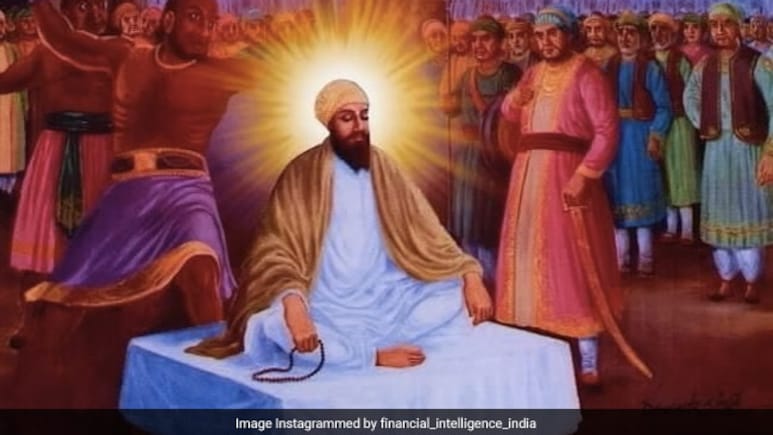
The world is marking the 350th Martyrdom Day of Guru Tegh Bahadar Sahib. The commemoration turns our attention toward the inner forces that shaped his life.
The execution in Delhi in 1675 is remembered by many. The spiritual strength behind it deserves equal remembrance.
Guru Tegh Bahadar Sahib's bani (sacred writings) in Sri Guru Granth Sahib carries that strength with precision.
A shabad in Raag Gauree brings his message into full view (translated in English by Professor Sahib Singh in Sri Guru Granth Darpan):
O seekers, give up the pride of the mind, physical desire, anger, and the company of harmful people. Keep away from them day and night. Pause.
See comfort and pain as equal. See honour and dishonour as equal.
A person who rises above joy and sorrow understands the essence of life.
Leave flattery. Leave slander. Search for the state free of cravings. This path is hard.
Nanak says that only those guided by the Guru come to know it.
These lines embody his spiritual vision. He points directly to the movements of the mind: pride, desire, anger, praise, insult, joy, sorrow.
Each one steers a person into reactions that darken judgment. Freedom appears when these pulls lose strength. Insight grows when the mind stops leaning toward applause or shrinking from accusation.
His own life rested on these grounds.
He wrote bani in 15 raags. He composed 57 sloks. Guru Gobind Singh Sahib, his son, included them in Sri Guru Granth Sahib.
Born in Amritsar in 1621, Guru Tegh Bahadar Sahib travelled widely. His journeys across the subcontinent brought this vision into public life. Communities grew in many regions. People sat together without caste barriers. Wells were dug. Farmers received cattle. Women gained space in community life. Spiritual insight shaped social change.
The same insight shaped his response in 1675. The Kashmiri Pandits reached him in fear of annihilation. Even though their tradition was different from his, he listened because conscience was under threat. A person who sees honour and dishonour as equal does not bow to force. A mind free of pride and fear stands where it must.
The execution in Chandni Chowk under Mughal command, imposed for his defence of others and his refusal to convert or display miracles, showed the depth of his inner state.
His body fell. His vision held firm. His life showed how spiritual depth can steady a human being when power presses hardest.
His martyrdom speaks both to devotees and to those who follow no organised faith.
Humanity marks his martyrdom because his message belongs to all.
(The writer is a career journalist currently serving as Communications and Advocacy Director at UNITED SIKHS (UK), a charity registered in England and Wales.)
Disclaimer: These are the personal opinions of the author

