






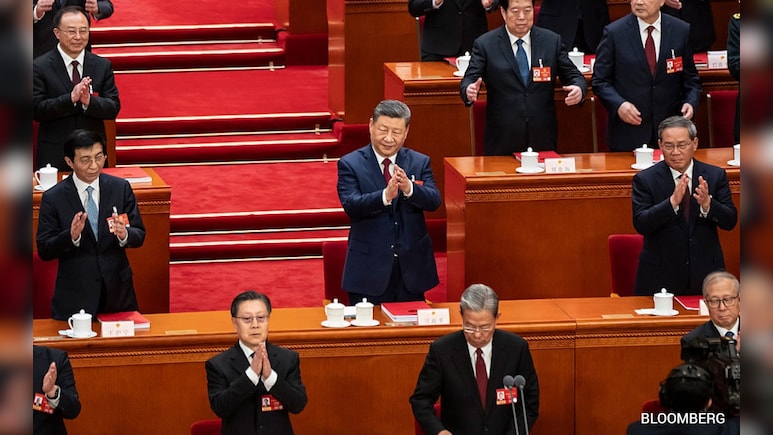
Imagine the world as a single political system with the US as the incumbent. In this universe, China is the challenger. It's not trying to dismantle American power. Instead, it is positioning itself as a rival source of authority.
Beijing is adopting the tactics of a global opposition party, argues a new paper by Hannah Bailey of the Carnegie Mellon Institute for Strategy & Technology and Todd Hall, director of the China Centre at the University of Oxford. This isn't a new approach, but Washington's current behavior is making it much easier to execute. Just this week, China reportedly played a role in pushing for a ceasefire in the Iran conflict. As tensions escalated, Beijing - Tehran's biggest trade partner - worked behind the scenes to encourage it to adopt a less confrontational stance in Pakistan-mediated talks.
These optics matter: While Washington is increasingly viewed as an erratic provocateur, Beijing has cast itself as a stabilizing force. Publicly, Chinese officials have called for restraint and warned about the impact of the conflict on global energy markets.
That is exactly how an opposition campaign works. China does not need to resolve conflicts outright - it just needs to show it's playing a constructive role. Even unrealistic peace proposals, such as Beijing's positioning on Ukraine or the Middle East, reinforce its goal of offering an alternative to countries looking beyond Western leadership.
If this trend continues, the consequences could be a gradual drift in China's favor. It would reshape the international system around Beijing's preferences, elevating state sovereignty over individual rights, stability over political freedom, and economic development at the expense of democratic governance.
Southeast Asia, the frontline of US-China competition, offers one of the clearest signals that this is already happening. A slim majority of respondents in the closely watched ISEAS-Yusof Ishak Institute's State of Southeast Asia 2026 survey said they would align with China over the US if forced to choose. Tellingly, 51.9% identified American leadership under President Donald Trump as their top geopolitical concern - even higher than worries about Beijing's own muscular behavior.
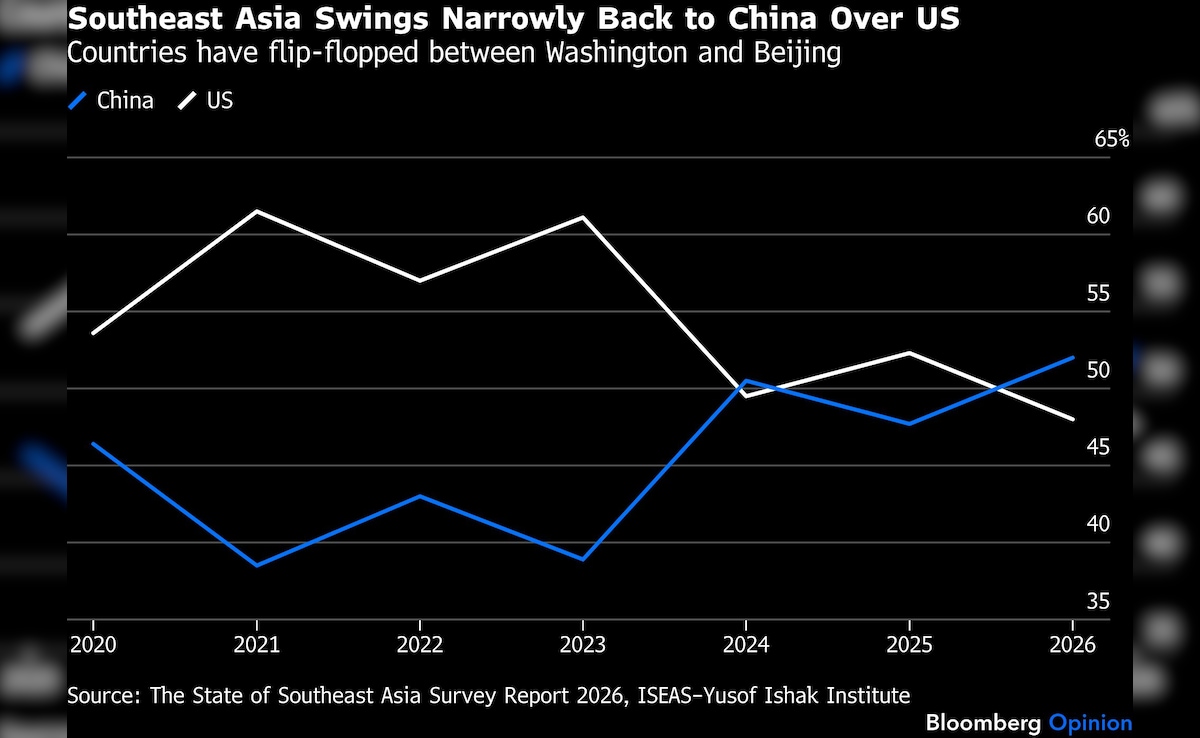
That skepticism is not unfounded. For many governments, the issue is not managing China - it's navigating the uncertainty generated by Washington. The region is among the worst affected from the economic fallout of the US-Israel war with Iran, which has closed off a vital supply of energy and threatened growth outlooks. The volatility of US tariff policies and demands for increased defense spending haven't helped sentiment either.
Even America's closest allies, some of whom have historically strained ties with Beijing, are adjusting. Australia's Prime Minister Anthony Albanese made that clear this week, stressing cooperation with China on energy and regional stability and reaffirming Canberra's commitment to a "stable and constructive relationship."
In Europe and North America - the traditional core of the US-led order - there are also signs of hedging. European leaders have expanded economic engagement with China despite security concerns. Canada, too, has moved to stabilize ties. In January, Ottawa and Beijing eased trade frictions, including steps to reduce tariffs on Canadian rapeseed and lower barriers affecting Chinese electric vehicles.
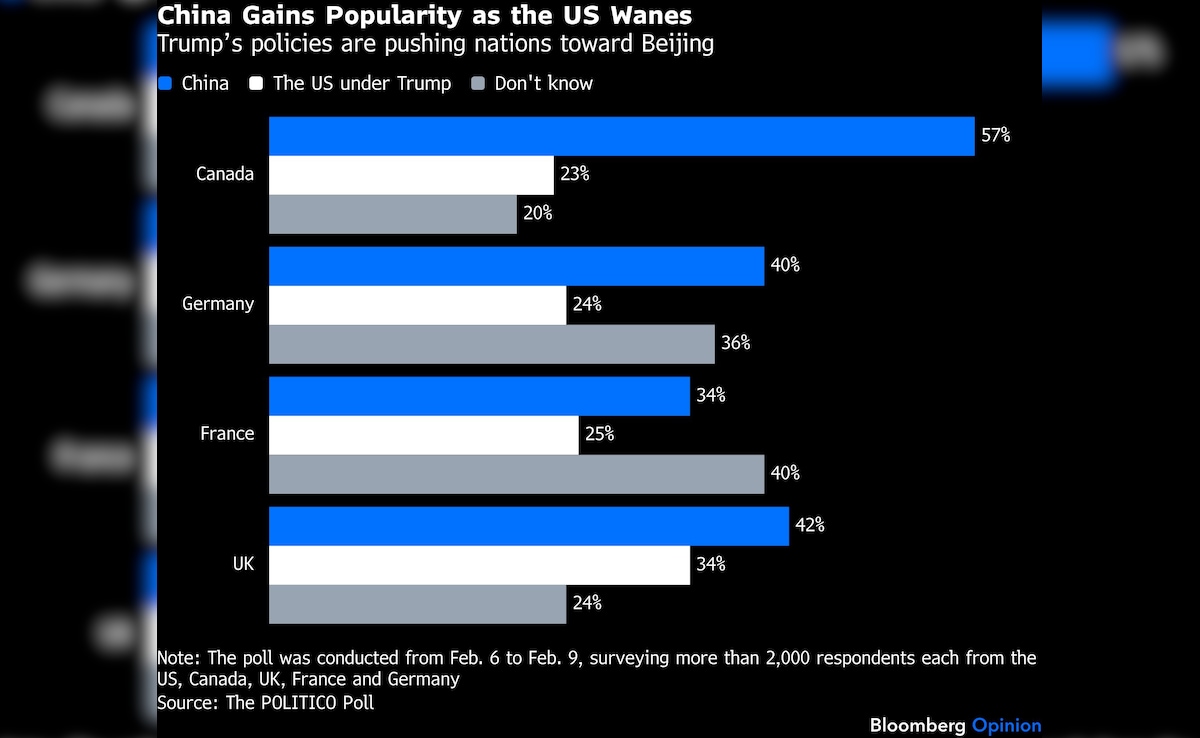
Like any ambitious opposition party, Beijing is pointing out the weaknesses of the incumbent while portraying itself as a steadier, more predictable partner with fresh ideas.
China is moving to shape international rules in areas where the US is stepping back. This past week, it lobbied to host an international ocean protection body that would help oversee the UN High Seas treaty and has presented global governance programs as alternatives to the American-led order.
It is backing that message with resources through infrastructure financing and coalition building in international groups such as BRICS and the Shanghai Cooperation Organization. These relationships are often transactional, but they also create leverage - countries tied to China economically are more likely to accommodate its preferences.
If left unchecked, this system could begin to resemble a world order long shaped by the US, only this time with China at its center. Domestic companies would operate more easily across aligned markets, its finance would underpin development, and its strategic interests would be more widely protected.
None of this is imminent. China isn't universally trusted, and concerns about economic coercion, political influence and transparency remain strong. Even in Southeast Asia, where Beijing is gaining ground, anxieties about its behavior remain high. The same ISEAS survey shows that nearly half of respondents view its aggressive actions in the South China Sea as a major concern.
China also appears more comfortable campaigning rather than governing, as Bailey and Hall note in their paper. It's far easier to criticize from the sidelines than to take on the full costs of leadership on a global scale as the US has done. As its influence grows, Beijing will face rising expectations to deliver real solutions.
For countries navigating this shift, hedging will be the default strategy, but it's not without risks. Greater cooperation among middle and smaller powers will be essential to avoid overdependence on any one actor. For Washington, the lesson is more direct: restore consistency, rebuild alliances and re-engage globally.
There is little evidence the current administration will do any of that. So the space China is exploiting will only continue to grow.
(Karishma Vaswani is a Bloomberg Opinion columnist covering Asia politics with a special focus on China.)
Disclaimer: These are the personal opinions of the author
(This story has not been edited by NDTV staff and is auto-generated from a syndicated feed.)

