




There appears to be an orchestrated attempt to drag and push India into the vague category of 'Middle Powers' in the global power pecking order, unsurprisingly, much to the surprise and shock of the country's 1.4 billion women, men, and children. Because this goes diametrically against the hard-earned image of India as a growing big power.
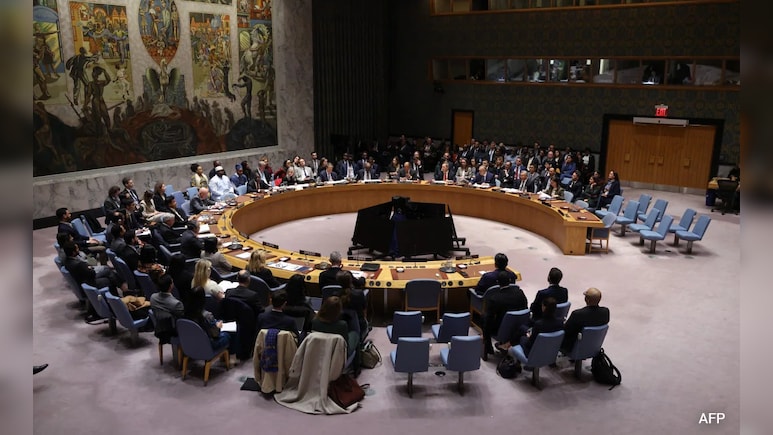
Middle powers, theoretically speaking, are countries that enjoy significant influence in their region or part of the world over smaller nations but are constrained by their limited size and power as far as influencing international policies and affairs are concerned, unlike big powers. India crossed that 'middle power' stage many years ago and is now considered, including by the countries calling New Delhi a 'middle power', the most eligible country to be a permanent member of the UN Security Council, the ultimate club of the superpowers.
Needless to say, India must thwart all such moves as forcefully as possible before it is too late. In this age of AI and hypercommunication, it may take no time for such a label to get stuck, but years and years to get rid of it. It has never been more important than now to position the correct image of the country in the mind of the world.
A section of deliberations at the two major international conferences, including the Bloomberg New Economy Forum, in the heart of New Delhi this month, may have left many a bit convinced that India was just a 'Middle Power' like Germany, or Australia, or Canada, and not a superpower in the making, thanks to some of the high-profile foreign speakers present there. However, addressing the Forum, India's External Affairs Minister Dr S Jaishankar, in his own inimitable style, tried to nullify all such efforts by insisting: 'India is a power in the middle' and not a 'middle power'. But we need to be more categorical, more forceful, and, if required, louder in stating that India is a big power in the making and nothing less. Sometimes, the world listens only when you speak a bit bluntly.
Countries like China and Pakistan have never been comfortable with the rise and growing recognition of India as a big global power in the making. Some countries in the West, too, appear to be keen to label India just as a 'Middle Power' rather than acknowledging the country's rise as a big power on all key parameters, including economic and defence. But there is no point blaming anybody - that is how the world is! There is no point being sentimental about such issues in internal affairs. The world - eventually, if not immediately - will think of us what we think of us. Hence, it is important that we are clear and consistent in positioning India as a rising big power everywhere, both as a people and as a government.
China is nowhere equal to the United States in most parameters. Yet, President Donald Trump has granted Beijing the status of an equal, or G2, in his desperate efforts to rebuild bilateral relations, lower the temperature on the issues of the South China Sea and Taiwan, and wean China away from Russia. China is, predictably, also happily playing along, talking more like a global superpower than what it is - a regional Asian power.
Until yesterday, the United States used to look upon itself as the guardian of the rules-based international order. It is, however, now China, a one-party dictatorship, which is trying to position itself as the most prominent voice on the rules-based world. Hard power is important. Soft power is important. But how you position and play your cards, image, and power has become central in this modern world.
A 7,000-year-old civilisation, the land known universally for peaceful coexistence, India is today the third-largest economy in the world at USD 18 trillion GDP (on a purchasing power parity basis). By most credible international projections, India will be the second-largest economy in the world, together with the United States, by 2060, if not sooner. Undoubtedly, there is a lot that we need to fix internally, especially in areas like the rural economy, economic reforms, and education, to realise our full potential, but there is no doubt that the country is steadily on the rise.
The unipolar world we have known since the end of the Cold War in 1991, with the United States as its de facto leader, is rapidly collapsing, and the multipolar world has begun to rise for everybody to see. The United States and many others in the West are, however, still refusing to acknowledge this historic shift. Because they want the status quo - the West-dominated world order - to continue. The attempt, therefore, to bundle India into this vague group of 'Middle Powers', which includes Mexico, Turkey, and Indonesia, and may include - who knows - even Pakistan tomorrow, is easy to decode.
It is evident that the multipolar world is fast taking shape, with China already having risen and India fast on the rise. The European Union is also going through a massive churn and may well be a key economic, political, and military global pole in its own right within the next two decades. Russia will continue to be an important global pole.
The multipolar world, when it fully emerges in about twenty years, will be a world of five global super poles, or G5, namely, the United States, the European Union, Russia, China, and India. There will be many smaller poles, or 'Middle Powers', too. This transition, however, will not be without resistance, challenges, and hindrances. India will have to be vigilant, keeping in mind that there are no friends when it comes to battles for securing a top place in the global power pecking order.
(Narendra Taneja is a reputed global expert on energy security and geopolitics)
Disclaimer: These are the personal opinions of the author

