






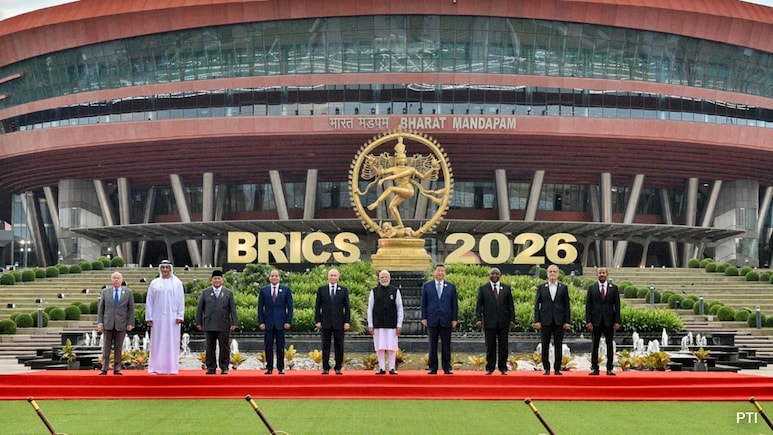
At a time when global geopolitics is defined by polarisation, systemic fragmentation, and regional conflict, the successful conclusion of the 18th BRICS Summit under India's chairship stands out as a significant triumph of astute and consummate diplomacy as well as adept and insightful leadership. Through patient dialogue, strategic neutrality, and pragmatic compromise, India steered the grouping to adopt the comprehensive New Delhi Declaration titled ''Building for Resilience, Innovation, Cooperation and Sustainability'' on the first day of the Summit on September 12, 2026.
Bridging Fractures
The achievement of a consensus declaration at the summit level is particularly striking when viewed against the backdrop of earlier deliberations. During the preceding meeting of BRICS Foreign Ministers in May 2026, member states were unable to agree on a consensus statement due to sharp ideological and geopolitical differences. The central diplomatic friction stemmed from competing regional perspectives in West Asia, with Iran, the United Arab Emirates (UAE), and Saudi Arabia being at war and holding vastly different geopolitical priorities and strategic alignments in the region. India, however, acted as a bridge-builder to bring all contending parties on the same page.
This was achieved by delivering a strong, unified response in the Declaration to the escalating crisis in West Asia, explicitly denouncing unilateral military actions and acts of war. They expressed deep concern over "deliberate attacks" on civilian infrastructure and peaceful nuclear facilities, a tacit condemnation of recent US-Israeli strikes in Iran without mentioning any country by name. Demanding maximum restraint and immediate de-escalation, the bloc firmly opposed the forced displacement of Palestinians, while advocating for dialogue, diplomacy, and adherence to international law
The Vision
India's BRICS Chairmanship was anchored in a clear, human-centric vision focusing on Resilience, Innovation, Cooperation, and Sustainability. Moving past abstract geopolitical grandstanding, India anchored the summit's agenda around tangible, practical, useful, and functional solutions for real-world development and benefits to common people.
A core pillar of this effort was amplifying the voice of the broader Global South - extending the platform's focus beyond major emerging markets to encompass developing economies across Africa, Asia, and Latin America. For this, India re-centered the multilateral conversation on food security including formal operationalization of the BRICS Grain Exchange, technological empowerment, public health, green transitions, innovation, digital public infrastructure, launch of the BRICS Incubator Network, plans for a BRICS Startup Innovation Fund, cooperative frameworks on Artificial Intelligence to ensure availability and accessibility of AI technology and data models to developing countries, enabling women's full participation in formal economic life, fair access to clean energy funding and technology across solar, green hydrogen,
nuclear, and hydro projects, rejecting unilateral green trade barriers (like carbon border adjustments) that disadvantage developing exporters, and many more.
Substantiating The Agenda
The New Delhi Declaration delivered concrete, practical initiatives across several vital sectors targeted at the socio-economic priorities of emerging markets and developing economies.
On Global Governance Reform & Multilateralism, the declaration explicitly reiterates support for India and Brazil's aspirations for permanent seats on an expanded Security Council. It demands that the IMF quota realignments must increase the voting shares of developing economies. The Declaration calls for immediate restoration of a fully functioning, binding WTO dispute settlement mechanism and the appointment of new Appellate Body members to protect smaller economies against unilateral protectionism.
The Declaration contains a strong condemnation of all acts of terrorism as criminal and unjustifiable, including ''the cross-border movement of terrorists, terrorism financing and safe havens''. It also condemns ''in strongest terms the terrorist attack'' in Pahalgam in April, 2025. It urges ''zero tolerance for terrorism and rejects double standards in countering terrorism.'' Without mentioning any country by name, this language points the finger squarely at Pakistan.
The Declaration advances the BRICS Payment Task Force framework to enable trade settlements, cross-border investments, and direct financial messaging using local currencies. This would reduce currency exchange volatility and reliance on foreign reserve pressures for developing nations. It directs the NDB to prioritize local-currency financing for infrastructure and climate resilience projects. There is no attempt at ''de-dollarization'' or establishment of a new BRICS currency.
The Declaration voices its strong opposition to Unilateral Economic Measures and strongly condemns the rise of unilateral tariffs, non-tariff barriers, and secondary sanctions that distort global supply chains and disproportionately harm developing markets.
The Declaration shared India's pioneering Digital Public Infrastructure (DPI) model - such as seamless cross-border payments and digital identity frameworks - as a template for financial inclusion.
The Bilaterals
On the sidelines of the Summit, PM Modi engaged in a marathon of high-level diplomacy, conducting more than 15 structured bilateral meetings highlighted by critical interactions with Russian President Vladimir Putin, Chinese President Xi Jinping, and Iranian President Masoud Pezeshkian. In his meeting with President Putin, Modi reaffirmed the India-Russia "special and privileged strategic partnership," focusing on boosting bilateral trade toward a $100 billion target by 2030 while enhancing India's exports to Russia, alongside expanding ties in defense, energy, infrastructure, and technology.
PM Modi's long-awaited, 50-minute-long bilateral meeting with President Xi Jinping marked a significant advance to mend fences after years of border standoff, while taking cognisance of the huge trade deficit between the two countries; both leaders welcomed the recent stabilization of ties, emphasizing the need to uphold existing pacts and maintain peace and tranquility along the Line of Actual Control (LAC).
Modi's talks with President Pezeshkian focused on the West Asia crisis, with India strongly advocating for dialogue and diplomacy while addressing critical energy cooperation, safety of seafarers, and maritime trade security. The major outcomes of these extensive sideline engagements, alongside meetings with other global leaders like South Africa's Ramaphosa, Kazakhstan's Tokayev, Egypt's El-Sisi, and others, resulted in significantly expanding India's engagement with a broader global community.
Reform, Not Rejection
A persistent mischaracterization in global commentary frames BRICS as an "anti-Western" coalition intent on tearing down the existing global order. The outcome of the Indian summit dismantled this narrative, demonstrating that BRICS functions as a platform for reform, not confrontation.
It is evident from the Declaration that the grouping does not seek to create a parallel universe of fractured global governance. Rather, its purpose is to modernize and reform the existing international structures to reflect contemporary geopolitical realities, ensuring the Global South has an equitable voice.
Far from projecting an anti-Western stance, the spirit of the declaration remains open to engagement with all partners. Indeed, pushback against BRICS has primarily emanated from US President Trump and some policy circles in the United States rather than the broader Western world. Many European and Western economies continue to maintain deep, productive bilateral ties with BRICS members. In fact, French President Macron, as the Chair of G7, has called for closer cooperation between G7 and the BRICS.
An Indian Imprint
The success of the summit firmly established that BRICS is not driven by any single nation's ideological imprint or anti-Western/anti-US agenda. There is no reference in the Declaration to Chinese signature diplomatic formulations like the Global Security Initiative or Global Civilization Initiative, which China seeks to impose on fora like the SCO, which is dominated by it. However, India has successfully subverted these attempts in BRICS with the support of partners like Brazil. Instead, the final consensus bears a distinct Indian imprint-one characterized by diplomatic balance, consensus-building, strategic autonomy, focusing on Global South priorities, and pragmatic problem-solving.
By steering clear of Cold War-style division and zero-sum bloc politics, India reinforced BRICS as an attractive, stabilizing force in a volatile international system. In an environment plagued by sanctions, unilateral economic restrictions, and supply-chain unpredictability, developing and
middle-power nations increasingly look to BRICS not as an ideological battleground, but as an essential forum to hedge against uncertainty, safeguard their sovereignty, and foster economic resilience.
The Road Ahead
The 18th BRICS Summit will be remembered as a landmark moment when India transformed a potential stalemate into a milestone of shared purpose and demonstrated the power of principled leadership and constructive dialogue.
As the global order evolves, the path forward does not lie in isolation or confrontation, but in structural reform, mutual respect, and shared progress. The legacy of the New Delhi Declaration proves that when nations choose cooperation over confrontation, a more equitable, resilient, and inclusive global system is well within reach.
(Amb. Ashok Sajjanhar was with the IFS for over three decades. He was the ambassador of India to Kazakhstan, Sweden, and Latvia)
Disclaimer: These are the personal opinions of the author

