



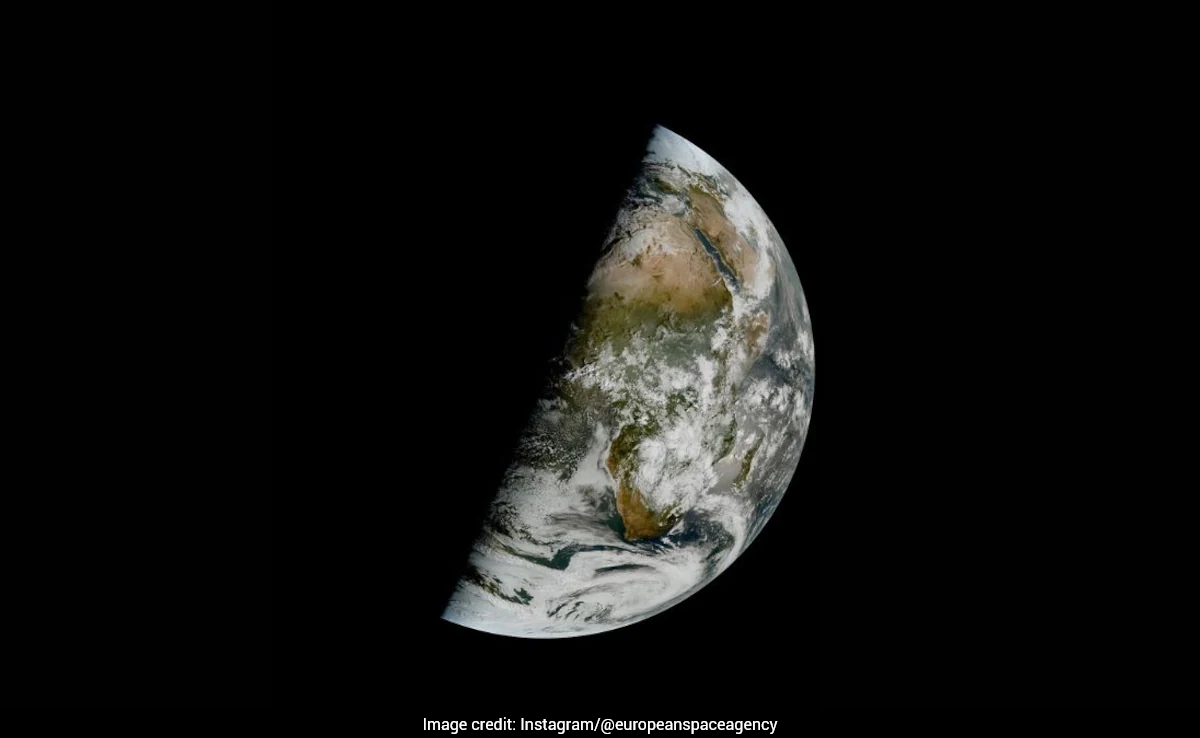
December 21 is a significant date in the Northern Hemisphere, marking the winter solstice, which is the shortest day and longest night of the year. This astronomical event occurs when the Earth's axis is tilted away from the Sun, resulting in reduced daylight hours and weaker solar heating. It happens for a moment, this year exactly at 10:03 am EST (16:03 CET and 15:03 GMT).
Also read | Chinese Firm Gifts Renovated Flats After 5 Years Of Service To Retain Employees
On this day, the European Space Agency (ESA) shared a few images revealing what's so special about the day. In a post on Instagram, ESA noted, "You're about to experience either the longest or shortest day of the year."
"On 21 December 2025 at 16:03 CET, Earth will reach the December solstice. This is the moment when the terminator - the line between day and night - tilts to its maximum angle relative to the equator."
See the post here:
What Is The Astronomical Significance Of This Day?
The winter solstice marks the beginning of astronomical winter in the Northern Hemisphere. And at this moment, the Sun appears at its lowest point in the sky, directly over the Tropic of Capricorn.
This event is caused by Earth's 23.5-degree axial tilt, which determines the distribution of sunlight throughout the year.
"That tilt, about 23.5 degrees (the same as Earth's axial tilt), brings:- the shortest day of the year in the Northern Hemisphere - and the longest day in the Southern Hemisphere," ESA noted.
Also read | Russian Woman Living In India Clears 6 Myths About The Country, Internet Reacts
What Is The Cultural Significance Of This Day?
Many ancient cultures celebrated the winter solstice as a time of renewal and rebirth. The solstice has influenced various festivals, such as the ancient Roman Saturnalia and the Scandinavian Feast of Juul.
Track Latest News Live on NDTV.com and get news updates from India and around the world

