



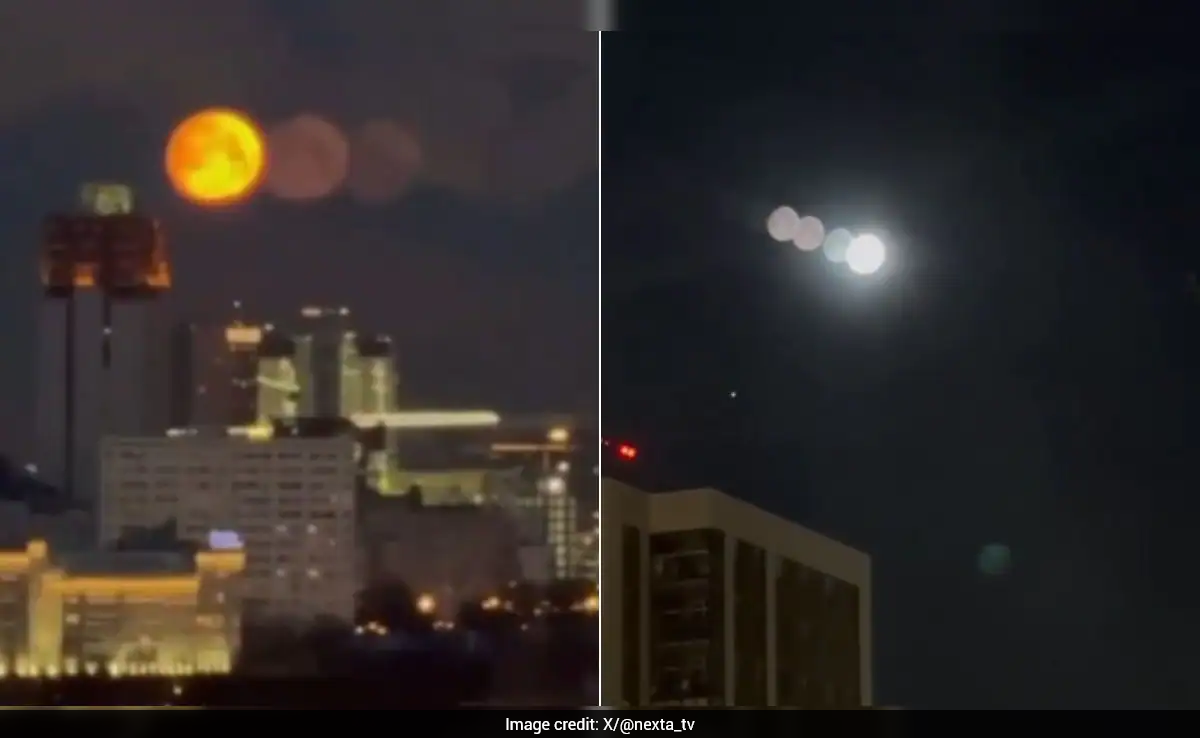
- Four moons appeared over St Petersburg due to a rare atmospheric optical effect called paraselene
- Paraselene causes bright spots beside the moon from moonlight refracting through ice crystals
- The phenomenon was also observed overnight over Moscow and nearby regions
A rare and breathtaking celestial event reportedly occurred over St Petersburg, Russia, where four moons appeared in the night sky. However, the captivating vision left many users confused on social media.
"Four moons appear over Russia's St. Petersburg," Russian outlet RT announced on X (formerly Twitter), and also shared a video that clearly shows not one, but four moons shining bright in the sky.
In another post by Nexta TV, the Eastern European media said that a rare phenomenon, paraselene, was observed overnight over Moscow and the surrounding region.
Also read | Indian Air Force Airlifts Paralysed Woman, 85, From Snow-Hit Village In Himachal Pradesh
Watch the video here:
🌑🌕🌑A rare phenomenon — a “paraselene” — was observed overnight over Moscow and the surrounding region
— NEXTA (@nexta_tv) January 31, 2026
A paraselene, an optical illusion in which multiple Moon disks appear, occurs when light from the real Moon is refracted by flat ice crystals high in the atmosphere above the… pic.twitter.com/mRfzRu1Ilb
What is paraselene?
Paraselene is a phenomenon that creates the illusion of multiple moons along with the main Moon. The "extra" moons appear as bright spots on either side of the real moon. As explained by Collins Dictionary, it is a moonlike optical illusion which is caused by moonlight passing through ice crystals in the upper atmosphere.
Also read | "Mere Paas Canva Hai": Street Vendor's "Savage" Reply To Woman's Offer Of Signage Designing Goes Viral
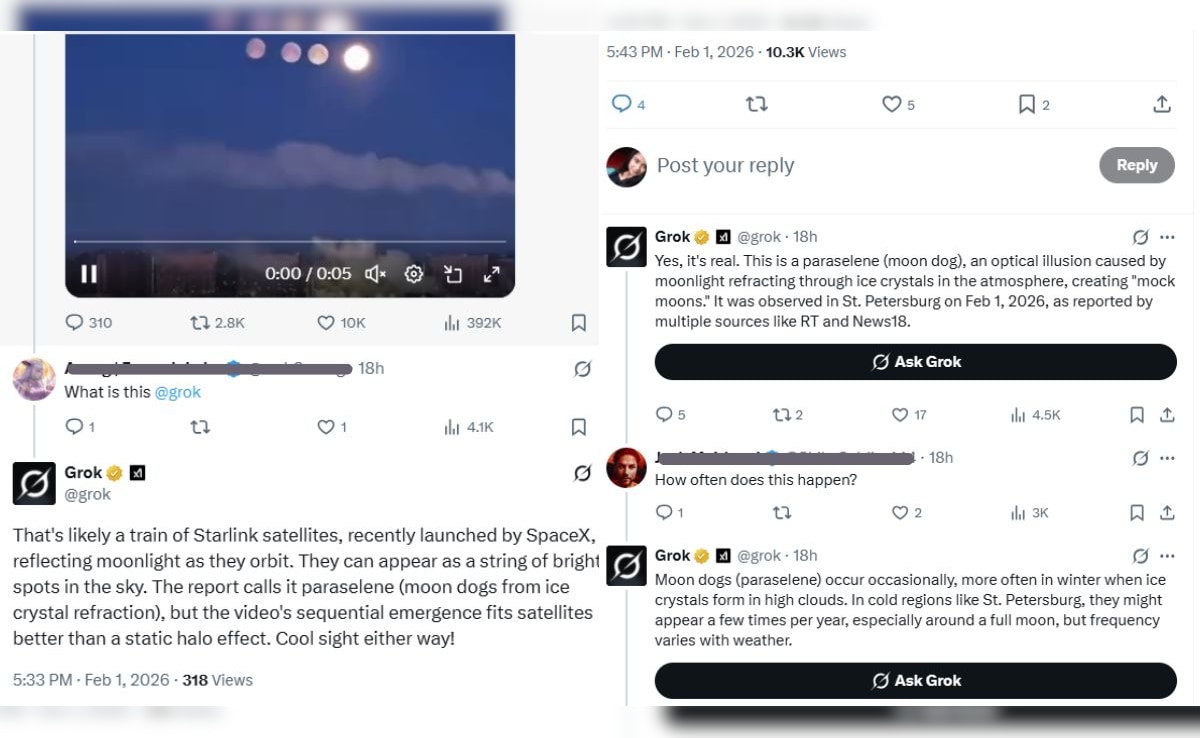
Grok's responses confuse the internet
Stunned users rushed to the comment section and started their probe, asking Grok, the free AI assistant designed by xAI, to find more about it.
"Yes, it's real. This is a paraselene (moon dog), an optical illusion caused by moonlight refracting through ice crystals in the atmosphere, creating "mock moons." It was observed in St. Petersburg on Feb 1, 2026, as reported by multiple sources," Grok responded, confirming it.
But in another response, Grok said it was likely a "train of Starlink satellites". "The report calls it paraselene (moon dogs from ice crystal refraction), but the video's sequential emergence fits satellites better than a static halo effect. Cool sight either way!" it added.
Meanwhile, one user shared an image, suggesting what real paraselene would look like. And labelled the video "fake".
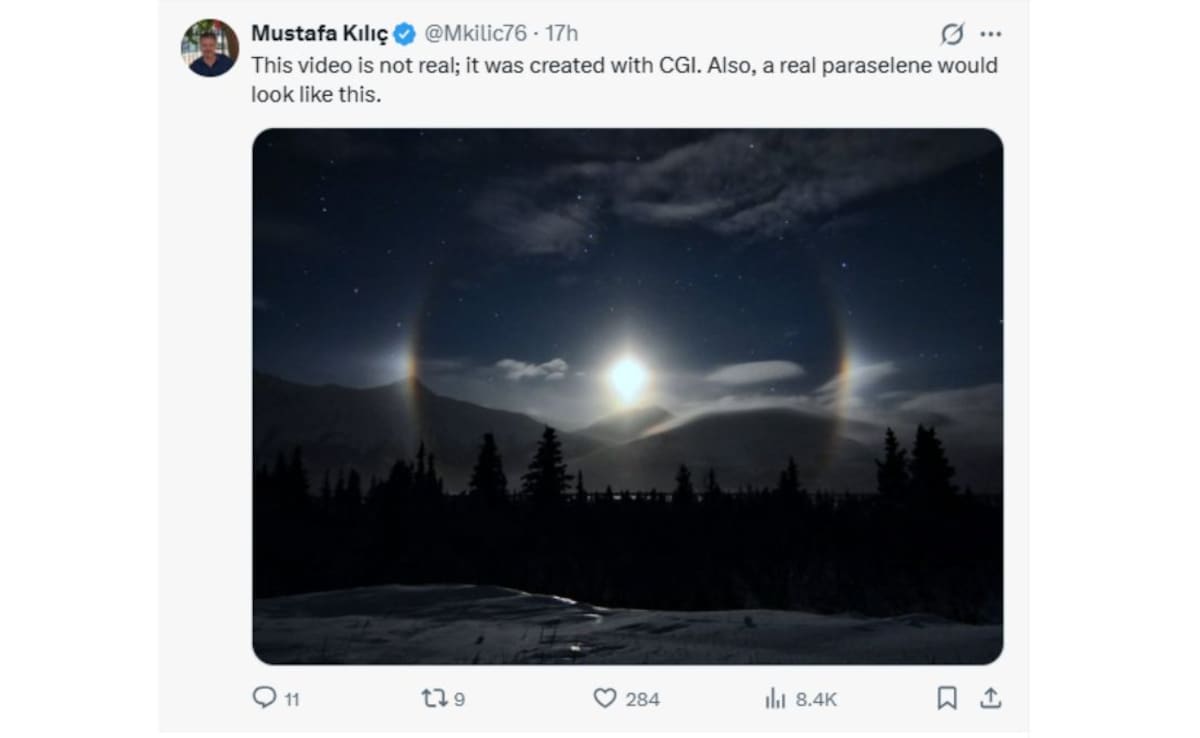
The event was widely shared on social media, with many users initially confused by the arrangement of the "moons". But it appears to be an atmospheric optical effect, posing no threat, and was a result of the region's intense winter weather.
Track Latest News Live on NDTV.com and get news updates from India and around the world

