





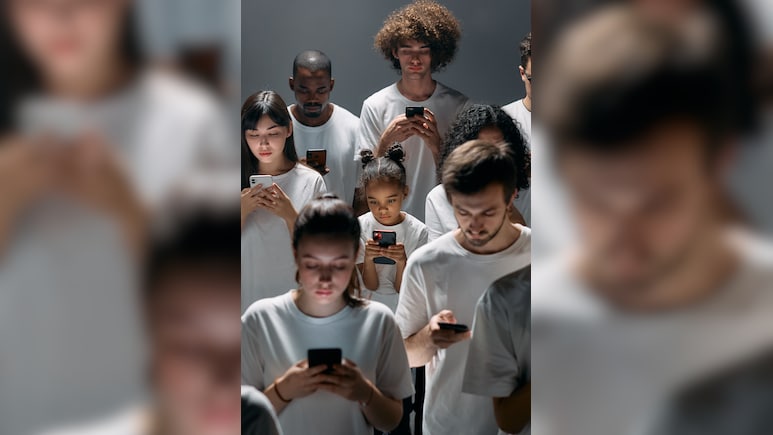
Investor Sparsh Sehgal has sparked an important conversation about the growing dependence on short-form content after disabling Instagram Reels and YouTube Shorts on his phone. Just a few days into the experiment, he said he began noticing how deeply scrolling had become embedded in his daily routine. In a long post on X, Sehgal said the idea came after he tried picking up a book following a three-month break. He noticed that his attention span felt noticeably shorter, prompting him to restrict access to short-form videos on his phone. He can still use Instagram for direct messages, but whenever he tries to open a Reel, the app automatically closes.
"The last three days have been an eye-opener on how deeply addicted our minds have become to reels and doom scrolling," he said in his post.
The first few days, he said, made him realise how often short videos had become a default response to moments of boredom. ". If I am idle even for a few seconds, such as being in an elevator or waiting for a person to join a Zoom call, I now get somewhat uneasy. Reason: reels had become a filler activity for any moment when my mind was idle. The stimulus was/is beyond addictive," he explained.
See the full post here:
On Friday, I disabled all short-form content on my phone via an app. This includes Instagram Reels and YouTube Shorts.
— Sparsh Sehgal (@sparsh_sehgal) September 7, 2026
I can open Instagram and exchange DMs but the moment I click on any short-form video (reel) it closes automatically.
My wake-up call to do this was when I…
Without that option, even brief periods of inactivity began to feel uncomfortable. He also noticed that the habit had become almost automatic. At times, he found himself opening Instagram and attempting to access Reels without consciously deciding to do so, suggesting that scrolling had become part of his muscle memory.
The experiment also made him question how much value he actually got from watching short videos. "I also realized how unnecessary watching reels is, there is no redeeming quality. I watched them for the memes, aka entertainment, but I replaced it with watching long-form entertainment such as stand-ups and sitcoms. Some boredom, yes, but no lack of entertainment per se," he stated.
However, Sehgal pointed out that giving up Reels could have an unexpected social cost. Short-form platforms have become a major source of pop-culture references and online trends, with certain jokes, phrases and trends emerging and disappearing within days.
"When everyone around you is consuming the same trends and hence has the same context-language for humour, you end up being "out of place" if you are unaware of those trends. Let us see if that actually happens," he added.
However, his concerns go beyond entertainment. Sehgal noted that Reels have increasingly become a way for people to discover products, restaurants, cafes, apps and activities in their cities. He said several of his recent clothing purchases were influenced by advertisements he encountered on Reels, while the platform had also helped him discover bars and cafes.
"Reels are not just a stimulus; they are also a de-facto search engine where the algorithm already knows what you want to search for and shows it to you preemptively. We are dependent on them not just for mental stimulus but also for discoverability of almost everything," he wrote further.
That, he argued, makes the dependence on these platforms more complicated. People may not only be relying on them for constant stimulation but also for discovering what to buy, where to go and what is trending. Sehgal's biggest concern is the extent to which a small device in people's hands can influence their mood, opinions, consumption habits and daily routines.
He also urged users to be particularly cautious about children's exposure to short-form content. ".If you have younger siblings or children, protect them from short-form content like you protect them from smoking. The impact on cognition, EQ and IQ is much stronger during the formative stages of one's brain," he advised users.
Track Latest News Live on NDTV.com and get news updates from India and around the world

