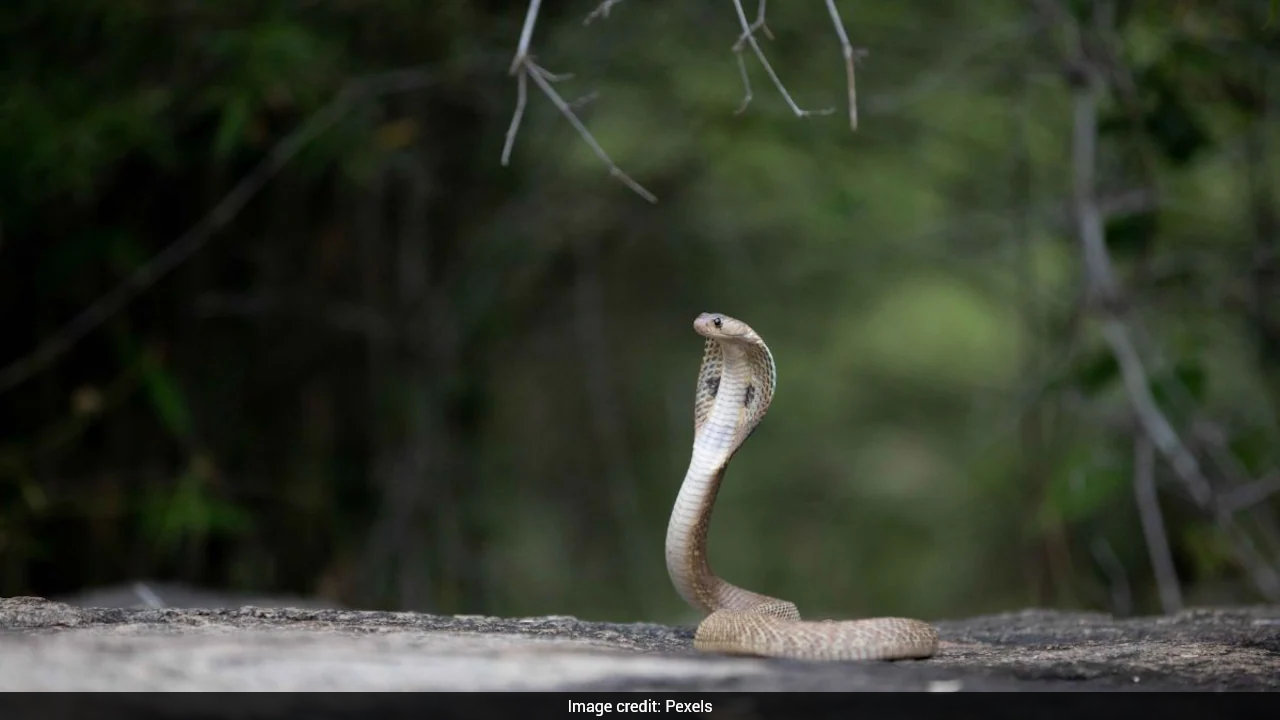

Researchers at the Indian Institute of Science (IISc), Bengaluru, in collaboration with the Technical University of Denmark (DTU), have developed a recombinant, nanobody‑based antivenom that offers broad protection against venom from multiple cobra and king cobra species found in India. In mouse experiments, a cocktail of five engineered antibody fragments, called nanobodies, not only prevented death but also reversed paralysis and other neurotoxic symptoms when administered up to 30 minutes after envenomation.
India alone reports nearly 50,000 deaths every year, the most by snakebite in the world, a report by the institute stated. Noting that snakebite is a neglected tropical disease, causing hundreds of thousands of deaths and disabilities each year, the researchers mentioned that each snake species produces a distinct mix of toxins that attack nerves, blood, or tissues, making it difficult to develop a unified treatment.
Presently animal-derived antivenoms also have drawbacks such as variability, side effects, and limited species coverage, and their production is costly and outdated.
As a solution to this, Kartik Sunagar, Associate Professor at Centre for Ecological Sciences (CES), IISc, collaborated with Andreas Laustsen, Professor at DTU, to engineer antibodies that can work against venom produced by various cobra species in India.
Published in the journal 'Science Translational Medicine,' the team exposed camelid antibodies to venom from different cobra species in India. They found that the antibodies could neutralise related toxins produced by Indian snakes as well.
In a previous study, Laustsen and colleagues used the blood of camelids (like alpacas and llamas) immunised with venom from various African snake species, extracted antibodies produced against the venom, and used microbial cells to mass-produce these antibodies in the lab.
The study noted that unlike conventional antivenoms, these recombinant antibodies can be manufactured using microbial and humanised expression systems without repeatedly immunising animals like horses.
Additional antibody components can be added to expand protection to other medically important snakes, allowing future recombinant antivenoms to be tailored for different regions or species, it added.
According to the official report, antibodies are usually Y-shaped with both heavy and light-chain proteins. The researchers used a portion at the tip of the Y shape, which is made up of light-chain proteins that can specifically bind to the venom toxins. Sunagar and colleagues isolated a cocktail of five such antibody fragments called nanobodies that could bind to toxins in the various cobra species they tested. It was found that this cocktail could neutralise venom activity and prevented the venom from binding to its target receptor.
The team tested the antibody cocktail in mice injected with venom and found that it protected the animals against toxins from spectacled cobras, monocled cobras, and both Indian king cobra species. It was also able to save mice from death even 30 minutes after venom injection. "Even mice that were paralysed or had typical neurotoxic symptoms would revert to a completely asymptomatic state," Sunagar said.
The project combined expertise in toxinology, antibody engineering, and protein science across several countries, solving a global health problem.
