





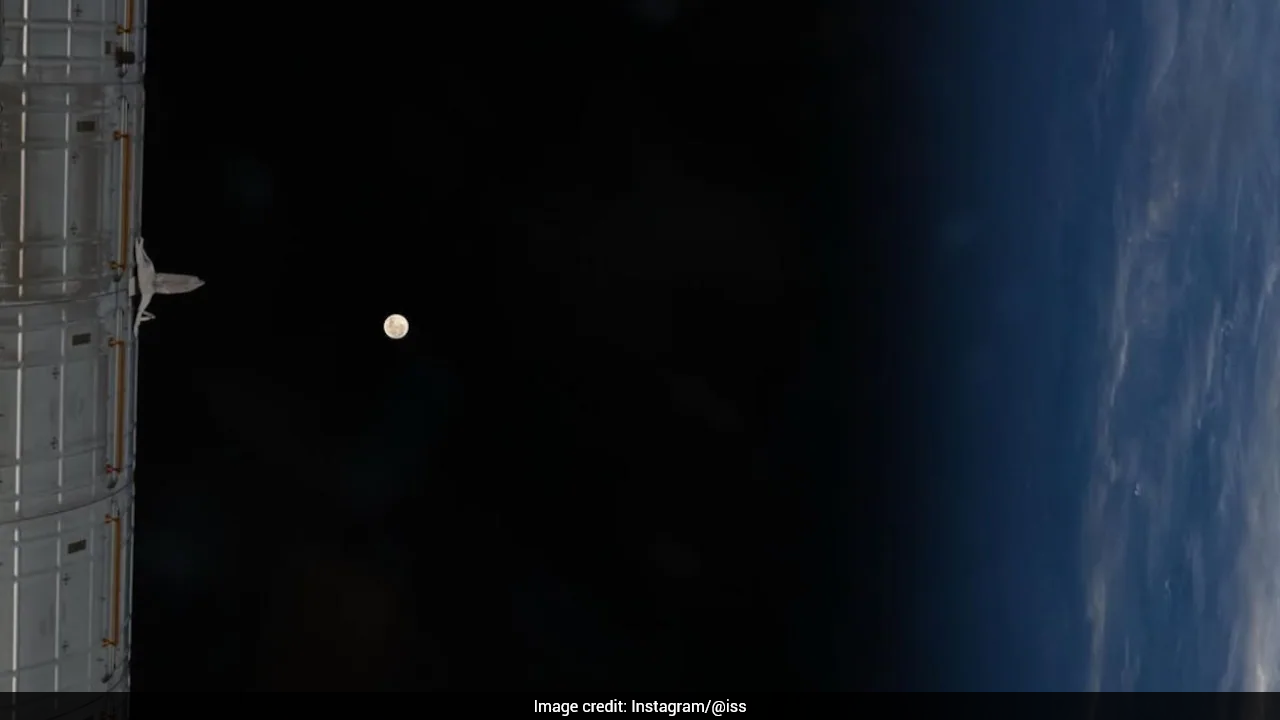
- The ISS shared a photo of the July full moon called the Buck Moon on July 29
- The Buck Moon name originates from Native American traditions linked to deer antlers
- July's full moon is also known as the Thunder Moon or Hay Moon for seasonal reasons
The International Space Station (ISS) posted a stunning photograph of the full moon glowing against the darkness of space. The image was released on July 29, which was this month's full moon, traditionally known as the 'Buck Moon'. The image was shared by NASA astronaut Anil Menon. While skywatchers on Earth observed the Moon rising above the horizon, astronauts aboard the ISS had a completely different view.
Also read | Apple's iPhone 18 Pro: From Camera To Design, 5 Rumoured Features That Look Legit
What is a Buck Moon?
The term "Buck Moon" is the traditional name given to the full moon that occurs every year in July. The name comes from Native American traditions. July is typically the time of year when young male deer, known as bucks, begin regrowing their velvety antlers after shedding them in the spring. This moon is also referred to as the Thunder Moon (due to frequent summer storms) or the Hay Moon (marking the summer hay harvest season).
"Full moon today. The @iss feels so close. And, that's why it's a step toward @nasaartemis, @nasamoonbase, and our future," ISS wrote as the caption of the post.
Social media reaction
"Amazing and scary at the same time. Please be careful up there! I really feel like astronauts have the hardest job in the entire world," one user wrote in the comment section.
Another user called it "stunning".
Also read | "Not Happy With This": Foreigner Claims Zomato Support Agent Texted Privately On WhatsApp
The official page of NASA Artemis also reflected on the full moon by writing, "Tonight, take a moment to look up and enjoy one of nature's timeless sights: a full Moon. Beautiful, familiar, and endlessly inspiring, the Moon never loses its ability to fill us with wonder."
"July's full Moon is traditionally known as the Buck Moon-a nod to the time of year when male deer begin growing a new set of antlers," it added. "The Moon's name may change with the seasons, but its beauty never does."
Track Latest News Live on NDTV.com and get news updates from India and around the world

