





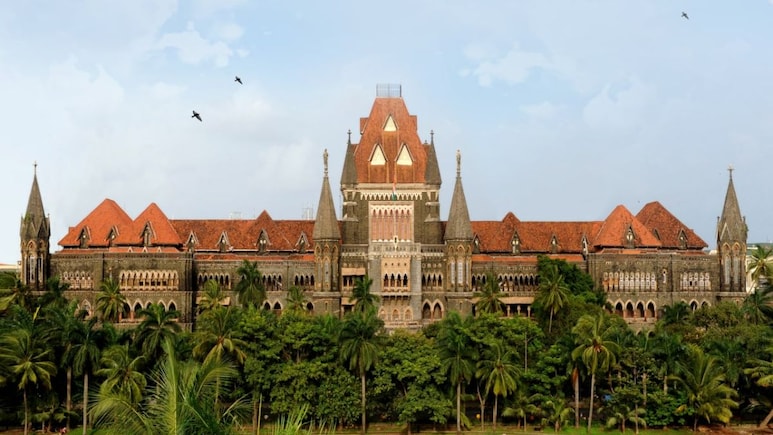
The Bombay High Court on Friday came down strongly on multiple stakeholders in the controversy surrounding the construction of a high-rise project near INS Shikra in south Mumbai, observing both a "failure of Naval Intelligence" and possible lapses by the civic administration in allowing the structure to come up to a substantial height without resolving security concerns.
A division bench of Justices Ravindra Ghuge and Abhay Mantri was hearing a petition filed by the Commanding Officer of INS Shikra challenging the allegedly illegal high-rise Jadhavji Mansion constructed close to the sensitive naval air station and heliport in Colaba. The petition had described the construction as "illegal and unauthorised" and lacking the mandatory defence clearance required for buildings near military installations.
The court noted that the building had already reached ground-plus-19 floors, exceeding 69 metres, by 2024 despite its proximity to a sensitive naval air station and heliport used for defence operations and VVIP movement. The bench remarked that authorities should have been alert to developments in such a high-security zone and questioned how such extensive construction went unnoticed for years. The bench also asked why the Navy had opposed only this building when several other high-rises exist close to the base, some described in court as being at a "stone's throw distance."
In an interim direction, the court said that construction beyond 53.07 metres, roughly the height earlier linked to sanctioned plans, will be permitted only at the developer's "own risk and consequences" until further orders. It cautioned that if, at the conclusion of the final hearing, it finds that a No Objection Certificate from the Indian Navy was legally required, it may order demolition of the additional floors constructed above the permissible limit.
The High Court also placed the role of the Brihanmumbai Municipal Corporation under scrutiny, stating that if it ultimately concludes that the municipal authority was complicit, lax, or committed a serious error in granting permissions without insisting on a defence NOC, it would not hesitate to direct prosecution of the officials concerned.
The dispute arose after defence authorities challenged the legality of the building, arguing that height revisions and amendments made after initial approvals required fresh clearance under defence safety norms applicable to constructions near military establishments. The Navy contended that the structure's elevation could pose surveillance and operational risks to the air station, while also raising concerns about flight safety and security during high-level visits.
During earlier hearings, the court had temporarily restrained construction activity and access to the site following security concerns flagged ahead of a scheduled prime ministerial visit to the naval facility. As proceedings progressed, the bench also expressed dissatisfaction over the delay by defence authorities in raising objections, noting that monitoring mechanisms should have detected the scale of construction much earlier.
The developer, on the other hand, had argued that the project received all necessary municipal sanctions and that a separate naval clearance was not mandatory under the applicable regulations.
Track Latest News Live on NDTV.com and get news updates from India and around the world

