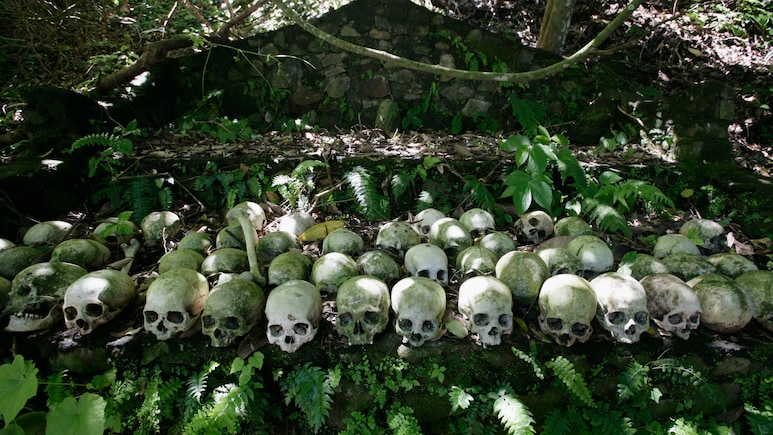
- Trunyan Village in Bali practices open-air burial under the Taru Menyan tree
- Bodies are placed in bamboo cages and only certain individuals qualify for this burial
- The Taru Menyan tree is believed to neutralize decomposition odors at the site
On the northeastern edge of Bali, far from the beach clubs and smoothie bowls, lies a village that does things differently. In Trunyan Village, death is not hidden away underground or consumed by fire. Instead, it is returned to the open air.
Set along the caldera of Lake Batur, this Bali village follows burial practices that predate mainstream Balinese Hindu customs. For travellers willing to step slightly off the usual route, Trunyan offers a rare glimpse into a worldview where death is not feared, but accepted as part of a cycle.
Getting There Is Part Of The Experience
Reaching Trunyan is not simple. The cemetery itself sits about 15 minutes away by boat, accessible only across the waters of Lake Batur.
The journey cuts through a dramatic landscape of steep cliffs and forested hills, creating a sense of isolation that feels intentional.
There is no rush here. The quiet, almost still environment sets the tone long before you arrive.
A Burial Tradition Unlike Any Other
The burial practice here is known as Mepasah. Instead of cremation or burial, the body is laid out in the open beneath the sacred Taru Menyan tree.
Bodies are first washed and wrapped in white cloth, with the face left uncovered. They are then placed inside simple bamboo enclosures. Personal belongings, sometimes even photographs, are left beside them.
There is a system to this. Only those who were married and died naturally are brought here. Children, unmarried individuals, or those who died in accidents are taken to separate burial grounds.
The number of bodies at the site is also limited. There are only 11 bamboo cages. When a new body arrives and space is full, the oldest remains are respectfully cleared. Skulls are placed on a nearby stone platform, while bones are arranged around the site.
The Tree That Keeps The Air Clean Burial
At the centre of this practice is the Taru Menyan tree, from which the village takes its name. Locals believe the tree emits a fragrance that neutralises the smell of decomposition.
And surprisingly, visitors often note the absence of any strong odour. Whether it is botanical science or belief passed down generations, the result is the same: the air remains calm, almost neutral.
The Belief Behind The Burial
For the people of Trunyan, the body is not the person. Once the spirit departs, what remains is simply a vessel, like clothing that is no longer needed.
This aligns with broader ideas of reincarnation, where death is not an end but a transition. The open-air process is not meant to shock, but to allow nature to take its course without interference.
There are also cultural boundaries. Women are traditionally not allowed to attend certain rituals at the site, reflecting long-held customs that continue to shape daily life here.
Why Travellers Are Paying Attention Now
Trunyan has always existed, but in recent years, it has found a place in the growing interest around cultural and "dark" tourism. Social media has played a role, with travel vlogs and reels showcasing the site's unusual practices.
Interest has steadily increased, with noticeable spikes in online searches and travel reviews. Bali's broader tourism revival has also brought more visitors curious about experiences beyond beaches and resorts.
That said, remember it remains a functioning cultural site, not a staged attraction.
Track Latest News Live on NDTV.com and get news updates from India and around the world
