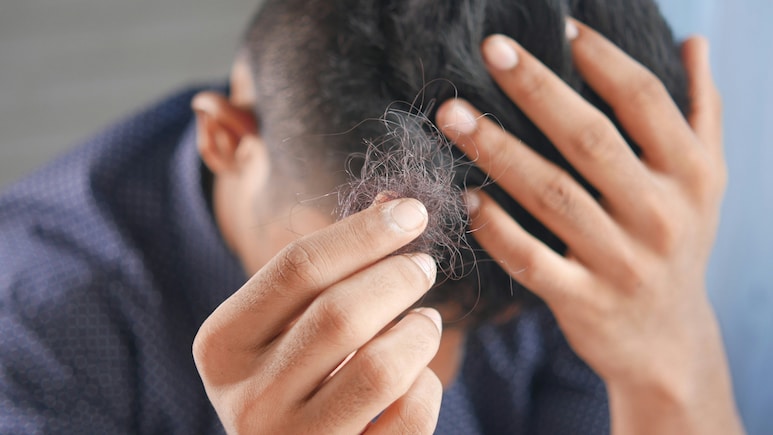
Hair loss is no longer just a concern men deal with later in life. Increasingly, men in their 20s and early 30s are seeking professional help for receding hairlines, thinning hair and loss of volume, often before they have even hit their mid-30s.
A recent study, The Man Matters Hairfall Index 2026, analysed 7,04,152 consultations between August 2025 and August 2026 and offers a glimpse into how young Indian men are experiencing and addressing hair loss.
According to the report, nearly 87.2 per cent of men seeking consultations for hair loss were under 35, with men in their 20s accounting for a significant share of the total.
But there is another finding worth paying attention to. While men are seeking help relatively early in life, many are waiting until their hair loss has already progressed.
Young Men Are Seeking Help, But Often Not Early Enough
According to the report, 65.2 per cent of men whose hair loss stage was recorded by a doctor were already at Norwood Stage 3 or beyond when they sought consultation.
The Norwood scale is used to classify the progression of male pattern hair loss, with higher stages indicating more advanced hair loss.
The findings point to an interesting gap between when men begin noticing changes in their hair and when they actually seek professional advice. Although consultations are concentrated among younger men, a considerable proportion are reaching out only after their hair loss has become more noticeable.
Dr Sumit Upadhyay says, "87% of Indian men who consult for hair loss are under 35. Two in three are already at Stage 2 or beyond by the time they do. Wherever you are, the earlier a doctor sees it, the more options you have."
While the numbers suggest that awareness around hair loss is growing among younger men, they also raise questions about how early men recognise the signs and what prompts them to seek help.
Receding Hairlines In Your 20s, Thinning Hair After 35
Interestingly, the way men describe their hair concerns appears to change with age.
For men under 25, a receding hairline is the more commonly reported concern, accounting for 18.8 per cent of consultations, compared with 14.5 per cent for thinning hair.
The focus shifts among men over 35, with thinning and low hair volume becoming more common concerns at 19.6 per cent, while receding hairlines account for 14.6 per cent.
In other words, younger men tend to notice changes around their forehead and temples first, while older men are more likely to complain about reduced density and volume, particularly around the crown and top of the scalp.
This shift also reflects how hair loss can become more apparent over time. What begins as a receding hairline may eventually be accompanied by more widespread thinning, changing the way individuals perceive and describe their hair concerns.
Not All Hairfall Means You Are Going Bald
Hairfall is often used as an umbrella term for several different experiences, but excessive shedding and progressive hair loss are not necessarily the same thing.
Androgenetic alopecia, commonly known as male pattern hair loss, is a hereditary condition linked to the sensitivity of hair follicles to dihydrotestosterone (DHT), a hormone derived from testosterone. It can begin any time after puberty and typically progresses gradually.
Temporary shedding, on the other hand, can be associated with telogen effluvium, a condition in which more hair than usual enters the shedding phase of the hair growth cycle. It can be triggered by factors such as significant stress, illness or other changes in health. In many cases, shedding improves once the underlying trigger has passed.
Noticing more hair on a pillow or in the shower does not automatically mean someone is going bald. The pattern, duration and possible underlying cause of hair loss all play a role in understanding what is happening.
The Growing Conversation Around Hair Health
Hair health is increasingly being discussed as part of a broader conversation around lifestyle, nutrition, stress and overall well-being. From dietary habits and sleep patterns to scalp health and everyday grooming routines, several factors can influence how people experience changes in their hair.
For younger men, in particular, the experience can also intersect with appearance-related concerns and the pressure to maintain a certain look. With conversations around grooming, skincare and self-care becoming more mainstream, hair health is increasingly finding a place in that discussion.
However, while lifestyle and nutrition can influence hair health, they are not a universal explanation for hair loss. Identifying the underlying cause remains important before considering treatment or making significant changes to a hair-care routine.
Track Latest News Live on NDTV.com and get news updates from India and around the world
