Deepinder Goyal, the founder of Eternal Ltd (formerly Zomato Ltd), stepped down as Director, Managing Director, and CEO on Monday in a significant board reshuffle.
He stepped into the role of vice chairman, which will allow him to pursue high-risk ventures beyond the company's scope.
The board has endorsed the appointment of Albinder Singh Dhindsa, current CEO of Blinkit, as Group CEO and Key Managerial Personnel, effective February 1, 2026.
An important update on leadership changes at Eternal. pic.twitter.com/CALn2QQFWE
— Deepinder Goyal (@deepigoyal) January 21, 2026
In his letter to shareholders, Goyal explained: "Recently, I've been increasingly attracted to bold new ideas that demand high-risk exploration and experimentation, ventures best pursued outside a public entity like Eternal."
His stepdown marks the end of an era for a startup that began as a scrappy PDF menu website and went on to change how urban India eats, orders, reviews and even thinks about food.
How Did It Start?
The Zomato story does not begin in a kitchen or a restaurant. It begins in an office cafeteria at Bain & Company in the mid-2000s. Deepinder Goyal, an IIT Delhi graduate working as a consultant, noticed a small but persistent problem.
Every lunch hour, colleagues queued up to flip through dog-eared paper menus. There was no clarity on prices, no consistency, no way to compare options or know what was actually good.
Goyal built a simple internal tool to digitise these menus. What started as a convenience for coworkers soon revealed a much larger opportunity. In July 2008, along with Pankaj Chaddah, he launched Foodiebay from Gurgaon. The idea was simple yet powerful: an online directory of restaurant menus.
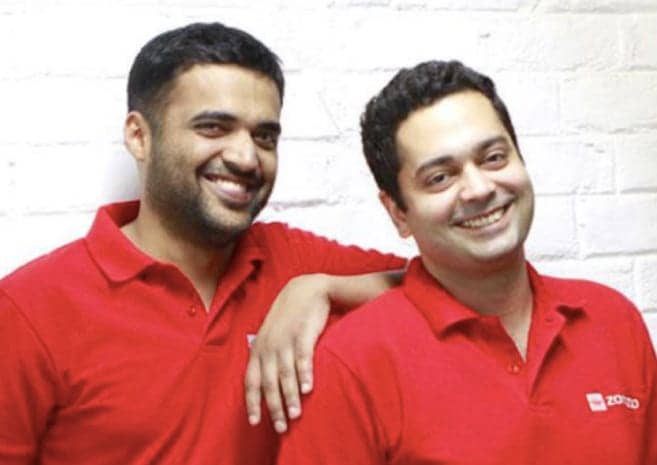
Deepinder Goyal and Pankaj Chaddah. Credit: Twitter
Within months, Foodiebay had uploaded over 1,400 menus and became the largest restaurant directory in Delhi NCR. The founders quit their jobs in 2009 to work on it full-time, bootstrapping the business initially and betting on scale over revenue.
Becoming Zomato
In 2010, Foodiebay rebranded to Zomato, a move nudged by early investor Sanjeev Bikhchandani of Info Edge, who flagged potential trademark issues and the need for a globally adaptable name.
Info Edge invested $1 million, roughly Rs 4.7 Cr at the time, giving the company capital and credibility.
Zomato was officially incorporated and began expanding rapidly across Indian cities. Unlike classifieds or review platforms of the time, Zomato focused obsessively on data accuracy. Menus were photographed, prices updated, cuisines categorised, and user reviews moderated.
Between 2011 and 2014, Zomato moved beyond India, launching in markets such as the UAE, UK, Qatar, Sri Lanka, Philippines and South Africa. The mobile app, launched in 2012, became a key growth driver as smartphones penetrated Indian cities. Zomato was no longer just a menu site. It was becoming a habit.
Going Global
Zomato's international expansion strategy was unusually bold for an Indian startup at the time. Instead of slow organic entry, it combined local launches with aggressive acquisitions.
In 2014, it acquired Gastronauci in Poland and Cibando in Italy for around $6 million. In 2015 came its biggest global bet: the acquisition of US-based UrbanSpoon for approximately $50 million, giving Zomato a foothold in North America. By 2015, it operated in over 20 countries including Brazil, Turkey, Indonesia, Chile, Canada, Lebanon and Ireland.
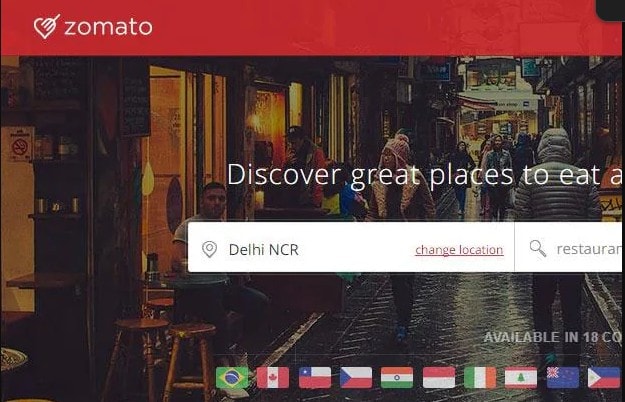
Zomato available in 18 countries. Photo: 2014/X
The approach worked in terms of reach but came at a cost. Managing diverse markets, languages and restaurant cultures stretched resources. Eventually, Zomato would retreat from several international markets to refocus on India, a decision that proved crucial. By 2024, Zomato exited most foreign markets and shuts down 10 subsidiaries within a year.
The Delivery Pivot That Changed Everything
Until 2014, Zomato made money largely through advertising and restaurant listings. But competition was intensifying. New players were entering discovery, and margins were thinning. At the same time, smartphone usage and on-demand behaviour were exploding.
In March 2015, Zomato pivoted decisively into food delivery. Initially, it partnered with hyperlocal logistics firms like Delhivery, Grab and Runnr to fulfil orders for restaurants without delivery fleets. The model was messy. Addresses were vague, traffic unpredictable, and partners inconsistently trained.
The turning point came in 2017 when Zomato acquired Runnr and began building its own in-house delivery network. Custom routing algorithms, delivery partner training, and real-time customer support followed. The company slowly moved towards positive unit economics, even during peak demand.
By 2018, Zomato became India's first food-tech unicorn, valued at over $1 billion.
Money, Money, Money
Zomato's growth was fuelled by consistent funding.
- After the initial Info Edge investment, the company raised Series A of $3 million in 2011, Series B of $2.3 million in 2012, Series C of $10.3 million in 2013, followed by larger rounds including $60 million in 2014 and another $60 million in 2015.
- Investors included Info Edge, Sequoia Capital (now Peak XV), Temasek and Vy Capital. By 2020, Zomato raised $660 million in a pre-IPO round, bringing total funding to over $2.5 billion.
- The defining financial moment came in July 2021. Zomato went public, raising $1.3 billion or Rs 9,375 Cr at Rs 76 per share. On debut, its market capitalisation crossed Rs 98,000 Cr, making it India's largest internet IPO at the time.
Beating Rivals And Consolidating Power
Competition, though, remained fierce. Swiggy, founded in 2014, emerged as Zomato's primary rival with a full-stack delivery model from day one. The battle for discounts, delivery speed and restaurant exclusivity reshaped the food-tech landscape.
In 2020, Zomato made a decisive move by acquiring Uber Eats India in an all-stock deal valued at around $350 million. The acquisition consolidated market share and reduced cash burn. It was a clear signal that Zomato intended to dominate the market share.
More Than Food: Blinkit, Hyperpure And District
Zomato's biggest strategic leap after its IPO came in 2022 with the acquisition of Blinkit, formerly Grofers, for $568 million in an all-stock deal. The move took Zomato into the controversial 10-minute quick commerce, leveraging Blinkit's dark store network and technology.
Hyperpure, its B2B restaurant supply arm launched in 2020, quietly scaled alongside. By 2025, Hyperpure's revenue had doubled year on year, nearing profitability and giving Zomato deeper control over quality and supply chains.
The District app, launched internally, extended the ecosystem to dining reservations, events and experiences, blurring the line between eating out and ordering in.
The Eternal Rebrand And What Next For Zomato?
In 2025, Zomato rebranded its parent company to Eternal Limited, signalling its evolution into a broader consumer tech platform. With Blinkit targeting 2,000 dark stores, Hyperpure scaling nationwide, and food delivery expanding to 1,000 cities, Eternal now positions itself as a super app built around consumption.
In 2025, Zomato rebranded its parent company to Eternal Limited.
The company, valued at around $32 billion post-rebrand, has turned profitable and projects positive free cash flow by FY27, even as it invests heavily in quick commerce and AI tools like its in-house customer support system Nugget.
How India Learned To Eat Differently
Zomato did not just deliver food. It revolutionised how India eats. Launched to digitise restaurant menus amid Delhi's sweltering summers, it pioneered online discovery before even Uber Eats arrived.
It trained a generation to scrutinise user reviews before ordering biryani or butter chicken, to demand clear menu details with calorie counts and allergen flags, to insist on hygiene ratings via FSSAI links, and to hold restaurants accountable through real-time feedback. There's no denying the app has a lot of issues that needs to be addressed (10 min delivery pressure on riders, working conditions and fair pay for them etc), but let's give credit where it is due.
The app levelled the playing field. Tiny dhabas, home and cloud kitchens in Tier-2 towns gained national reach, competing with fine-dining spots across 3 million+ listings.
It created over 4,00,000 flexible jobs for delivery riders-many ex-cab drivers or students-boosting urban economies.
Eating shifted from whim to data ritual: heat maps forecast peak demand for momos in Mumbai winters or idlis at Chennai dawn, while AI tailors feasts from fusion fare to guilt-free keto bowls.
The 2020 pandemic accelerated change, with orders up 2.5 times as lockdowns entrenched habits at home. Today, Zomato handles 300 million+ transactions yearly, fusing convenience and culture. Quick commerce delivers midnight ramen or wellness smoothies, mirroring India's taste for hybrid desi-global dishes-from avocado dosas to truffle pav bhaji.
As Deepinder Goyal steps back from daily operations (yet holds CEO control), its important to note the app's journey that was born from a Bain & Company 'annoyance' which now serves as dinner decider for 100 million+ users. Zomato's story is about how convenience, when scaled right, quietly changes culture.
Track Latest News Live on NDTV.com and get news updates from India and around the world
