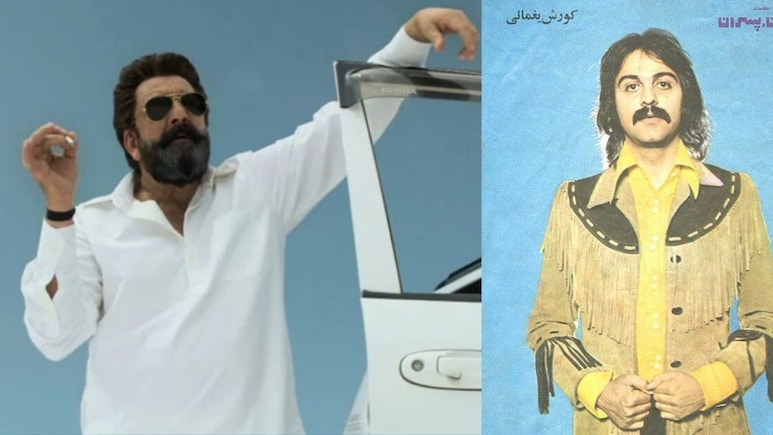
When Sanjay Dutt makes his entry as SP Aslam in Dhurandhar it is not just his screen presence that grabs attention. A familiar melody kicks in, instantly transporting audiences back decades.
The song is Hawa Hawa, a track that has lived many lives across borders, languages and political upheavals.
Nearly 40 years after it first stormed cassette players, the song's reappearance in Dhurandhar has reopened a story far more tragic than the song sounds.
The Pakistan Connection
In 1987, Hawa Hawa turned a young Pakistani singer, Hassan Jahangir, into a cultural phenomenon. The song was everywhere, from wedding playlists to roadside radios, and Jahangir's popularity soon crossed borders. So massive was the craze that he was dubbed the "Michael Jackson of Pakistan".

Hassan is also known as Michael Jackson of Pakistan due to his singing styles and dancing. Photo: X
His self-titled album reportedly sold over 15 million cassettes in India alone, a staggering number in the pre-digital era. For many listeners, Hawa Hawa became synonymous with carefree romance and youthful exuberance, rarely raising questions about where the melody itself came from.
PS: The Internet also spotted similarities between Hawa Hawa's tune and a popular Bengali song, O Tunir Ma Tomar Tuni Kotha Sune Na, and the notes do match completely with the superhit bengali number.
The Real Story Behind Hawa Hawa's Melody
The roots of Hawa Hawa can be traced to Havar Havar, a track composed in the early 1970s by Iranian musician Kourosh Yaghmaei, widely regarded as the godfather of Persian rock.
The melody appeared on the same album as Gol-e Yakh, Yaghmaei's breakout single that became a nationwide hit in Iran in 1973. While Gol-e Yakh enjoyed instant acclaim, Havar Havar quietly carried a hypnotic quality that later echoed across borders, eventually re-emerging as Hawa Hawa in South Asia.
The lyrics went:
Havar havar, ya havar, yarom miayad
Havar havar, ya havar deldarom miayad
In del, azizom, ze dooriyat bizara
Del hasrat kesheom dige taghat nadare
Yarom miayad Deldarom miayad
Yarom miayad, deldarom miayad
Translated, the words mean:
Hail! Hail! Hail! My beloved is coming!
Hail! Hail! Hail! My sweetheart is coming!
O' my dear, this heart hates your departure
My sorrowful heart cannot wait any longer!
My beloved is coming!
My sweetheart is coming!
The Godfather of Iranian Psychedelic Rock
Born in 1946 in Shahrud, Iran, Kourosh Yaghmaei discovered music early after his father gifted him a santoor when he was just ten years old.
By the 1960s, he had taught himself traditional Iranian music, picked up an electric guitar, and formed his first band, The Raptures, with some of his friends.
Inspired by the vinyl records of surf-rockers like The Ventures, The Raptures covered tracks by The Ventures, The Kinks, The Beatles, and The Monkees.
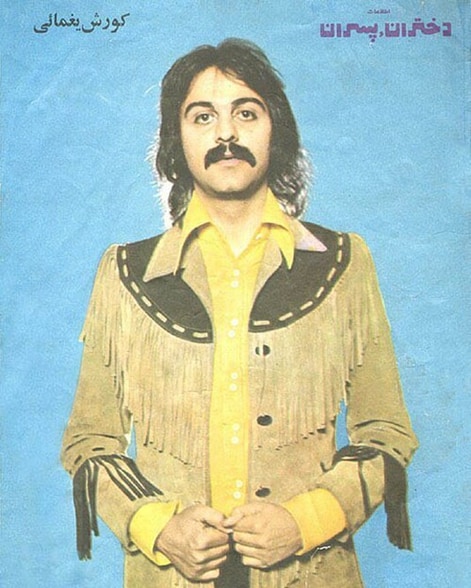
In 1973, Kourosh released his first solo single – Gol-e-Yakh. Photo: X
In terms of songwriting, Kourosh became known as a cross-pollinator-fusing Persian traditional music with the Western psychedelic rock of the era. He cited Led Zeppelin and Pink Floyd among his key influences.
Kourosh began blending distorted guitar riffs with Persian poetry and melodies. In the early 1970s, he formed another band with his brothers Kamran and Kambiz, creating a sound that was revolutionary for Iran at the time. His music defined a generation and cemented his place as one of the country's most original artistic voices
How Iranian Revolution Impacted Kourosh's Music
Everything changed after the 1979 Iranian Revolution. Western-influenced music was banned, and Yaghmaei's work was deemed unsuitable under the new regime. Unlike many artists who fled the country, he chose to stay.
For years, he was forbidden from performing publicly or releasing albums. To survive creatively, he turned to children's music and educational publishing, finding ways to keep music alive within strict state boundaries. When he finally released an album in 1987, it had to be stripped of guitars, drums and bass to meet government regulations.
During this time, many Iranian singers and musicians emigrated to western nations. Kourosh however, declined to leave his motherland and stayed back.
The 1990s offered limited relief. He was allowed to perform abroad and cautiously return to recording. His album Malek Jamshid, completed in the early 2000s, faced continuous censorship and was only released internationally in 2016.
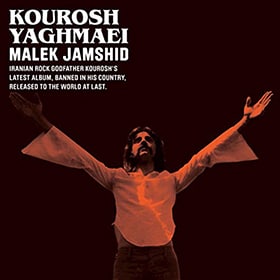
Malek Jamshid is the twelfth studio album by Kourosh Yaghmaei. Photo: Amazon.com
A Ever Lasting Legacy
Today, Kourosh Yaghmaei lives in Tehran and runs a music school, and mentors a new generation of musicians.
In late 2025, he announced his retirement from music, coinciding with the release of his final album, Number 44. It marked the end of a career shaped as much by resistance as by creativity.
Track Latest News Live on NDTV.com and get news updates from India and around the world
