Today's the day. Christopher Nolan's mega-ambitious project The Odyssey hits theatres in India today and the wave of excitement is palpable - as it should be for every Nolan film.
Christopher Nolan's adaptation of Homer's ancient Greek epic, The Odyssey, reportedly mounted on a budget of over $250 million, is a story divided between sea and land. It follows King Odysseus (Matt Damon) after the fall of Troy as he encounters sirens, monsters and the underworld in his attempt to reach his wife Penelope (Anne Hathaway) and son Telemachus (Tom Holland). It takes him ten years of wandering at sea before he finally heads home.
A striking element that carries immense weight in The Odyssey is the Trojan Horse. Nolan's larger-than-life epic, designed for the big screen, restores its impact - both as told in history and in the way the concept is used today.
The Trojan Horse: History And Nolan's Vision
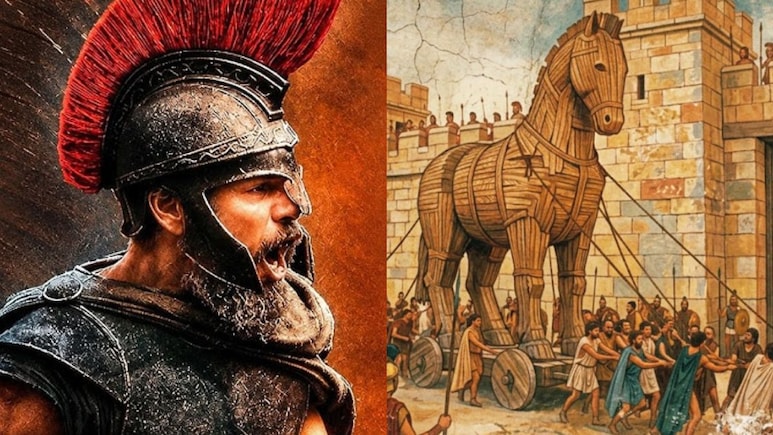
Travel back in time - the Trojan Horse was a giant wooden construct built by the Greeks to conceal soldiers - a legendary ruse in Greek mythology. After a decade-long war, relentless frustration prompted a tactic of deception that allowed the Greeks to infiltrate the walled city of Troy.
In the ancient Greek world, cunning strategies were often celebrated as heroic. The use of the Trojan Horse painted an ambiguous picture of Odysseus, who over time has been regarded by some as an anti-hero or even villain for employing the stratagem that led to mass slaughter and the enslavement of survivors. Although his aim was to get home to his wife and son, the fall of Troy is a passage marked by death and captivity, leaving Odysseus in a morally grey light.
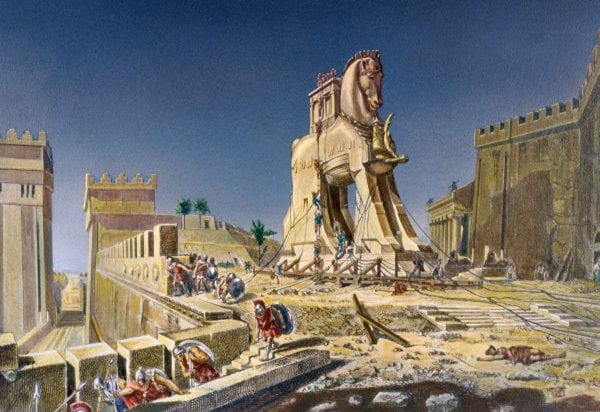
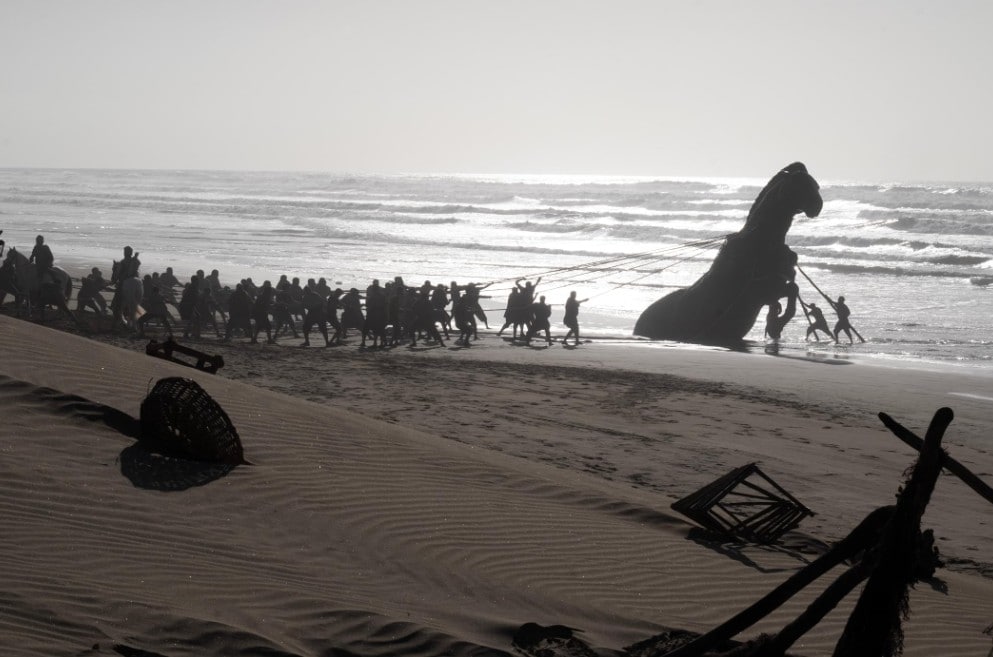
For Nolan's production, the team aimed for a sophisticated, realistic Trojan Horse. Key design points included no wheels, human-powered operation, and practical manageability. About 35 feet tall and roughly 8,000 pounds, the prop was built using moulds, fibreglass panels and supporting infrastructure; it was moved from the shore into the town and placed in a temple of Athena, as shown in the recently released documentary The Odyssey: The Making of an Epic.
Nolan's Trojan Horse appears as a massive, rough-hewn structure: shabby, an ugly chunk of wood rather than a polished showpiece. Reports also suggest Nolan insisted on realism by placing Matt Damon, who plays the titular role, and several other actors inside the cramped horse to capture genuine claustrophobia.
Beyond Strategy: Symbolism And Modern Resonance
What's more interesting is the deeper psychological meaning of the Trojan Horse that transcends its strategic use. Modern interpretation frames the Trojan Horse as anything that appears safe but conceals a harmful surprise.
On the factual side, historians generally agree the Trojan War likely occurred around 1200 BC, during the Bronze Age. The wooden horse itself is often regarded as a poetic or symbolic representation of a surprise attack rather than a strictly literal device.
The Trojan Horse: Analysis And Modern Parallels
Contemporary retellings emphasise psychological manipulation. Commentators note how a desperate desire for peace can lead people to accept a gift that ultimately brings devastation - as when the Trojans brought the giant horse inside their walls. Some representations avoid portraying the Trojans as simply foolish, instead showing them as battle-fatigued and vulnerable to deception. The episode highlights human frailty more than purely tactical brilliance.
In the modern world, the Trojan Horse remains a powerful metaphor for covert deception.
The best-known modern analogue is the Trojan virus. Like the wooden horse, this malware disguises itself as a trustworthy file to trick users into downloading it. Once executed, it can spy, steal passwords and penetrate the 'walls' of a computer.
A "free" app laden with ads or data collection is often described as a modern Trojan Horse; rivals may offer a seemingly attractive service that secretly harvests user data.
The term is applied to policies or actors that appear benevolent but conceal ulterior motives.
Whether strategic, figurative or contemporary, the Trojan Horse teaches a blunt lesson: in adversity, exhaustion and eagerness for quick victories, people often accept solutions that bring ruin. That was the Trojans' downfall - and it recurs wherever deception takes centre stage.
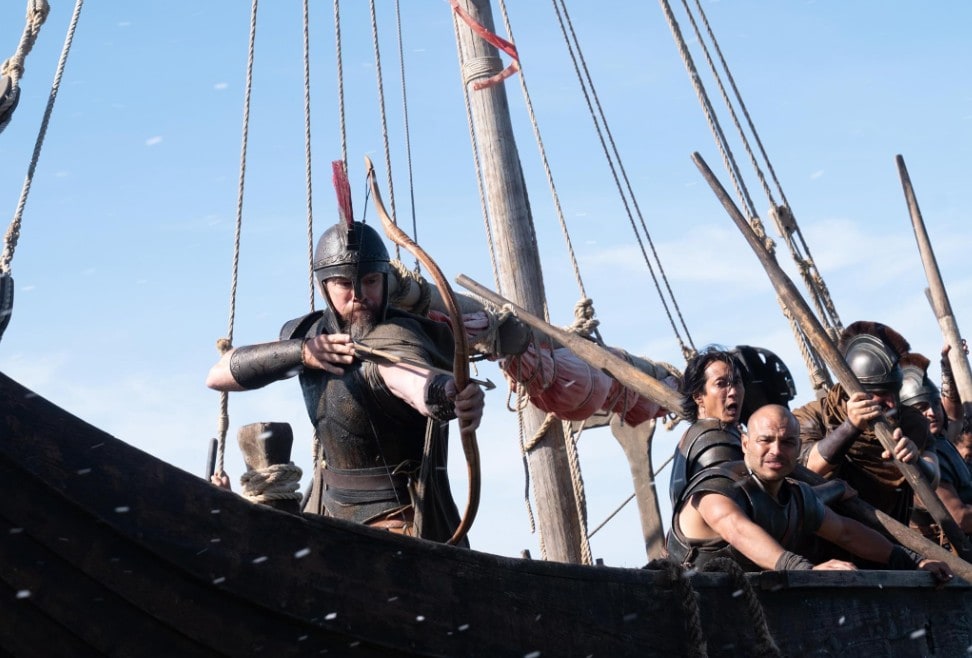
Nolan's Odyssey returns us to history while, ironically, forcing us to view the present through a recycled lens.
ALSO READ | $250 Million, 5 Countries, 91 Days: How Christopher Nolan Made The Odyssey
Track Latest News Live on NDTV.com and get news updates from India and around the world
