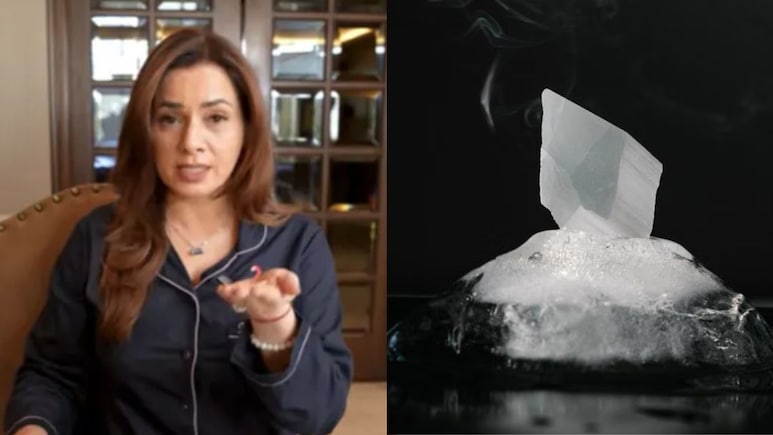
Many celebrities now have YouTube channels where they share routines, including fitness, work, skincare, and haircare, subjects that intrigue their fans. Recently, actor Neelam Kothari shared the recipe for her DIY face pack, which included ingredients like curd, turmeric, coffee, aloe vera, glycerine, and alum.
The Fabulous Lives of Bollywood Wives star cautioned that if someone follows her recipe, they must only add a pinch of alum to the pack, else it can burn their entire face. She also claimed that it helps with pigmentation and freckles.
-

-
 Best Of NDTV World Summit 2026 | Defining Conversations, Big Ideas
 -
 PM Modi Says 'Parasite' Congress Hurts 'Honest' Dissent Movements
 -
 "Some Dreaming Of Disorder": PM Modi's Dig At Rahul Gandhi
 -
 PM Modi Highlights India's Firsts: Fast Breeder Reactor, Hydrogen Train, Asian Games Medals
 -
 "UN's Limits Clearly Visible": PM Modi Presses For 'New Solutions' At NDTV Summit
 -
 "World That Relied On India's Brainpower Now Trusts Its Mindpower": PM Modi
 -
 Non-Oil Trade With India Went Up 50% In 3 Years: UAE Minister At NDTV Summit
 -
 "Some Dreaming Of Disorder": PM's "Failed Product Of Congress" Jibe At Rahul Gandhi
 -
 'Viksit Bharat Not Just For Us': PM Modi's Top Quotes At NDTV World Summit
 -
 Has Indian Cuisine Arrived At The Global Stage? What Vir Sanghvi Believes
Since fans often follow in the footsteps of celebrities, especially when it comes to skin, diet, and hair health, we spoke to a dermatologist to understand whether adding alum to a face pack is a good idea. Dr Rupika Singh, Founder & Chief Dermatologist at Akiya Aesthetics, shared the potential benefits and risks of the ingredients.
Is It Safe To Use Alum In A DIY Face Pack
Alum, or potassium aluminium sulphate, popularly known as fitkari, has been used for centuries in the wellness space for its antiseptic and astringent properties. "It tightens the skin temporarily, but there is a lack of scientific evidence to support this. This makes its use in DIY face masks questionable," Dr Singh told NDTV.
She added that dermatologists don't recommend directly adding alum to a homemade face pack. "Its harsh, drying nature can disrupt the skin barrier, increasing the risk of irritation, especially in people with sensitive or acne-prone skin. Since alum is not a standardised cosmetic ingredient for facial use, there is no evidence-based or dermatologist-approved quantity that can be considered safe or ideal for DIY face masks," she added.
The expert noted that even after reading this, if someone still wants to use it, they must apply it occasionally and not make it part of their everyday skincare routine. She recommended that a tiny pinch of powder is enough, but before applying it to the face, one must conduct a patch test 24 to 48 hours in advance.
What Should You Not Blend Alum With
Alum is naturally drying; therefore, it is crucial to note that you cannot mix every ingredient in your kitchen, especially when the aim of the pack is to achieve a healthy glow for your skin.
Dr Singh advised against combining alum with,
- Juice of lemon
- ACV
- Baking soda
- Undiluted essential oils
- Alpha hydroxy acids or beta hydroxy acids
- Retinoids
- Benzoyl peroxide
- Vitamin C, especially formulations with low pH
"When you layer multiple ingredients, it raises the risk of redness, burning and post-inflammatory pigmentation, especially in Indian skin types," she shared.
The dermatologist shared that instead of using alum in a face pack, it can be used as a styptic after shaving to stop minor bleeding, as an aftershave because of its mild antibacterial properties, or as a deodorant.
However, if you are concerned about your skin, you must pick skincare products that target specific issues. For example:
- Pigmentation: you need niacinamide, azelaic acid, tranexamic acid, or a treatment prescribed by your dermatologist
- Acne: salicylic acid or benzoyl peroxide
- Barrier support: ceramides and glycerin
The aforementioned ingredients are backed by science and research, making their reaction with the skin more predictable.
Risks Of Alum Overdosing
Using alum frequently or in large amounts can lead to overuse, stripping away the protective skin barrier. "Once this barrier is compromised, the skin becomes more vulnerable to irritation, inflammation, UV damage, and post-inflammatory hyperpigmentation (PIH), which is a particular concern in Indian skin tones," Dr Singh told NDTV.
Possible side effects of excessive alum use include:
- Burning or stinging
- Excessive dryness
- Skin barrier damage
- Tightness
- Redness and peeling
- Irritant contact dermatitis
- Post-inflammatory hyperpigmentation (dark marks after inflammation)
Therefore, it is best to avoid using alum in DIY face packs. According to the dermatologist, people with sensitive skin, acne, eczema, rosacea, and active pigmentation disorders should avoid it. If you have had a cosmetic procedure done recently, avoid applying alum to your face.
But if you are using alum, the following signs indicate that you must instantly stop using it on your face:
- Burning that lasts more than a few minutes
- Persistent redness
- Itching
- Swelling
- Rash
- Peeling
- Blistering
- Increased sensitivity after washing
- Dark marks appearing after irritation
It is better to invest in a good, science-backed skincare product than to risk a reaction from a DIY face pack and end up spending a huge amount of money treating your skin.
Also Read | 'Enhance Your Breasts': Dia Mirza Recalls Unsolicited Beauty Advice From Men
Track Latest News Live on NDTV.com and get news updates from India and around the world
