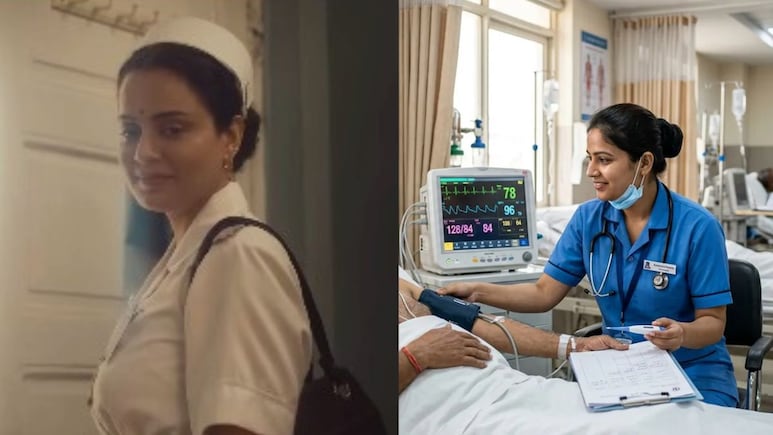
Kangana Ranaut, who is playing the role of a nurse in Bharat Bhhagya Viddhaata, recently brought healthcare uniforms into the limelight. Speaking to ANI, she said, "I feel that the dress code of British nurses is still in use. Our nurses, like doctors, can wear whatever they want to wear; they get a code. But our nurses, whether the weather is hot or cold, in a way, have a foreign look."
"More than their lives, there should be a change in what people feel towards them. It's the most sexualised profession. People dress up as a nurse on Halloween, and crack jokes on them. They're underpaid, overworked, and sexualised," Kangana added.
"This is my personal opinion. But in this film, we have worked with integrity and dignity. The shape and size don't matter; your uniform is your duty," she said, adding, "I personally feel that it is a very British look - putting a pin, a cap, or a belt on top of the uniform is an influence of the US Navy, the way it was during World War I and II."
The actor urged that nurses' uniforms should be 'Indianised'. While she is correct about the British influence on the uniform, nurses' dress codes in India have evolved tremendously over the decades since Independence.
Before diving into the evolution of nurses' uniforms in India, one must note that Kangana Ranaut's role in Bharat Bhhagya Viddhaata is inspired by nurse Anjali Kulthe, who saved 20 pregnant women and assisted in the delivery of a baby while Mumbai's Cama Hospital was under a terror attack on November 26, 2008.
At the time, the hospital's nurses were still wearing British-influenced uniforms. The current dress code is a salwar suit paired with a white half-sleeved coat and a scrub cap.
Introduction of Nurses' Uniform In India
The concept of nurses wearing uniforms in hospitals was first introduced in India by the British government in the late 19th century. Training schools and hospitals adopted Florence Nightingale's standard uniforms - white long-sleeved dresses, an apron, and a cap to cover the head. She is credited as one of the founders of the nursing profession.
Not only did the uniform distinguish nurses from other hospital personnel, but it also helped protect patients and nurses from coming into direct contact with each other, especially in cases involving communicable diseases. These uniforms had roots in the early Christian era, when women were commissioned to assist healthcare professionals in caring for the sick.
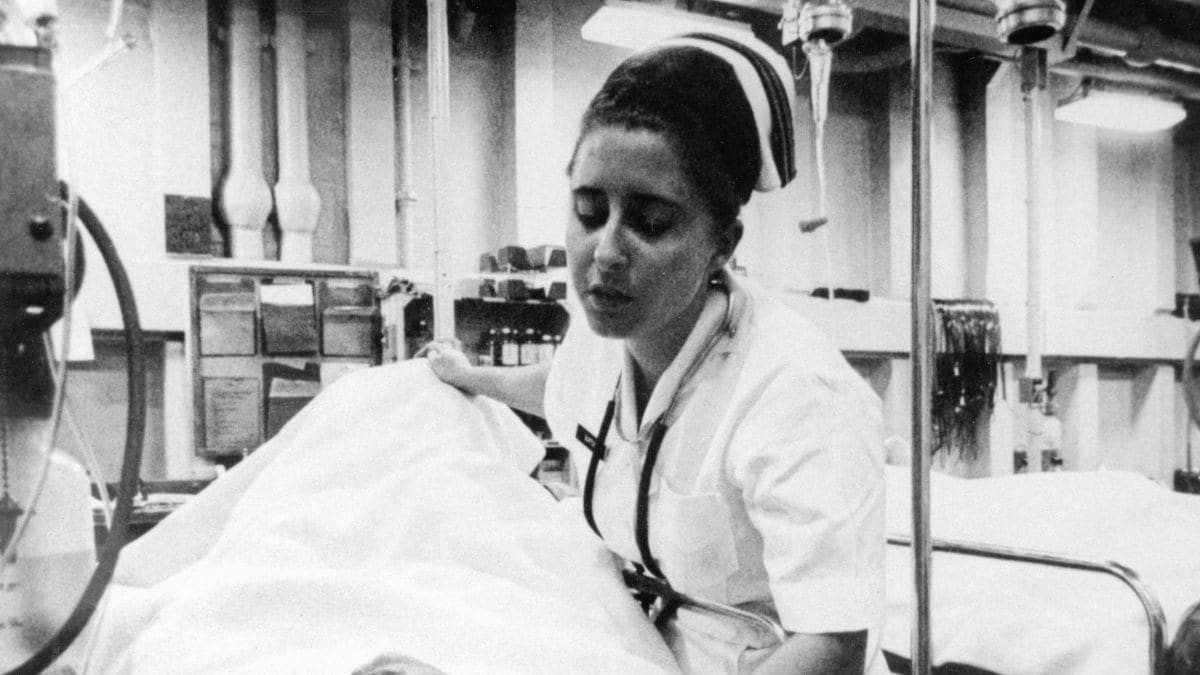
Training schools and hospitals adopted Florence Nightingale's standard uniforms - white long-sleeved dresses, an apron, and a cap to cover the head. Photo: Unsplash
Post-Independence Era And Introduction Of Sarees For Nurses' Uniforms
One must note that Western clothing was not widely popular in India in the 19th century, which limited the number of women entering the nursing profession. Hence, after India's Independence in 1947, many healthcare institutions decided to introduce sarees - the nine-yard drapes that were not only deeply rooted in Indian culture but were also seen as symbols of modesty and respect.
Nurses paired the saree with a short-sleeved blouse. However, this style was not adopted uniformly across India. Many hospitals still had nurses wearing dresses with long or short sleeves. This shift is also reflected in Indian cinema. In Anand (1971), nurses are seen wearing classic white uniforms, while in Khamoshi (1969), nurses were featured wearing white sarees with starched caps pinned to their heads with bobby pins.
From the 1980s to the 2000s, Indian hospitals witnessed the next stage in the evolution of nurses' uniforms. Nurses increasingly began wearing salwar kameez or modified suits. In popular shows like Dill Mill Gayye, nurses were shown wearing pink scrubs with matching caps. These uniforms allowed nurses greater mobility while caring for patients.
Nurses' Uniforms In The Contemporary Era
Today, hospitals across India commonly have nurses wearing scrubs - V-neck tunics paired with loose trousers. They have become the default uniform in many healthcare institutions. Made from lightweight and breathable fabrics, scrubs allow doctors and nurses to move freely, treat patients without worrying about stains, and withstand rigorous washing cycles.
This trend is not limited to India. Hospitals in countries such as the US, South Korea, Germany, and Britain have also widely adopted scrubs. Some hospitals have modified the classic uniform and introduced darker colours to distinguish their staff from those of other institutions. Shows like Grey's Anatomy, ER, and Hospital Playlist also feature nurses wearing comfortable scrubs.
Indian Nurses Talk About Present-Day Uniforms
Mary, Nursing Manager at Rainbow Children's Hospital, Bengaluru, told NDTV that she wears blue scrubs, while doctors wear white aprons.
The 57-year-old nurse shared that uniforms are distinguished by colour across departments. For example, the gynaecology department wears purple scrubs, while the paediatrics department wears dark blue. She added that she feels comfortable in the current attire.
"I don't want skirts or any short dress as my uniform because that would not be comfortable while working," she added.
Anita L, Chief Nursing Officer at Aster Whitefield Hospital, Bengaluru, said that nurses wear navy blue and green uniforms — shirts paired with trousers.
Speaking about the evolution from traditional uniforms to scrubs, she added, "In some rural facilities, traditional outfits might still be popular or even preferred, but modern nursing is not that simple. There are long hours, lots of walking, lifting, bending, and close-up patient support involving hands-on care. Because of that, trouser-and-shirt uniforms or scrub-style sets are practical, appropriate, and help nurses do their work quickly and safely."
From white dresses to sarees and breathable scrubs, nurses' uniforms in India have evolved with time, practicality, and changing social attitudes.
Also Read | Cotton Sarees To Gamchas, How Indian Textiles Keep You Cool In Extreme Heat
Track Latest News Live on NDTV.com and get news updates from India and around the world
