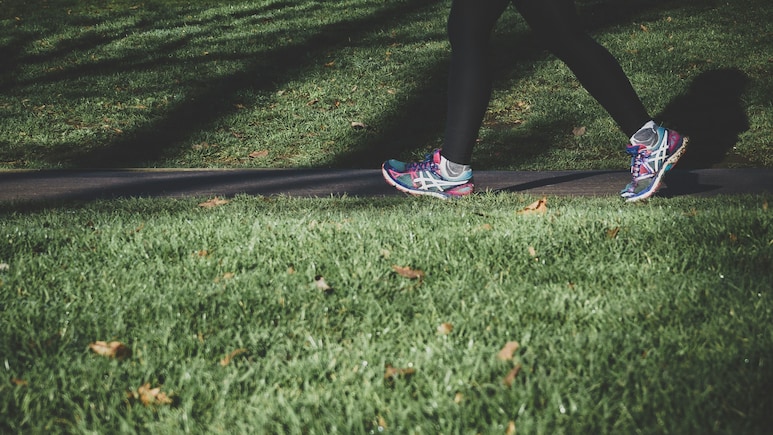
- Walking is a basic movement but not a complete workout for most adults, according to experts
- Brisk walking supports cardiovascular health and stress relief if consistent
- Walking alone does not build sufficient muscle or bone strength over time
It is the most democratic form of exercise. No membership fee, no fancy gear, no complicated technique. Just you, your shoes, and a stretch of road or your home or walking pad.
In Indian families especially, many skip heavy workouts and prefer to just go for a walk after meals.
So, is walking enough?
For many, it feels like it should be. You move, you sweat a little, you hit 10,000 steps and feel virtuous. So, What does experts say? We asked them.
Walking Is Movement, Not A Complete Workout
Mitushi Ajmera, Nutritionist And Senior Fitness Master Trainer, makes a clear distinction and says, "Walking is a movement and it should be considered so. It is not a complete workout."
She explains that while walking is "better than nothing" and excellent for circulation, joints, mood and basic activity, calling it a full workout ignores how the human body adapts.
"There is a saying, use it or lose it. So it is certainly better than being sedentary. But calling it a complete workout ignores how the human body actually adapts," she says.
For beginners, older adults, those returning after illness or injury, or even people dealing with high stress, walking can act as a reset. It reintroduces movement without overwhelming the system. But beyond that stage, the body needs more stimulus.
When Walking Can Be Enough?
Asad Hussain, Exercise Scientist and Founder of ODDS Fitness, believes walking can absolutely serve as the primary form of exercise for certain people.
"Walking can be your only workout, particularly for beginners, older adults, or those returning after a long break," he says. It supports cardiovascular health, improves circulation, aids weight management and reduces stress. Performed at moderate intensity and in sufficient weekly volume, it can meet the aerobic component of global physical activity guidelines.
Similarly, Yogesh Bhateja, Celebrity Fitness Coach, says, "If you are just starting out or getting back into movement after a break, walking can absolutely be enough."
For general health, building stamina, stress relief and creating a daily movement habit, brisk walking can deliver meaningful benefits. It lowers blood pressure, improves insulin sensitivity and reduces cardiovascular risk.
But that comes with conditions: pace, consistency and progression matter.
Not All Walking Is Equal
There is a difference between strolling through a market and walking with intent.
Experts broadly agree on one simple test: you should be able to talk, but not sing comfortably. That usually signals moderate intensity. Brisk walking is often around 5 km per hour, though this varies based on fitness level.

There is a difference between strolling through a market and walking with intent. Photo: Unsplash
Hussain recommends aiming for 150 to 300 minutes per week of moderate-intensity walking. Tracking steps, pace or heart rate can help ensure you are progressing rather than plateauing.
Kushal Pal Singh, Fitness and Performance Expert at Anytime Fitness India, advises walking purposefully for 30 to 45 minutes or targeting 7,000 to 10,000 steps daily. Posture matters too: upright spine, relaxed shoulders, natural arm swing.
Jashan Bhumka, Fitness Trainer and Certified Zumba Instructor, also stresses intention. Walking should be "brisk enough that you are slightly breathless but still able to hold a conversation". Adding inclines, stairs or uneven terrain prevents the body from adapting too quickly.
Where Walking Falls Short
All the experts converge on one point. Walking alone does not build enough muscle, strength or bone density for long-term resilience.
Ajmera cautions against using walking as a replacement for strength training or other load-bearing exercise. "Do not use it as a replacement for strength training or any other load-bearing exercise for muscle building or just as the only activity for bone density or joint health because age does catch up. The deterioration speeds up beyond what walking alone can help you achieve."

Walking cannot replace strength training. Photo: Unsplash
Bhateja puts it bluntly: "Muscle is your metabolic engine - and if you don't challenge it, you gradually lose it over time."
Walking helps maintain health. It does not significantly increase muscle mass, enhance athletic performance or fully optimise bone strength. As we age, muscle loss accelerates. Without resistance training, strength and metabolic rate gradually decline.
For visible muscle tone, stronger bones, improved posture and long-term mobility, resistance training is consistently recommended two to four times a week.
How Long Should You Walk
There is no magic number. More important than one intense hour is what you do across the day.
Ajmera suggests spreading walking through the day rather than pushing through very long stretches, especially with improper footwear. "The goal is to become better not to stress."
Even five to ten minutes of movement counts. A 10-minute walk after each meal can accumulate meaningful activity and support blood sugar control. For older adults, breaking walks into shorter bouts may be more realistic and sustainable.
If you enjoy longer walks, an hour is fine. Just ensure that strength training complements it.
"It's what you do through the day that matters much more than what you do in one hour," Ajmera adds.
The Dos And Don'ts
The fundamentals are surprisingly simple.
Do:
- Walk briskly for 30 to 45 minutes most days
- Warm up for five minutes at a slower pace
- Wear supportive footwear
- Maintain upright posture and relaxed shoulders
- Gradually increase pace, distance or incline
- Aim for at least 150 minutes per week
Don't:
- Slouch or constantly look down at your phone
- Overstride and strain your joints
- Ignore persistent pain in knees, hips or lower back
- Suddenly double your step count
- Rely only on step count while ignoring intensity
- Use walking as the sole strategy for fat loss or muscle building
Walking can also serve as mental recovery. Not every session needs to be intense. But equally, not every walk should be a casual shuffle if fitness is the goal.
Bottomline
The honest answer depends on what you want.
For general health, stress reduction and staying active, yes, brisk walking can be enough. It is accessible, sustainable and safe for most people. For many who are sedentary, simply walking daily is transformative.
But if your goals include building muscle, strengthening bones, improving metabolism and ageing well, walking alone will not get you there.
Track Latest News Live on NDTV.com and get news updates from India and around the world
