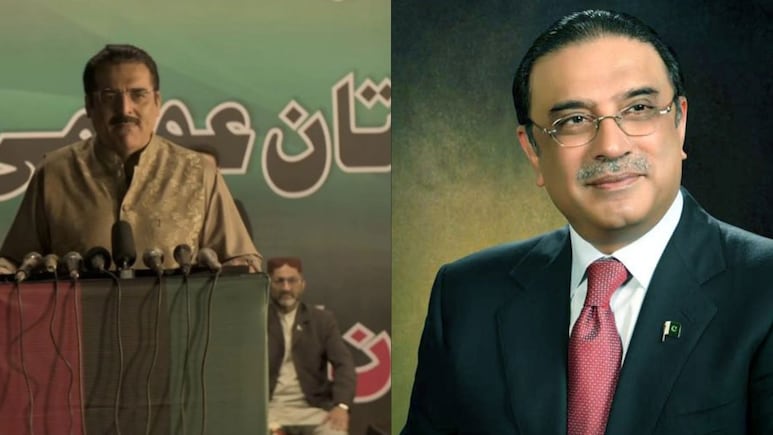
In the Dhurandhar universe, Asif Ali Zarwari is not just another political figure written into the script for flavour. Played by Sanjay Mehandiratta, he is positioned as a powerful, calculating presence, often occupying the highest offices in Pakistan.
The films lean into his authority (though given limited screen time) but also into the whispers that follow him.
Zarwari is shown as someone who pulls strings from behind the scenes. If you're still having trouble recalling who he was in the movie, this might help: he is the one who introduces Rehman Daikat to Lyari, punctuated by that now-iconic line: "As-salaam alaikum, Lyari."
But Zarwari's power also has a label attached to him. At one point in Dhurandhar 2, he is referred to as "10 Per cent Zarwari."
This line signals that the character is not just inspired by a real figure, but also by the reputation that has followed that figure for decades.
The Real-Life Inspiration: Asif Ali Zardari
Zarwari is widely understood to be modelled on Asif Ali Zardari, the husband of former Pakistani Prime Minister Benazir Bhutto.
In real life, Zardari has been one of Pakistan's most polarising political figures, with a career that spans imprisonment, presidency, and persistent controversy.
The nickname "Mr 10 Per cent" or "10 Per cent Zardari" did not originate in cinema. It dates back to the late 1980s and 1990s, during Bhutto's time in power, when political opponents accused him of demanding a 10 per cent commission on government contracts, loans, and large-scale deals.
Over time, the label stuck. But let's start from the beginning.
Who Is Asif Ali Zardari?
The Dhurandhar films hint at power, but the real story behind Zarwari's character lies in the long, layered political career of Asif Ali Zardari.
A central figure in the Pakistan Peoples Party (PPP), Zardari's rise is closely tied to his marriage to Benazir Bhutto, under whose governments in the late 1980s and 1990s he first became a powerful, if controversial, presence.
Following Bhutto's assassination in 2007, he moved from the shadows to the centre, taking over as co-chairman of the PPP and steering the party through a turbulent transition.
In 2008, Zardari became Pakistan's President, leading a civilian government at a time when the country was balancing military influence, economic strain, and internal security crises.
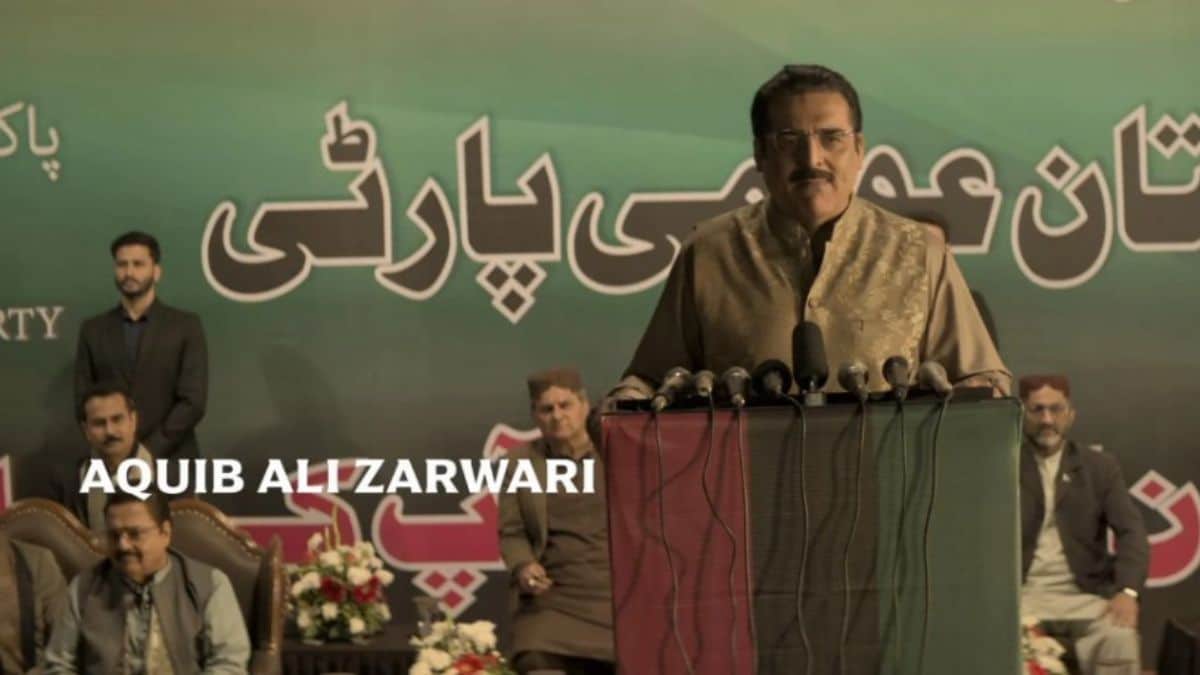
'Asif Ali Zarwari' is played by Sanjay Mehandiratta
His tenure until 2013 was marked by careful coalition-building, including working with rivals like the Pakistan Muslim League (N) when political arithmetic demanded it.
Supporters often point to the 18th Amendment during this period, which reduced presidential powers and strengthened Parliament, as a defining institutional shift. Critics, however, continued to view him through the lens of past allegations.
Even after leaving office, Zardari remained a key power broker within the PPP, shaping alliances and strategy, before returning again to the presidency in 2024.
He has rarely been a mass orator in the mould of Bhutto, instead cultivating a reputation as a dealmaker who understands the mechanics of power.
Where The '10 Percent' Tag Came From
The origins of the nickname lie in a series of corruption allegations that surfaced after the dismissal of Bhutto's government.
Critics claimed that Zardari acted as a gatekeeper to state contracts, allegedly taking a fixed percentage from companies seeking government approval.
Several cases were filed, involving sectors like pre-shipment inspection contracts, gold imports, and tractor deals. Investigators pointed to offshore companies, foreign bank accounts, and financial trails that they argued linked back to Zardari and his associates.
One of the most cited episodes was the SGS-Cotecna case, in which foreign firms were accused of paying commissions in exchange for contracts.
A Swiss magistrate in 2003 even found both Bhutto and Zardari guilty of receiving illegal payments, adding credibility at the time to the "10 per cent" narrative.
In fact, several international media organisations ran headlines calling him "Mr. 10 Per cent" in 2008, when he became president. For instance, France 24 wrote, "'Mr. 10%' Becomes Mr President," on September 4, 2008, when he took office.
The Other Side: Overturned Cases, And Political Battles
However, the legal story is far more complicated than the nickname suggests.
Many of the cases against Zardari were later overturned, dismissed, or ended in acquittals. Pakistan's Supreme Court set aside a key conviction, citing political bias. Other courts pointed to insufficient evidence, missing original documents, or procedural flaws.
By the 2010s, Zardari had been cleared in several major cases, including those related to assets, imports, and inspection contracts.
Swiss proceedings were eventually dropped as well, partly due to legal and diplomatic complications.
Zardari and his party consistently maintained that the charges were politically motivated, part of a broader campaign by rival governments to sideline him and the Bhutto legacy.
This leaves the "10 per cent" label in a peculiar space, widely recognised, often repeated, but never conclusively proven in a final, standing court judgment.
Why Dhurandhar Uses The Nickname
Dhurandhar does what political thrillers often do: it borrows from reality, then sharpens it for effect.
By calling the character "10 per cent Zarwari," the film taps into a reputation that audiences are likely to recognise instantly. Instead of explaining the character's past, the nickname does the work in a single line.
Track Latest News Live on NDTV.com and get news updates from India and around the world
