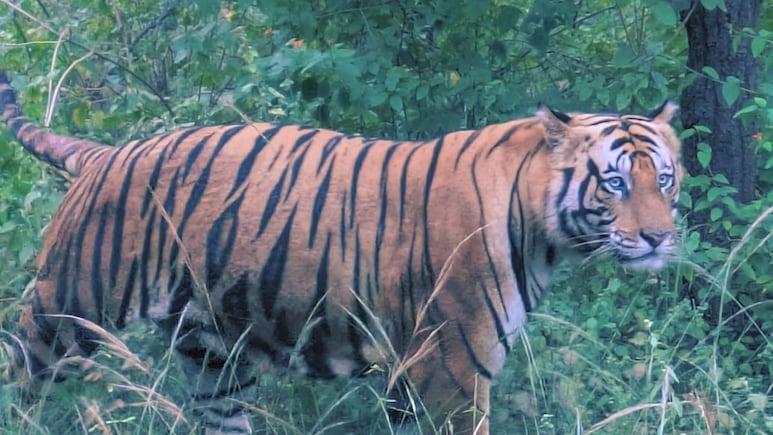
Prominently known for the presence of the Royal Bengal Tiger, the Bandhavgarh Tiger Reserve is one of the best protected areas to spot the majestic big cat in its full glory
The New York Times has named the Bandhavgarh Tiger Reserve in its list of 52 places to go in 2026. If you have not been to the tiger reserve before, this is pretty much a good excuse to visit the jungles of Madhya Pradesh rich in wildlife, vegetation, and terrain.
After all, it's the heart of India.
Whether a wildlife adventurist or not, the thrill of spotting a tiger sauntering in its natural habitat never fades - even on your first safari.
What The New York Times Said About Bandhavgarh Tiger Reserve
The New York Times article highlights Bandhavgarh Tiger Reserve for its "conservation efforts create a top choice for tiger spotting".
"There are fewer than 5,600 tigers left on Earth, according to the World Wildlife Fund, many of them prowling the jungles of India. The good news is that since the early 1970s, the Indian tiger population has doubled, thanks to conservation efforts," the report reads.
History
The Bandhavgarh Tiger Reserve derives its name from the Bandhavgarh Fort which sits on a hill in the park surrounded by diverse forests and lush grasslands. Legends say that Lord Ram gave the Bandhavgarh Fort to his younger brother Lakshman.
The fort, they say, was supposed to be a key vantage point for Lord Ram's army to keep watch on Ravan's Lanka. That's how it also got its name: Bandhav - brother, Garh - fort. It is believed that Hanuman and his followers built such high cliff walls to make the fort almost impenetrable.
Bandhavgarh was known as the "game reserve" of the Maharajas of Rewa before it came under the control of the Government of India in the post-Independence period.
Area Of Bandhavgarh Tiger Reserve
Prominently known for the presence of the Royal Bengal Tiger, the National Animal of India, the Bandhavgarh Tiger Reserve is one of the best protected areas to spot the majestic cat in its full glory.
Out of its total area of over 1,500 sqkm, the core area of the Bandhavgarh Tiger Reserve is spread across around 717 sq km with the remaining area falling in the buffer zones. It has 9 main entry points spread across its core and buffer zones.
While Tala, the oldest gate, Magdhi and Khitauli fall in the core zone, Dhamokar, Panpatha, and Johila lie in the buffer area. Core zones thrive with rich wildlife in dense forests, whereas fewer animals are spotted in buffer zones that also include human settlement in villages.
Besides tigers, the Bandhavgarh Tiger Reserve is also worth a visit for its dense forests, bamboo thickets and vast grasslands.
A perennial river, called the Charan Ganga, runs through the reserve is a source of life, irrigation, and stories too. Considered a holy river, the Charan Ganga river originates from a spring at the feet of a 10th-century reclining statue of Lord Vishnu, known as Shesh Shaiya.
A partially hilly terrain with abundant vegetation and water reservoirs makes the Bandhavgarh Tiger Reserve the go-to place to discover the wildlife in their natural habitat.
If one is travelling by train, the nearest railway station is Umaria. Katni and Jabalpur are other nearby cities and transport hubs, with Jabalpur Airport around 165 km away.
If a tourist is visiting the reserve in summer, April to mid June are the best months. For monsoon, try coming to Bandhavgarh between mid June and late September. October and mid February is the perfect window in winter.
What To Look Forward To
Jungle tours with experienced guides and naturalists just enriches your safari experience. Riding through the tiger reserve amid tall sal trees and bamboo thickets. Besides a host of birds, even the sparrow whose population has declined in cities in the past few years, and insects, if one is lucky they may also spot leopards and elephants.
One can buy lots of bamboo-made products from local craftspeople and even visit nearby tribal villages. Liquor and food prepared from the revered local Mahua flower is also worth a taste. History nerds can head to the ancient Khajuraho temples which are around 200 km away from the Bandhavgarh Tiger Reserve.
Also Read | In Pench And Tadoba National Park, A Thrilling Tiger Safari Through Mowgli's Land
Track Latest News Live on NDTV.com and get news updates from India and around the world
