





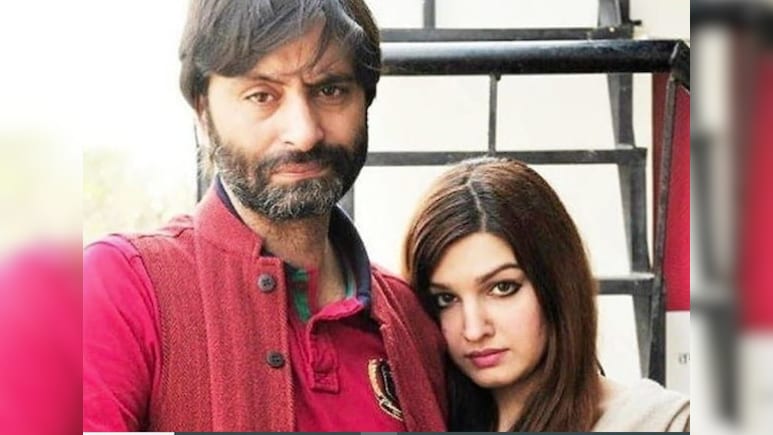
Jailed Jammu & Kashmir Liberation Front (JKLF) chief and convicted terror-funding offender Yasin Malik has, in an affidavit filed before the Additional Sessions Judge of the TADA/POTA Court in Srinagar on August 27, announced that he will no longer contest the proceedings in the case concerning the killing of Kashmiri Pandit nurse Sarla Bhat and has instead asked the court to award him the death penalty.
He has simultaneously announced his decision to end his marriage to his Pakistani wife.
The 25-page affidavit, filed from Delhi's Tihar Jail, is framed by Malik as his final statement before the court. He says that after performing an Istakharah (asking Allah for guidance) prayer and reflecting on his circumstances, he has decided not to contest the trial further. At the same time, he specifically states that this decision should not be treated as an admission of guilt or acceptance of the prosecution's allegations. He nevertheless asks the court for "capital punishment."
The development comes two months after the Jammu and Kashmir State Investigation Agency (SIA) filed a 737-page chargesheet in the Sarla Bhat murder case.
According to the case background cited in Malik's own affidavit, the chargesheet was filed on June 29, 2026, and named him as one of the accused more than three decades after the 1990 killing. The affidavit records that SIA officers had questioned Malik in Tihar on June 2 and 3 about an alleged JKLF handwritten note said to have been recovered from the scene and about the prosecution allegation that he had ordered Bhat's killing.
Read | Yasin Malik Named Mastermind In 36-Year-Old Kashmiri Pandit Nurse Sarla Bhat Murder Case
Bhat, a Kashmiri Pandit nurse associated with Sher-i-Kashmir Institute of Medical Sciences (SKIMS), was killed in April 1990, during the period of intense terrorism and the mass displacement of Kashmiri Pandits from the Valley.
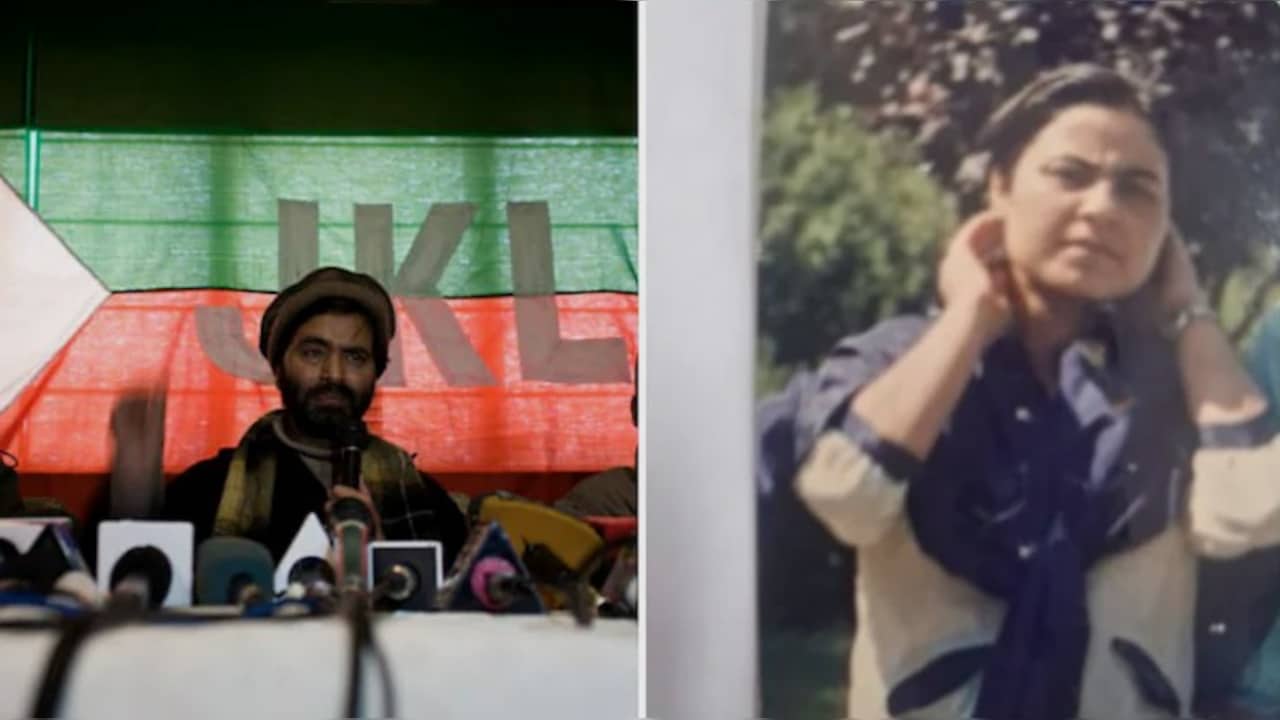
Terrorists kidnapped and killed 27-year-old Sarla Bhat in 1990.
The SIA's case has placed Malik at the centre of the alleged conspiracy surrounding her killing. Malik, however, rejects the prosecution's account throughout the affidavit, including the allegation that Bhat was targeted because she was suspected of providing information to security forces.
He also disputes the prosecution's reliance on the alleged handwritten JKLF note and questions why he and other accused were not prosecuted in the case when they were arrested or investigated during the 1990s.
A major section of the affidavit concerns Malik's own account of his dealings with the Atal Bihari Vajpayee government. He claims that after his release from jail in 2000, the then BJP-led government initiated a dialogue process with him.
Malik says he met senior officials, including Ajit Doval, then a senior Intelligence Bureau officer, Shyamal Dutta and National Security Adviser Brajesh Mishra. He also says RK Mishra facilitated meetings with senior government figures as part of the India-Pakistan dialogue process.
The most striking allegation concerns money for medical treatment in the United States. Malik claims that while he was undergoing medical evaluation at Johns Hopkins Hospital, the Indian Embassy contacted a friend of his and conveyed that then Prime Minister Atal Bihari Vajpayee had sanctioned $50,000 for his medical treatment. Malik says he declined the money. He further claims that RK Mishra subsequently telephoned him from New Delhi and told him that Vajpayee was personally concerned about his medical condition.
These claims are assertions made by Malik in his affidavit, rather than established findings contained in the document. Malik also says that the Pakistani ambassador to the United States at the time arranged $30,000 for his medical expenses through an associate, which he says he declined. According to his account, the medical bills were ultimately paid by the JKLF's England branch.
The claim cannot, however, be independently verified.
Yasin Malik for years has been accused of receiving money and luxuries from Indian and Pakistani Intelligence agencies especially since the mid-1990s.
The affidavit also revisits Malik's injuries from 1990. He says he suffered serious injuries after falling from a fifth-floor building on April 8 that year, remained unconscious and underwent extensive treatment. He uses this account to challenge the prosecution's allegation that he directed Bhat's killing on April 19.
On June 29 this year A 737-page chargesheet filed by State Investigation Agency (SIA) in Kashmir named the jailed JKLF chief terrorist Yasin Malik as the mastermind behind the 1990 abduction, torture and killing of SKIMS nurse Sarla Bhat, a crime buried for decades under a climate of terror and silence. NDTV had exclusively accessed the chargesheet filed in Kashmir with shocking details of conspiracy for mass-exodus of Kashmiri Pandits.
On the morning of April 18, 1990, Sarla Bhat, a staff nurse at the Sher-i-Kashmir Institute of Medical Sciences (SKIMS) in Srinagar was abducted from near her hospital, tortured and shot dead with an automatic rifle at Omer Colony, Malbagh. She was among the last Kashmiri Pandit women still at her post as the Valley descended into one of the darkest chapters in its modern history.
Sarla Bhat's killing was not an isolated atrocity. Estimates by Kashmiri Pandit community organisations place the number of community members killed since 1989 at between 1,500 and 2,000, though no official government documentation of all the killings exists due to lackadaisical approach of successive Governments in J&K.
Over half a million Kashmiri Pandits were displaced in the exodus. Community groups have long demanded a commission of inquiry into the forced displacement and killings, with several describing the events as genocide and ethnic cleansing.
Sources in J&K Police told NDTV that the Sarla Bhat investigation has yielded fresh leads and witnesses in several other long-unresolved cases, including the conspiracies behind the killings of Justice Neelkanth Ganjoo, lawyer Tikka Lal Taploo and poet Sarwanand Kaul Premi. Further investigation and chargesheets in those cases may follow beginning with the case of killing of Justice Neelkanth Ganjoo.
In another significant section, Malik addresses his wife and daughter. He says that he has been unable to communicate with them for years and states that, before he is hanged, he has decided to separate his wife from the bond of their nikah. He invokes Nelson Mandela's account of his own marital separation while imprisoned to explain his decision.
The move is being seen by many as a last attempt to white-wash Yasin Malik's terror crimes. Malik's claims may be an attempt to divert the focus from the investigations and push a narrative of him being a martyr.
The affidavit ends with Malik describing the document as his final statement of conscience. Whatever the motivation behind his decision not to contest the proceedings, his request for capital punishment does not itself determine the sentence. The court will decide the case on the basis of the prosecution's evidence, the defence position and the applicable law.
Track Latest News Live on NDTV.com and get news updates from India and around the world

