





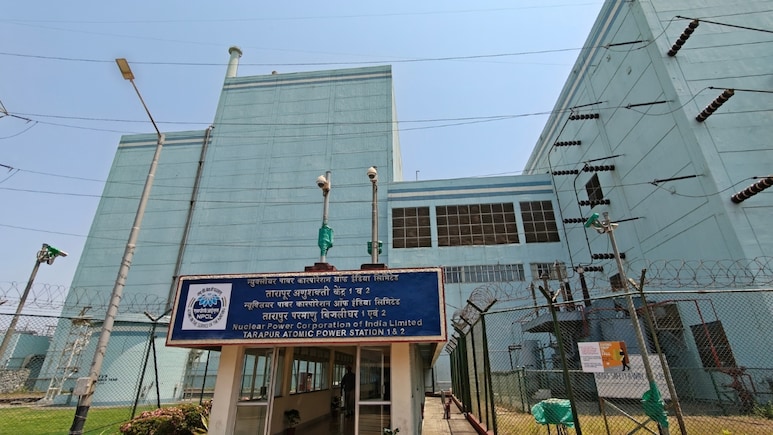
For nearly six decades, two green-hued buildings on India's western coast have quietly produced electricity. They have outlasted geopolitical shocks, technology denial regimes and the wear of time. Today, Tarapur Atomic Power Station Units 1 and 2 are the oldest commercially operating nuclear reactors in the world, with Unit 2 set to restart soon.
During a rare visit, NDTV accessed the facility alongside BC Pathak, chairman and managing director of the Nuclear Power Corporation of India Limited, to examine how the ageing reactors have been refurbished and brought back into operation, a feat nothing short of an open heart surgery.
"This green building has been generating clean, carbon-free power for the last 57 years," said Pathak as he stood outside Tarapur. "India is now home to the newest reactor, the Prototype Fast Breeder Reactor, and also home to the world's oldest commercially operating nuclear reactor."
Commissioned in 1969, the Tarapur units are based on boiling water reactor technology. Designed and supplied in an era when nuclear engineering was still in its infancy, especially in developing nations, these reactors have now been refurbished and brought back into full commercial operation after prolonged shutdowns.
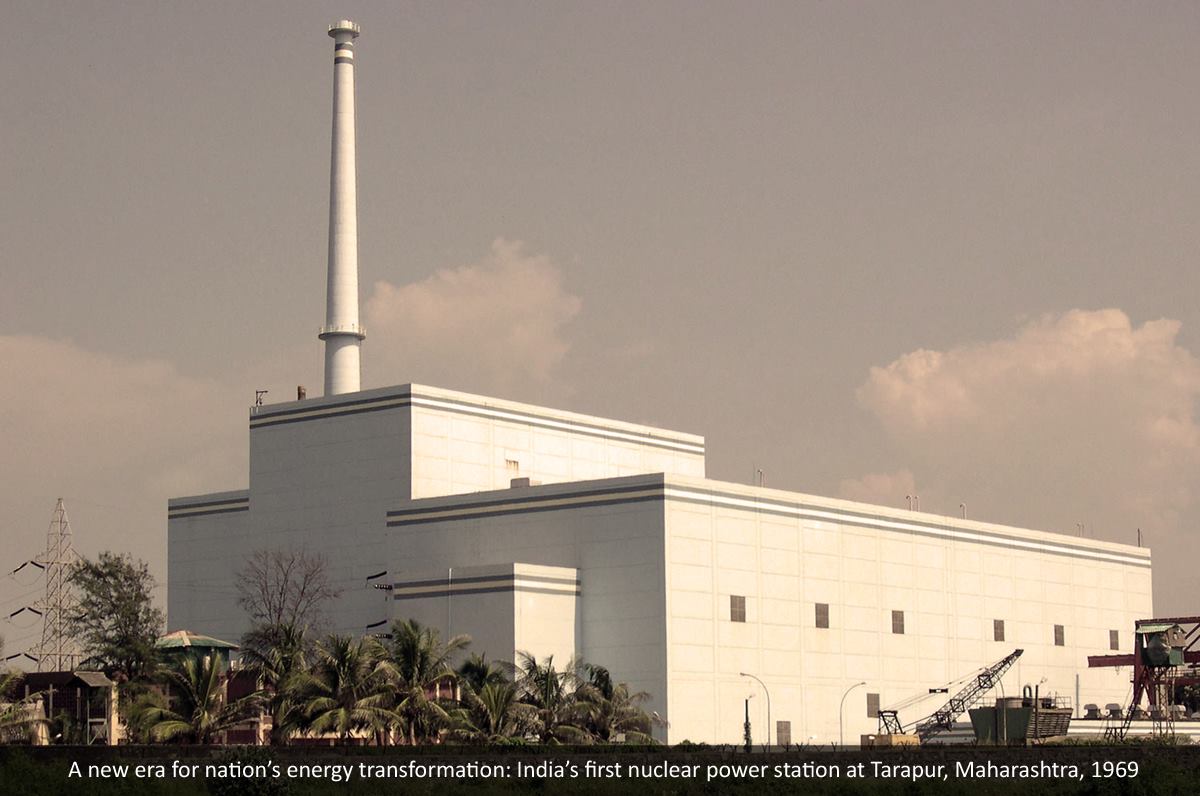
NPCIL
Each unit now produces 160 megawatts of electricity. Unit 1 has already resumed operations, while Unit 2 is expected to follow shortly.
"This is our oldest power plant, not only of the country, but of the world," Pathak said. "What you see here is a very compact reactor, very beautifully designed."
What makes this achievement remarkable is not just the age of the reactors, but the scale of engineering intervention required to revive them. "This refurbishment is like open heart surgery," Pathak explained. "The reactor is the heart. The heart is intact, but all the veins were replaced."
Engineers carried out extensive non-destructive testing of the reactor pressure vessel, the plant's most critical component. "The reactor life is very good," he said, adding that civil structures and key equipment were also assessed and replaced where required.
Much of the work was carried out under radiation-controlled conditions. "All 24-inch stainless steel pipelines were replaced," Pathak said. "Our engineers worked day and night for four years."
Unlike many large infrastructure projects, the refurbishment was largely executed in-house. NPCIL says this helped keep costs low and minimise radiation exposure.
The total cost of refurbishing both reactors was around Rs 400 crore, significantly lower than building a new plant of comparable capacity. "In return," Pathak pointed out, "we are today generating 160 megawatt clean energy from each unit."
"This reactor today is as good as a brand new reactor," Pathak stressed. "Otherwise, we would have shut it down after 57 years of operation."
Safety Upgrades And Legacy Systems
The refurbishment also incorporated safety measures developed after global incidents such as the Fukushima nuclear disaster.
"This is the safest reactor, giving clean energy at a very reasonable price," he said. "Everything is here, including upgrades which came out of the Fukushima accident."
Inside the complex, NDTV was shown the containment filtered venting system, a post-Fukushima feature designed to manage pressure and reduce radioactive release in emergencies.
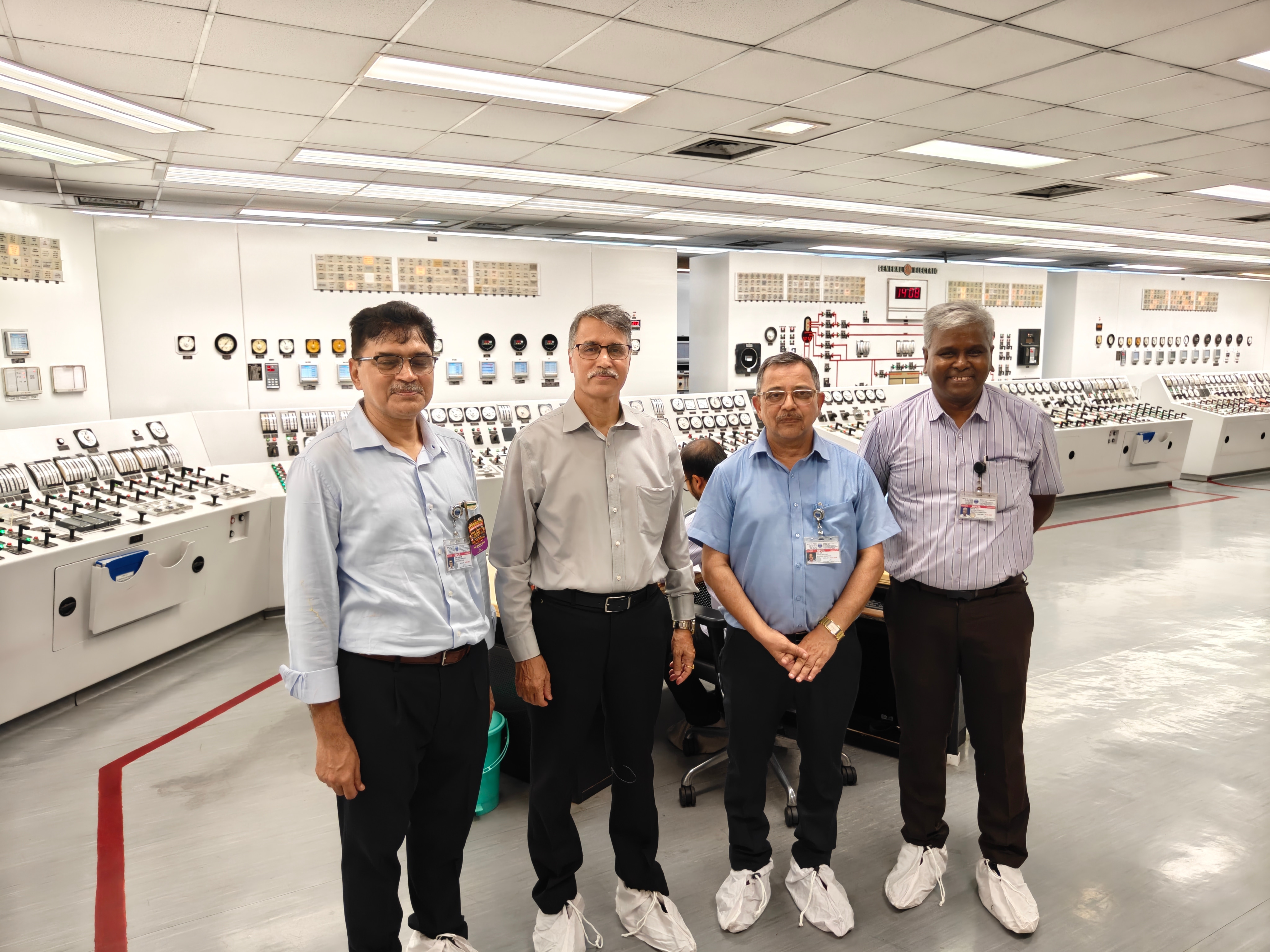
The leadership of the Tarapur Atomic Power Station in the Control Room of the units 1 and 2. Photo Credit: Pallav Bagla
Despite these upgrades, Tarapur retains its original analogue control room, with rows of dials and gauges instead of modern digital interfaces.
"Yes, it is an analogue control room," Pathak said. "At that time, instrumentation was not developed like today."
Yet, there is no sense of obsolescence. The control room looked freshly painted and well-maintained, staffed by young control engineers, including women officers managing power generation in real time. "We are very proud to have women in our Nuclear Power Corporation," Pathak said, as a control engineer calmly monitored output.
At the time of NDTV's visit, Tarapur Unit 1 was operating at full capacity. "This is around 160 megawatt," Pathak said, pointing to the analogue meter. "This is the maximum capacity."
Tarapur's longevity is also tied to India's push for self-reliance after international cooperation collapsed following the 1974 nuclear test.
"We indigenised everything," Pathak said. "All components we could source from India."
Today, NPCIL says fuel supply is stable, and spent fuel is being managed effectively.
"We do not have any problem as far as fuel is concerned," Pathak said. "Spent fuel storage is fully managed."
According to NPCIL, India's nuclear fleet has accumulated around 650 full-power reactor years of operating experience.
"We have been operating our reactors very safely," Pathak said. "The radioactive releases have never been beyond stipulated values."
India, he pointed out, has not even a single instance of 'concern' occurring to date in any of the nuclear power plants. "We have been operating since 1969," he said. "You can see where we are."
Tarapur's revival comes as India expands its nuclear ambitions, including the development of the Prototype Fast Breeder Reactor at Kalpakkam.
"The fast breeder reactor is the crowning glory of nuclear technology," Pathak said, describing it as key to long-term energy security. "It paves the way for nuclear power security in the country." While the PFBR represents the future, Tarapur represents endurance.
At Tarapur itself, plans are underway to introduce Bharat Small Modular Reactors, reinforcing its role in India's nuclear roadmap.
For India, the refurbishment is not just about extending the life of ageing infrastructure. It reflects a broader strategy of balancing cost, safety and energy security.
"With relatively modest investment, we are able to generate significant electricity," Pathak said.
As India aspires to become a developed nation and achieve carbon neutrality, nuclear energy is being positioned as a reliable base-load power. The newly passed Shanti Act opens the door for private participation, but NPCIL's experience stands as a benchmark.
"Safety culture is very important," Pathak said. "Once you are into nuclear, you are into nuclear forever."
Tarapur 1 and 2, having survived time, technology denial, and history itself, now stand renewed. With their open-heart surgery complete, they are once again quietly powering India, proof that with engineering discipline and a safety-first culture, even the oldest machines can be given a new lease of life.
Track Latest News Live on NDTV.com and get news updates from India and around the world

