





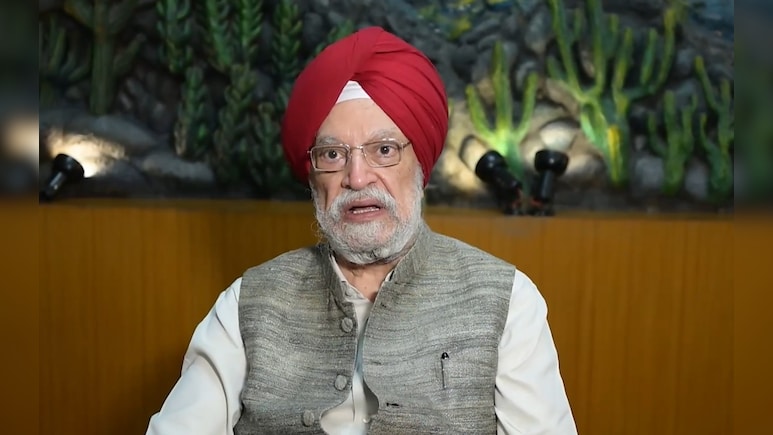
Oil marketing companies suffered Rs 74,781-crore losses for selling petrol, diesel and LPG below cost for the period up to June 30 when global crude oil prices spiked in the wake of the West Asia conflict, Union Petroleum Minister Hardeep Singh Puri said on Thursday.
International crude oil prices have come down, but companies are still processing crude they bought at the height of the West Asia crisis, the Minister told reporters.
Asked if there would be a cut in prices of petrol and diesel, Puri said this would be a legitimate question if oil prices stayed low for the next few weeks.
"We are using the crude petroleum stock today that we had bought two months ago (at a price that existed two months ago). If this (decline) continues for 2-3 months, we will see. But it is a hypothetical situation," he said.
The Minister highlighted that the petrol price increase in developed world was around 20% and around 35% in India's neighboring countries, but in India, the increase in petrol price was just 5.58% during the crisis.
"We did well without any dryout or closure at any of the 1,07,000 retail outlets during last four months (February 28th till the end of June)," Puri said.
Private fuel retailer Nayara Energy has cut petrol prices by Rs 5 per litre and diesel prices by Rs 3 per litre across its retail network from July 1, making it the first major cut in retail fuel prices since crude prices began falling.
The decision may put pressure on rival private retailers to review their own prices if international oil markets remain stable.
But there's a catch.
Unlike state-run fuel retailers, Nayara had been selling petrol and diesel at relatively higher prices in many parts of the country. This gave Nayara room to lower prices without undercutting state-run competitors.
"Nayara has reduced the price of Petrol because it had increased it by Rs 5 per litre during the crisis period. They have only taken back that price increase now. They have only reduced that price... while the Oil Marketing Companies had not increased the price at that time," Puri said.
Global oil prices climbed above $110 per barrel during the Iran conflict, forcing Indian state-run OMCs to absorb a significant part of the increase instead of passing it entirely to consumers.
Crude oil prices started coming down only in the second half of June after the US and Iran reached an agreement to end the conflict.
Oil companies typically buy crude oil - the raw material for producing fuel - at least two months in advance. So, crude oil that is being processed now is essentially what was bought in April or early May when international prices were very high.
Track Latest News Live on NDTV.com and get news updates from India and around the world

