



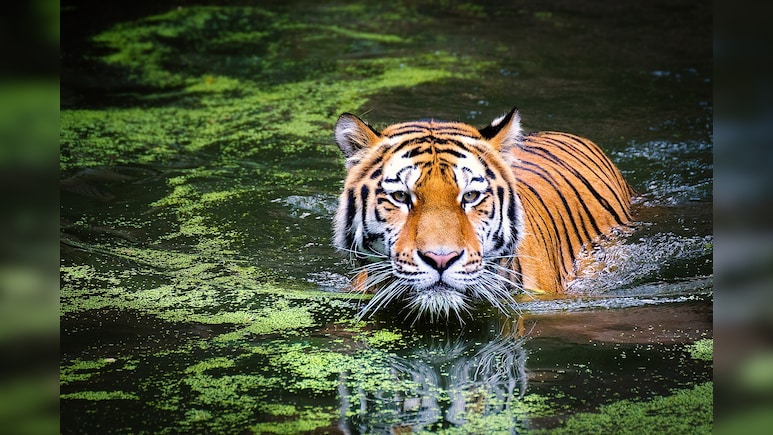
- The tiger-human conflict has risen with increasing tiger and human populations in India, the report said
- Tiger attacks led to 43 human deaths in January-June in 2024 to 44 in the same period the next year
- Tiger attacks on cattle have little economic impact due to government compensation for losses, the report said
The growing number of tigers and humans has enhanced the man-animal conflict, leading to more instances of tiger attack. Compared to the first six months of 2024, one more person died in the same period in 2025. Paradoxically, when it comes to attack on cattle, the tiger has become part of the village economy, with the government paying hefty compensation for the cows killed. This and more have been revealed by a report released by the Centre for Science and Environment or CSE and Down To Earth magazine today.
The report also said in four instances, the tigers had eaten parts of the prey - which is more a deviation than the norm. While the big cats attack humans, they become maneaters only when the animal in question is old or sick.
The 2026 State of India's Environment (SOE 2026) report says at least 43 people were killed near tiger reserves during the period January-June 2025. In 2024, the figure was 44.
This, the report said, is due to the increasing overlap of tiger and human territories.
The report quotes a recent study which says in 20 states with tiger populations, about 40 per cent of the tiger's territory is shared by 60 million people.
With reserve forests being saturated by the tiger population, the animals are venturing outside protected areas in search of food.
Here, the report adds a twist - the increasing areas of lantana bushes in the Indian forests. Lantana, an ornamental hedge plant brought to India by the British in the 19th Century, has now invaded into forests, scrublands and village commons of the country and occupies 50 per cent of the area.
In the process, they have driven out the native grass and plants that deer and other herbivores - the usual prey of tigers - pushing the big cats all the more to come to villages in search of cattle, an easier and bigger prey.
Track Latest News Live on NDTV.com and get news updates from India and around the world

