





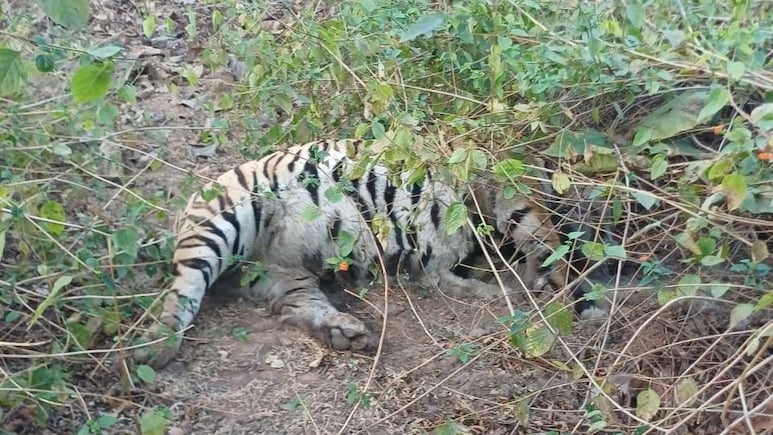
A young tiger brought with hope, fitted with a satellite collar, tracked 24/7 under a flagship reintroduction plan and now found dead in the core of Madhya Pradesh's Rani Durgavati Tiger Reserve.
The discovery of the body of a 3-4-year-old male tiger in the Manegaon Beat of Mohli Range on February 15 has triggered shockwaves inside the Forest Department and ignited explosive allegations of negligence and a possible cover-up.
This was no ordinary tiger. Relocated from Kanha Tiger Reserve last month as part of a high-profile translocation exercise, the big cat had been separated from its mother as a cub, rescued, trained for rewilding, and released into the core area on the night of January 18-19. It was fitted with a satellite radio collar, a technological safeguard meant to ensure constant monitoring.
Yet, according to officials, the tiger's location remained unchanged for two days before a patrol team was finally dispatched. By then, it was too late.
The body of the tiger was found in the forest, and preliminary findings point toward a territorial clash.
DFO Rajneesh Kumar Singh confirmed that pugmarks of another tiger were found near the site, suggesting a possible fight between adult males over territory, a common but brutal reality in the wild. Officials have ruled out immediate signs of poaching, saying no illegal power lines were found and nearby water sources appeared normal. A panel of veterinarians conducted the post-mortem inside the reserve premises. The final cause of death, they say, will only be known once the report is released.
But wildlife activist Ajay Dubey has blown the lid off what he calls a "hush-hush" tragedy.
In a formal complaint, Dubey alleges gross negligence and systemic failure. He claims that data from the satellite collar clearly showed the tiger remained stationary for a prolonged period, a red flag under National Tiger Conservation Authority (NTCA) protocols. "The monitoring team failed to respond or conduct physical verification. This is mandatory," the complaint states.
Dubey has demanded an independent high-level inquiry by the NTCA, strict disciplinary action against officials responsible for 24/7 tracking, and immediate public release of the post-mortem report to rule out poaching or electrocution.
He goes further, questioning the very scientific foundation of the Kanha-to-Nauradehi translocation. "Releasing an apex predator into an irresponsible environment without a functional protection grid is a waste of public money and a death sentence for the animal," the complaint alleges.
The timing makes the incident even more sensitive.
Nauradehi, now part of the Veerangana Durgavati Tiger Reserve landscape, is slated to receive cheetahs later this year under an ambitious expansion plan. Dubey warns that if the department cannot protect a radio-collared tiger under active monitoring, the prospects for more vulnerable cheetahs look bleak. He has called for an immediate halt and review of reintroduction protocols until safety can be guaranteed.
Forest officials, however, maintain that territorial fights are natural in a growing tiger landscape. They insist there is no evidence of foul play so far and that continuous monitoring was being carried out.
Track Latest News Live on NDTV.com and get news updates from India and around the world

