





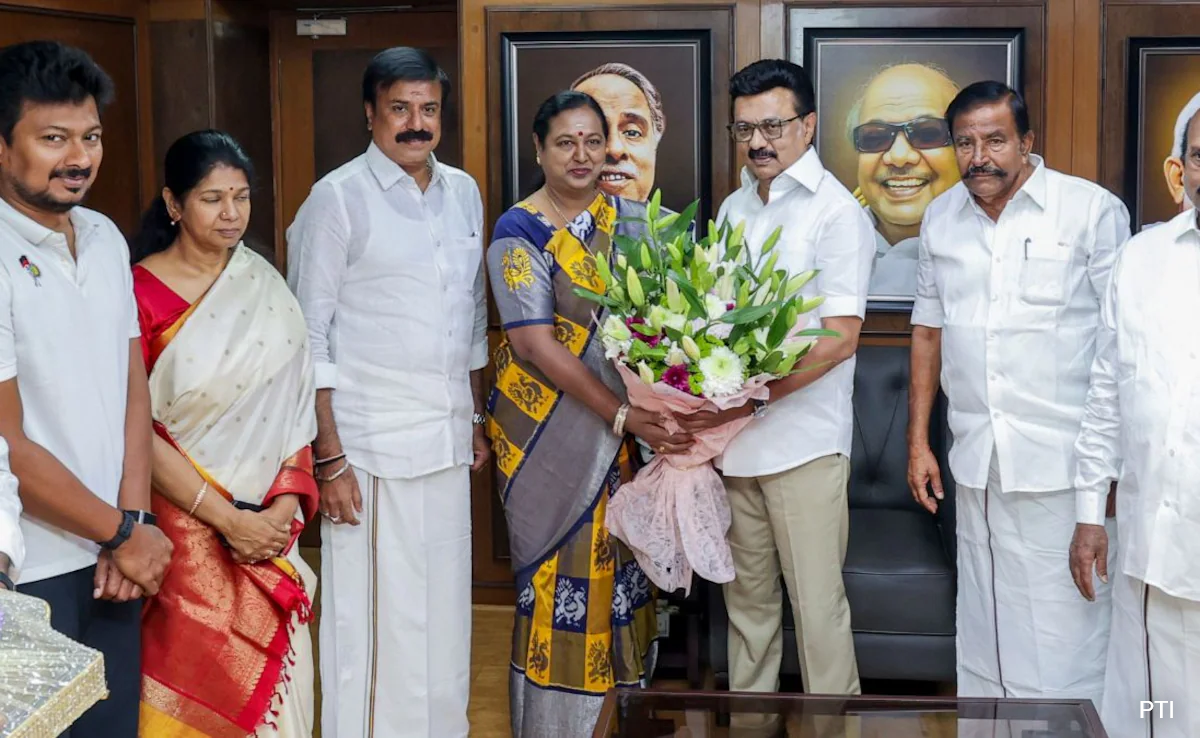
With weeks to go for the Tamil Nadu Assembly elections, the induction of the Desiya Murpokku Dravida Kazhagam (DMDK) into the Dravida Munnetra Kazhagam (DMK)-led alliance on Thursday is reshaping seat-sharing negotiations.
Tamil Nadu has 234 constituencies, and the Congress contested 25 in 2021 as part of the alliance, alongside the VCK, MDMK, the Left parties and other constituents. The VCK and the Left got 6 seats each, while the MK Stalin-led DMK contested 173. Another 14 seats were also contested by other parties on the DMK symbol.
If the DMDK seeks seats even in the single digits, that space must come largely from the DMK's own share. Adding allies is the responsibility of the primary convenor, and every addition eats into the DMK pie first before cutting into the shares of others.
Compared to 2021, however, the margins are narrower.
The DMK is pursuing a 'Dravidian unity vs BJP-AIADMK' narrative and the DMDK fits that framing smoothly. Its inclusion also strengthens the DMK in negotiations with the Congress, which has been demanding a larger share of seats.
On the flip side, experts said, the Congress remains indispensable to the DMK to consolidate minority votes. With Vijay projected to corner a chunk of minority votes, especially from the Christian community, the DMK cannot afford fragmentation in that segment.
How Strong Is DMDK?
Following the death of founder Vijayakanth in 2023, the DMDK has not demonstrated a high degree of strength on its own, particularly in the 2024 Lok Sabha elections, when it could not win even one of the five constituencies it contested. Experts said its value lies more in regional balancing than vote transfer, and it has a solid regional core vote base, which also helps with the caste arithmetic.
Track Latest News Live on NDTV.com and get news updates from India and around the world

