



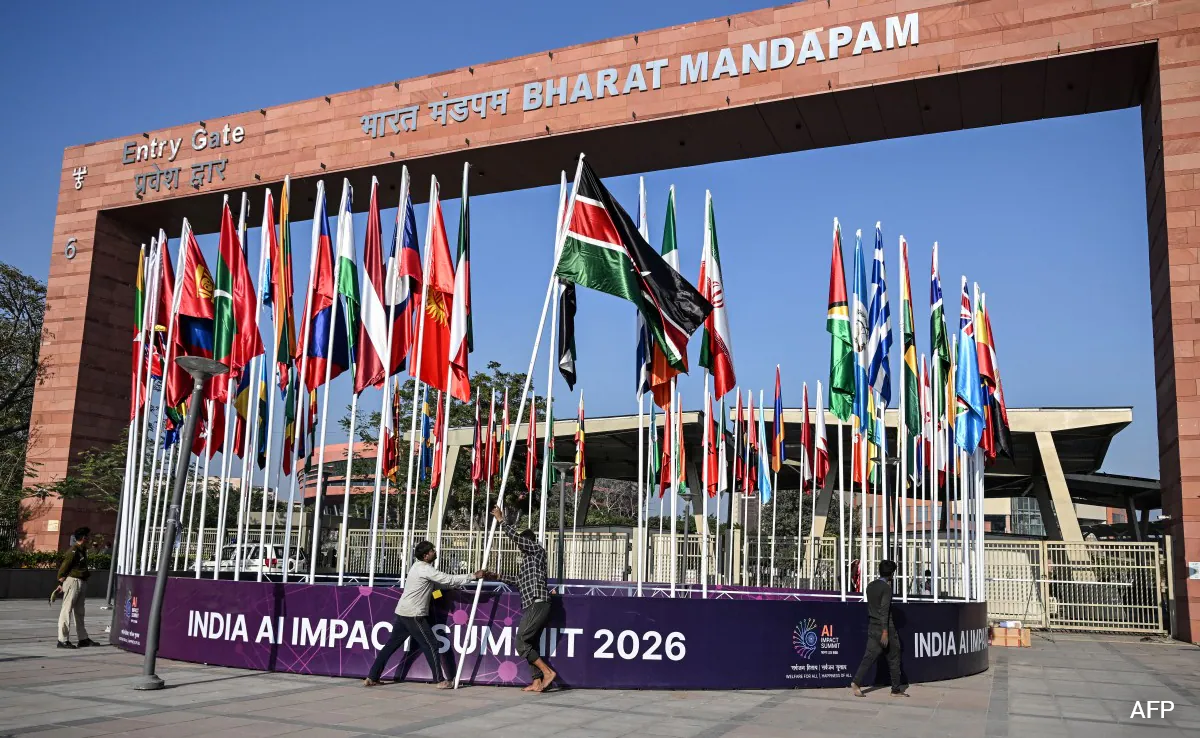
As India wrapped up one of the world's largest and most inclusive discussions on artificial intelligence, Switzerland has confirmed it will host the next major global AI summit in Geneva in 2027. The announcement came during an exclusive interaction with NDTV at the AI Summit in New Delhi, underlining a growing continuity between India's leadership-driven approach to AI and Switzerland's emphasis on regulation, academia and innovation.
Calling the New Delhi summit "extremely significant," Bernard Maissen, Swiss State Secretary and Director General of the Federal Office of Communications, said the gathering marked a turning point in global AI discourse. "This is the first AI summit in the Global South, and that matters," he said, noting that artificial intelligence must benefit everyone, not just technologically advanced economies.
India's AI Summit, which drew participation from nearly 300,000 stakeholders, culminated in the Delhi Declaration, placing strong emphasis on safety, regulation, inclusion and the leadership role of developing nations. Maissen said Switzerland was keen to learn from India's experience, particularly its focus on "AI for all" and on bringing communities together across geographies.
Confirming that the next summit will be held in Geneva in 2027, Maissen said Switzerland sees itself as a bridge between the Global North and the Global South. "We have a strong ecosystem of regulation, universities, research institutions and startups. That gives us the ability to host meaningful global conversations while ensuring balance between innovation and safeguards," he said.
On the question of AI regulation, Maissen acknowledged growing global concern around safety, misinformation and the impact of technology on young users. His remarks came amid debates in Europe following proposals such as banning social media access for children under 15. While the European Union has moved ahead with comprehensive AI legislation, Switzerland has chosen a more cautious path.
"At the moment, Switzerland does not have a specific AI Act, nor do we have laws to ban social media for minors," Maissen said. However, he added that Bern is closely monitoring developments across Europe and globally. Switzerland, he noted, is a signatory to the Council of Europe's AI Convention, which outlines key principles for responsible AI use, and these principles are gradually being integrated into domestic law.
The interview also highlighted the strengthening technology and innovation partnership between India and Switzerland. Maissen pointed to strong bilateral ties, increasing investments and the recently signed trade agreements as indicators of deepening cooperation. "Swiss companies invest heavily in India and vice versa. India is a huge market, and this summit opens new doors for collaboration in AI and digital technologies," he said.
Addressing concerns over disinformation and deepfakes, particularly in the context of global conflicts such as the Russia-Ukraine war, Maissen acknowledged the growing risks. He said Switzerland's approach prioritises media literacy and public awareness rather than outright bans. "It's difficult to regulate disinformation directly. Our focus is on empowering people to distinguish between what is fake and what is real," he said, stressing the importance of a strong, independent media ecosystem.
As India concludes its landmark AI Summit, the baton now passes to Switzerland. With New Delhi setting the tone on inclusion and Global South leadership, and Geneva preparing to host the next chapter, the global AI conversation appears to be moving toward a more balanced, collaborative and people-centric future.
Track Latest News Live on NDTV.com and get news updates from India and around the world

