





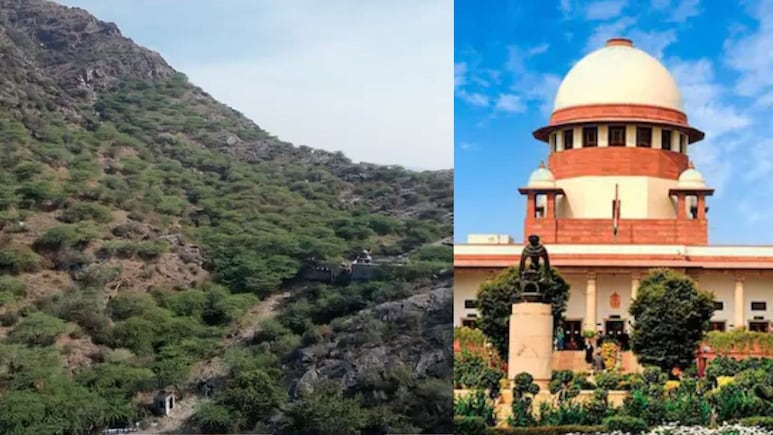
The Supreme Court made it clear Thursday afternoon that all mining in the Aravalli Hills must stop and that status quo must be maintained till it decides otherwise, i.e., till the federal government and environment experts agree on the topographical boundaries of the ecologically sensitive zone, which supports biodiversity, recharges groundwater, and regulates climate across northern India.
"All permission is no permission… we say stop mining in Aravalli and you stop!" Chief Justice Surya Kant said in response to an intervention application regarding pre-existing permissions.
"No one yet knows what all exactly falls under the Aravalli Hills. First, let experts tell us whether mining can be allowed or not. And, if it is to be allowed, then to what extent it can be allowed," he responded to senior advocate Mukul Rohatgi, who appeared for a miner claiming his operation does not fall within the area currently geographically defined as part of the Aravalli Hills.
"If you go by history, then the Supreme Court is also located in the Aravalli Hills… all of Jaipur city is located in the hills (which run for 700km across northwest India)," he remarked wryly.
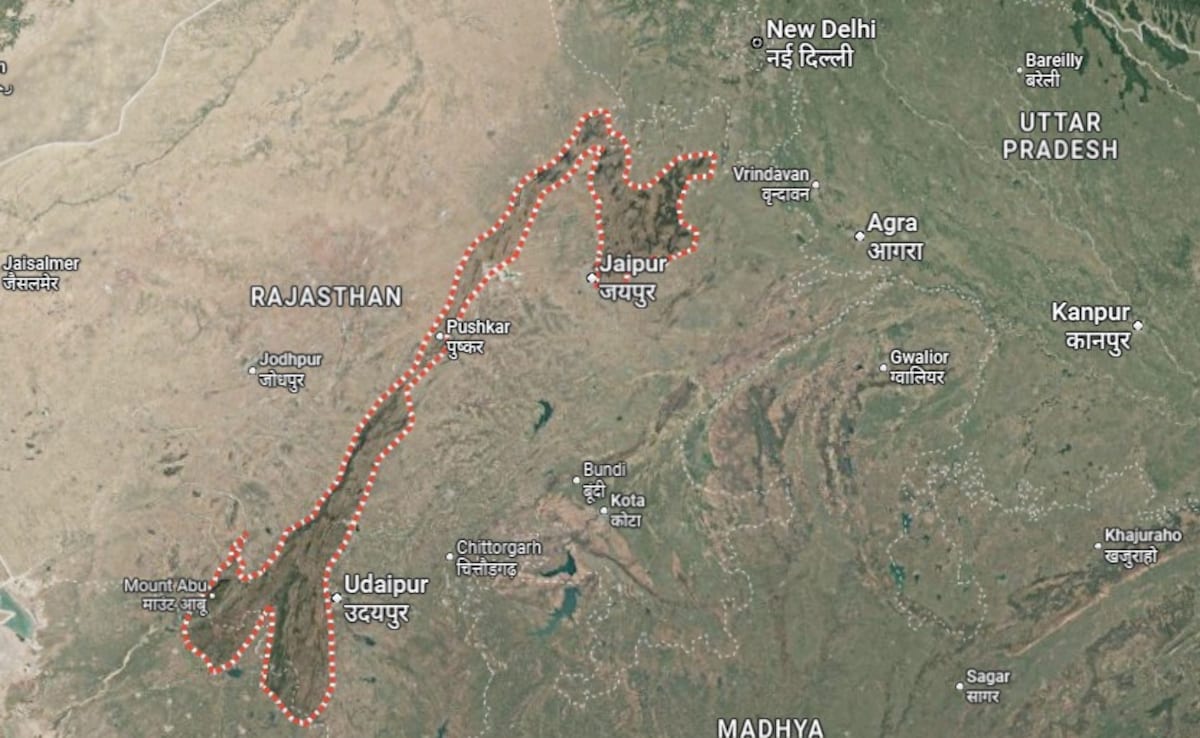
The Aravalli Hills run for nearly 700km through northwest India. Photo: Google Maps
"We are conscious of the fact that all activities and especially mining, for which licenses were granted, has come to a halt. However, such status quo will have to be maintained for the time being… at least till some preliminary issues are answered in phased manner," the court said.
In January the court had taken note of illegal mining activities at places in Rajasthan and directed the BJP-led state government to ensure no unlawful extraction takes place.
RECAP | Supreme Court Extends Stay On Revised Aravalli Hills Definition
Meanwhile, amicus curiae (i.e., Latin for 'friend of the court') K Parameshwar submitted a note on issues likely to arise in the case and the court requested the federal government and senior counsels to suggest experts to be named to a committee that will answer the question.
In December last year the court stayed its own order from a month earlier that accepted a uniform definition of the Aravalli Hills. The court pointed to a need to resolve "critical ambiguities", including whether one of the criteria – a 100-metre elevation and the 500-metre gap between each hill – would strip a large portion of the range of environment protection.
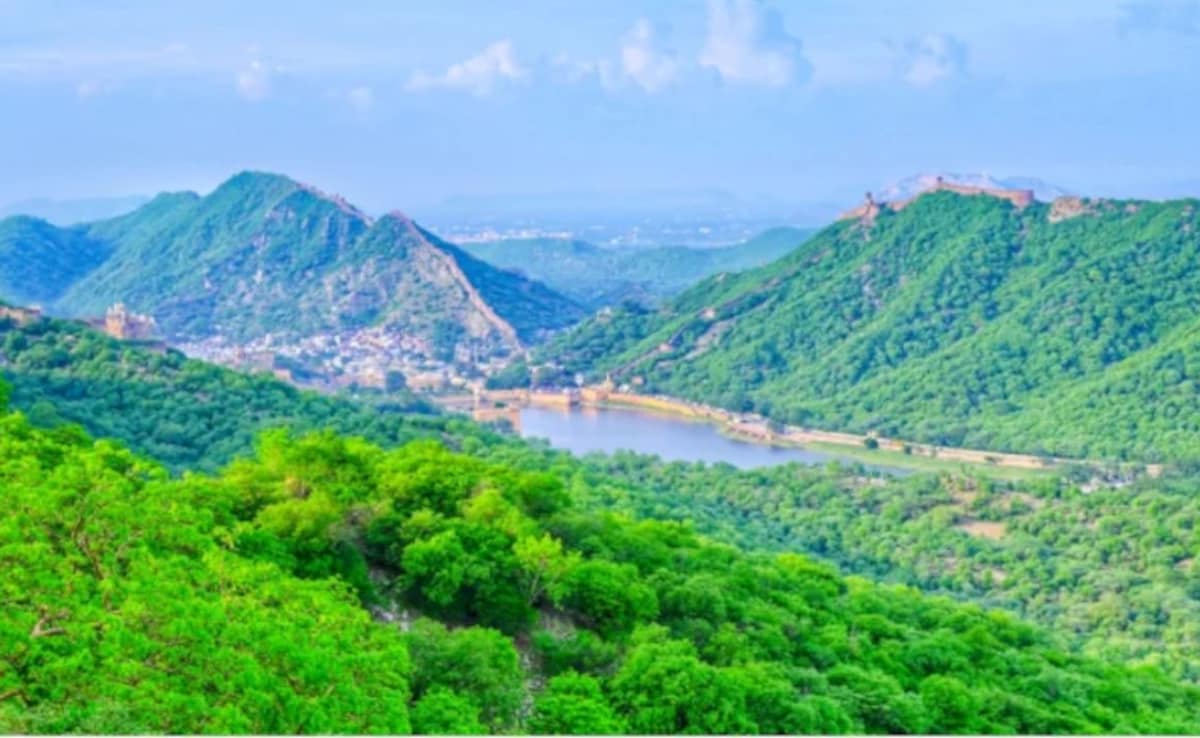
The Aravalli Hills are key to ensuring ecological diversity across northern India.
The Aravalli Hills is at the centre of a legal and political storm after the government narrowed its definition of the range. The changes, the government has argued, resolved inconsistencies in how Rajasthan, Haryana, Gujarat, and Delhi – across which the Aravalli spans – see the range.
NDTV Special | What is The Aravalli Story And Why It Is Important
These inconsistencies, the government said, created confusion over where mining could occur and led to illegal operations, some of which NDTV exposed in a December 6 report.
Amid outcry over this definition, in December the court kept in abeyance its November directions that accepted the government's uniform definition.
Earlier this month the court also refused to entertain any request related to a proposed Aravalli Zoo Safari project in Haryana at this stage. "We will not permit anything today. We are absolutely firm. We will not allow anyone to touch Aravalli as of now," a bench led by the Chief Justice said.
Track Latest News Live on NDTV.com and get news updates from India and around the world

