





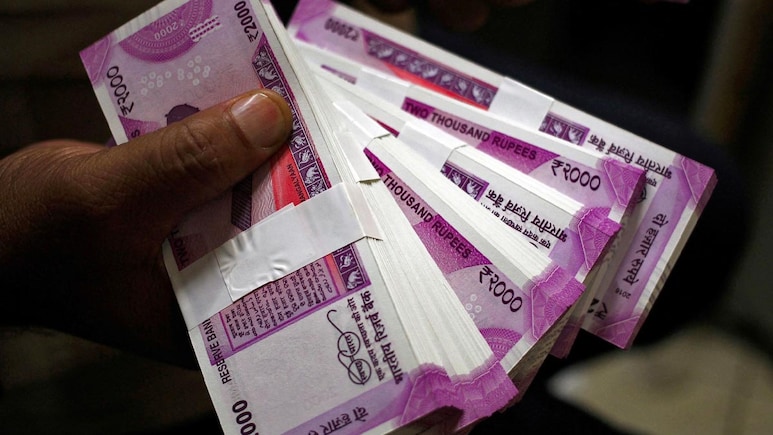
The government has approved a Rs 1,800 crore proposal to increase the production of high-security paper used for printing currency notes, a move aimed at strengthening India's currency infrastructure and reducing import dependence.
The paper will be manufactured at the Security Paper Mill located in Narmadapuram, Madhya Pradesh.
The approval was granted by the Cabinet Committee on Economic Affairs (CCEA) on Wednesday, under the chairmanship of Prime Minister Narendra Modi. The project will involve setting up a new Cylindrical Mould Watermark Banknote (CWBN) line at the printing mill, which will produce 6,000 tonnes of high-quality and durable security paper annually.
This specialised paper is used not only for printing currency notes but also for non-judicial stamp papers and passports. The new CWBN line will replace two of the three old production lines that have been in operation since the 1970s, marking a major step towards modernising the facility.
The Security Paper Mill functions under the Security Printing and Minting Corporation of India Limited (SPMCIL) and currently holds a monopoly in the production of currency paper in the country. With economic growth and the increasing circulation of currency despite the rise in digital payments, the demand for banknotes has continued to grow, making the upgrade necessary.
High-security paper contains features such as watermarks, security threads, and special fibres, which play a crucial role in preventing counterfeiting. Following demonetisation, the demand for currency increased significantly, highlighting the need for enhanced domestic production capacity.
The project is also expected to reduce India's dependence on imported materials, generate employment in Madhya Pradesh, and align with the government's vision of Atmanirbhar Bharat.
Track Latest News Live on NDTV.com and get news updates from India and around the world

