





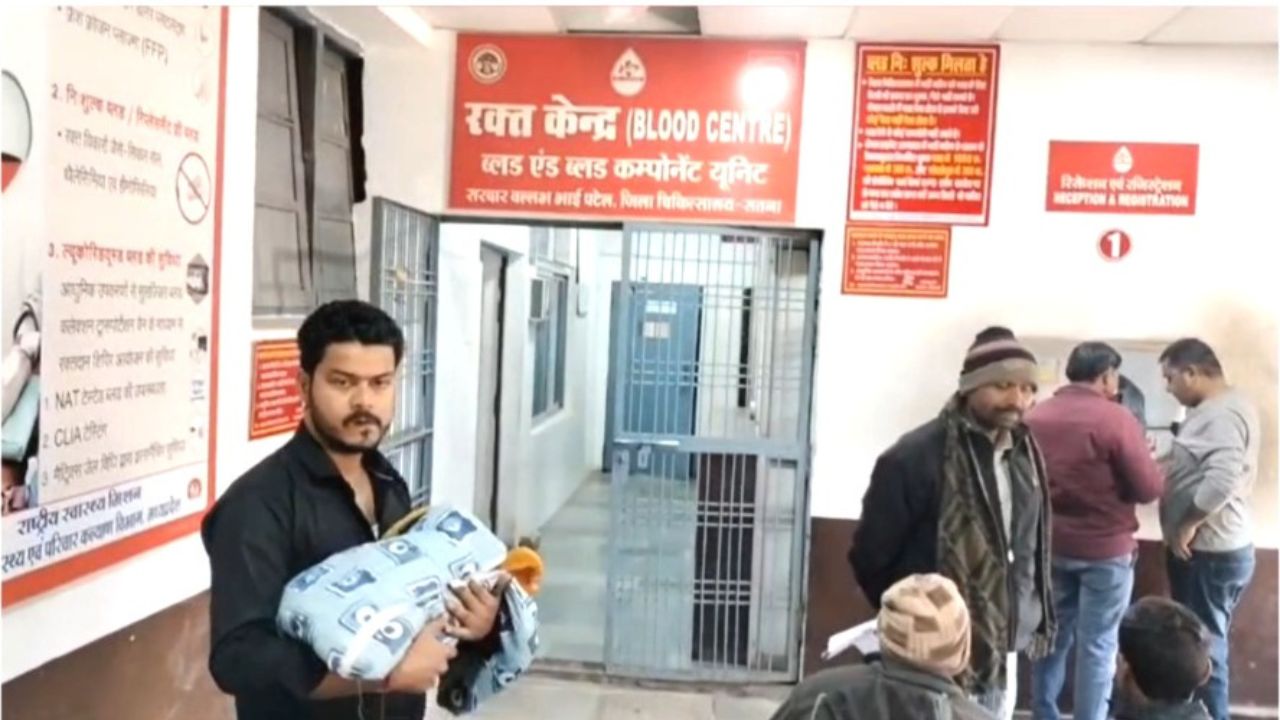
The National Human Rights Commission (NHRC) has taken cognisance of the shocking case in which five children tested HIV positive after allegedly being administered infected blood during transfusions at government health facilities in Madhya Pradesh's Satna district. The NHRC has issued notices to all states and Union Territories, seeking detailed reports and calling for strengthened safeguards to prevent such incidents.
Following nationwide attention and an NDTV investigation into the Satna case, the Madhya Pradesh Department of Public Health and Family Welfare has initiated strict action based on the preliminary findings of a seven-member inquiry committee chaired by Dr Yogesh Bharsat, IAS, CEO of Ayushman Bharat.
As part of the action, the blood bank in-charge and two laboratory technicians posted at Satna District Hospital have been suspended. Those suspended include Dr Devendra Patel, Pathologist and Blood Bank In-charge, and lab technicians Ram Bhai Tripathi and Nandlal Pandey. Additionally, a show-cause notice has been issued to Dr Manoj Shukla, the former Civil Surgeon of Satna District Hospital, directing him to submit a written explanation. Officials have warned that strict departmental action will follow if his response is found unsatisfactory.
The case has exposed what investigators and health experts are calling one of the gravest public health failures in recent years. What began as routine, life-saving transfusions for children suffering from thalassemia turned into a devastating tragedy when they were allegedly administered HIV-infected blood. An NDTV investigation established that the affected children were given a total of 189 units of blood sourced from three blood banks, exposing them to blood from nearly 200 donors. A district-level inquiry has concluded that HIV infection occurred through donor blood, confirming a serious breach in mandatory screening protocols.
The timeline of events has raised troubling questions. The first HIV-positive case among the children reportedly surfaced on March 20, 2025, followed by multiple positive cases through late March and early April. However, NDTV has learnt that for several months, this information was either not escalated or not formally acknowledged by the hospital and district authorities. During this period, no emergency audit of blood banks was initiated, nor were preventive measures taken to stop further exposure.
Concerns have also been raised over the credibility of the investigation itself. NDTV found that the blood bank in-charge, responsible for collection and screening, was initially included as a member of the inquiry committee, a clear conflict of interest that has further eroded public trust in the process.
Families of the affected children are now grappling with irreversible consequences. Speaking to NDTV, the father of one of the infected girls said his daughter, dependent on frequent transfusions since childhood, now requires lifelong antiretroviral treatment. "Where do I complain? What will happen?" he asked, describing severe side effects of medication and repeated illness.
Sources involved in the probe have indicated that while plasma used by the hospital was procured from a contracted agency with multi-layer testing, platelets were processed locally. Investigators are examining whether weaker local oversight of platelet processing could have been the source of infection, exposing a dangerous loophole in the system.
The state government maintains that the lapse was detected internally. Deputy Chief Minister and Health Minister Rajendra Shukla told NDTV that investigations are ongoing and that transfusions often take place across multiple centres. However, opposition leaders have termed the incident as criminal negligence. Congress leader Dr Vikrant Bhuria alleged suppression of information, violation of screening norms, and serious failures in donor traceability, noting that only about half of the donors could be traced.
With over 70,000 HIV patients already in Madhya Pradesh and several districts classified as high-risk, public health experts warn that even a single breach in blood safety protocols can have far-reaching consequences. While multiple inquiry committees have now been constituted at the district, state, and central levels, questions remain over accountability, compensation for affected families, and whether systemic reforms will follow beyond suspensions and notices.
Track Latest News Live on NDTV.com and get news updates from India and around the world

