



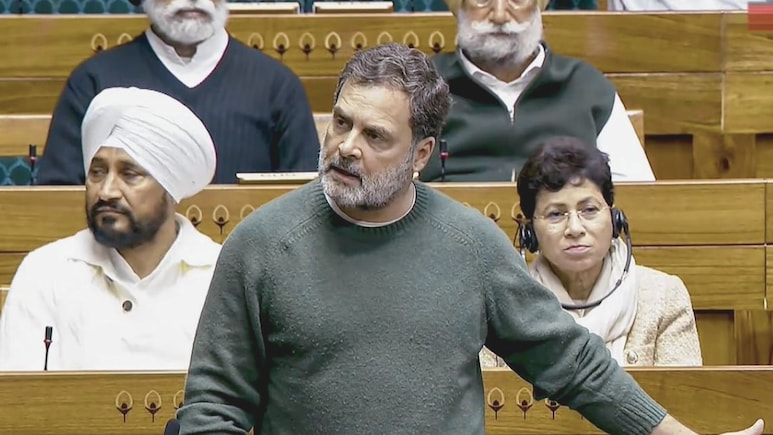
Bharatiya Janta Party (BJP) MP Nishikant Dubey has demanded the expulsion of Congress leader Rahul Gandhi from the Lok Sabha. He has submitted a notice seeking a substantive motion against Gandhi over his remarks on the India-US trade deal.
Dubey has demanded the cancellation of Gandhi's Lok Sabha membership and a lifetime ban from contesting elections. But the big question is: "Can a sitting member actually be removed from the Lok Sabha?"
Here's a step-by-step look at how an MP can be expelled:
Submission of notice
The process starts when a member or party files a formal complaint against a sitting member.
Referral to Ethics Committee
The Lok Sabha Speaker may refer the complaint to the Committee of Privileges, which conducts a detailed probe.
Committee investigation
The committee investigates the matter, can call witnesses, and allow the said MP to present their defence. After reviewing evidence, it submits a report with its findings and recommendations.
Presentation in the House
The committee's report is presented in the Lok Sabha. If the committee finds the member guilty and recommends expulsion, a motion is moved in the Lok Sabha to accept the recommendation.
Motion for Expulsion
The motion must be approved by a majority of MPs present and voting. If a majority of members support the motion, the member is expelled.
Rahul Gandhi's expulsion in 2023
In 2023, a Surat court sentenced Gandhi to two years in prison after he was found guilty in a criminal defamation case over a remark he made about the "Modi surname".
As per Section 8(3) of the Representation of the People Act, 1951, if an MP is convicted in a criminal case and sentenced to two years or more, they are automatically disqualified from Parliament.
However, Gandhi challenged the conviction in the Supreme Court, which later stayed his conviction. As a result, his Lok Sabha membership was restored, and he returned as an MP.
Track Latest News Live on NDTV.com and get news updates from India and around the world

