






At 74, she had long left behind the busy corridors of IIT Bombay, where she once served as a medical officer. Retirement brought with it a secured life with fixed deposits carefully built over decades, recurring savings set aside with discipline, and the comfort of financial security earned the old-fashioned way.
Then the video call came.
On the screen appeared a man claiming to be from the telecom department. He spoke with urgency. Her Aadhaar number, he said, had been misused. Before she could process the accusation, another caller entered the frame, and this time it was a man posing as an IPS officer. His tone was sterner and authoritative. A bank account had allegedly been opened in her name. Transactions worth Rs 6 crore had passed through it. The Central Bureau of Investigation, she was told, had registered a case. Arrest was imminent.
What followed was a carefully choreographed "digital arrest"-a form of cyber fraud in which fear replaces handcuffs and a screen becomes an interrogation room. Isolated and under immense psychological pressure, the retired doctor lost nearly Rs 4.2 crore.

Digital arrests are run by cybercriminal groups that operate similarly to organised crime syndicates.
The phenomenon of "digital arrest scam" grabbed eyeballs, especially in 2024, when news broke that for two days, 82-year-old industrialist SP Oswal lived inside a meticulously staged illusion.
What began as a routine call spiralled into a chilling "digital arrest", with men posing as CBI officials and even the then CJI DY Chandrachud appearing on video to accuse him of grave financial crimes. On his screen flickered what looked like a Supreme Court hearing with emblems, documents, and stern faces invoking the law. Isolated and warned not to speak to anyone, the Vardhman Group chairman complied, transferring nearly Rs 7 crore to what he believed were official accounts.
Digital Arrest: A Psychological Heist
Mimansa Ambastha, a cybersecurity and privacy expert who has dealt with several such cases in Delhi-NCR, told NDTV that a digital arrest is at its essence a psychological heist.
"It's a potent cyber-scam because it manages to exploit the ambiguity and lack of awareness amongst citizens about criminal investigation procedure." She explained while listing three common challenges victims face.
Ambastha, who has appeared as a legal counsel in several such cases, pointed out that in most of the digital arrest cases she has dealt with, there are three common problems that victims face in seeking restitution and justice:
1. Difficult To Trace Mule Accounts Ensure High-Speed Transactions: The moment the victim transfers his money to the scammers' account, the said amount is transferred to offshore accounts using mule accounts.
"First, funds transferred by the victim are moved with great speed by scammers using 'mule' accounts, offshore accounts and cryptocurrency to layer transactions and hamper traceability. By the time a victim realises the 'arrest' was fake, the money has often left the Indian banking jurisdiction, making standard recovery protocols ineffective", Ambashtha explained.
2. Little To No Evidence: The scammers often force victims to delete the interaction on video call if recorded.
"The victim is left with little to no evidence of the actual 'wrongful confinement' to press and prove charges under the BNS (Bharatiya Nyaya Sanhita) without high-quality recordings or logs of the continuous video calls, which scammers often force victims to delete."
3. Organised Crime Operating Through Syndicate: Digital arrests are run by cybercriminal groups that operate similarly to organised crime syndicates.
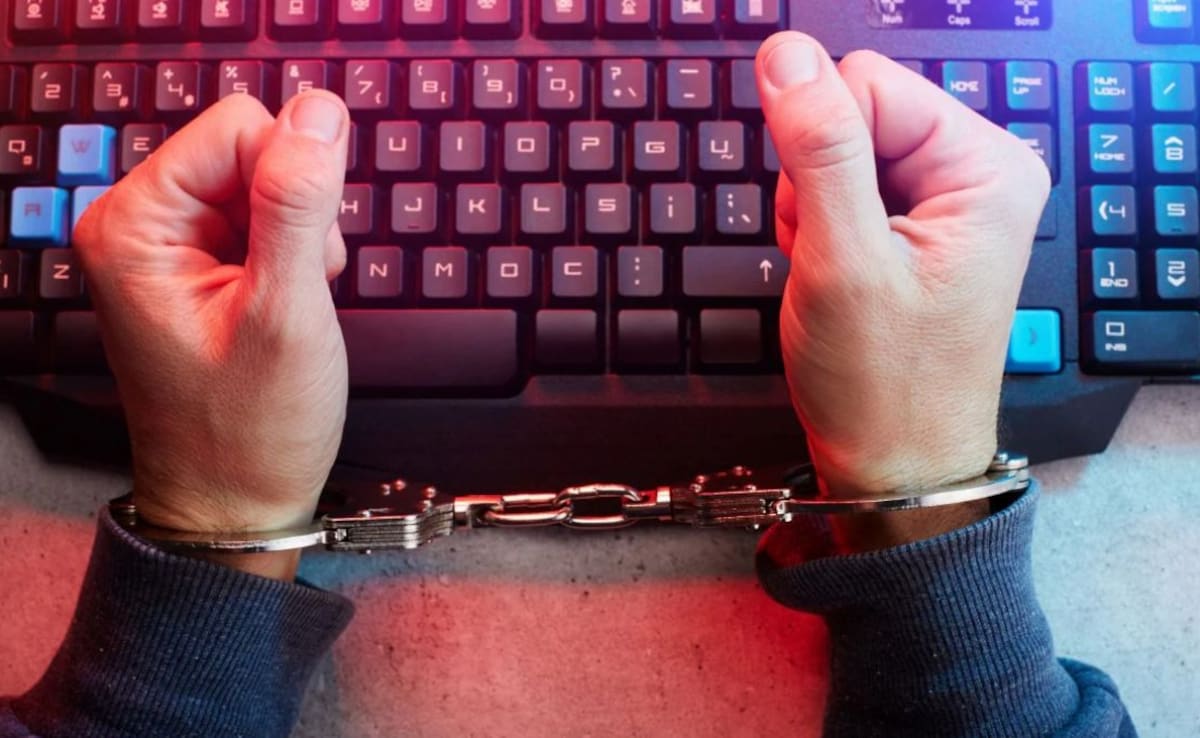
The cases of digital arrest scams have amplified over the years.
"Many of these scam hubs operate from Southeast Asian countries (Cambodia, Myanmar, Laos), where cross-border legal cooperation is slow, leading to a low rate of actual arrests and asset seizures despite high-value losses." She explained.
How Has Supreme Court Intervention Helped So Far?
Despite massive information campaigns by government and telecom companies, the cases of digital arrest scams have amplified over the years. According to central government data, more than Rs 54,000 crore was syphoned off through such frauds between April 2021 and November 2025.
In September 2025, an elderly couple from Ambala found themselves trapped in a chilling "digital arrest" after fraudsters posing as CBI and Enforcement Directorate officials bombarded them with forged Supreme Court orders, fake seals and threats of imminent arrest. Isolated and terrified, the couple transferred over Rs 1 crore.
In November, when this couple's letter reached the Chief Justice of India, the Supreme Court initiated suo motu proceedings, calling the use of fabricated court documents a direct assault on the justice system and seeking coordinated action from the Centre, States, Central Bureau of Investigation, Reserve Bank of India, telecom firms and other authorities to curb the growing menace of such cyber scams.
Subsequently, the court directed CBI to take over all the cases of digital arrest from across the country and even gave a "free hand" to CBI while relaxing several rules for the central agency.
In the latest hearing on Monday, the court sharply questioned banks over their failure to flag suspicious transactions and pressed the RBI for regulatory oversight.
Terming it as absolute "robbery and dacoity", the Chief Justice noted that more than Rs 54,000 crore, which is equivalent to the annual budget of a small Indian state, had been syphoned off through such frauds from April 2021 to November 2025.

Digital arrests are multi-dimensional cyberscams that require systemic reforms.
The Supreme Court has directed the Ministry of Home Affairs (MHA) to formally adopt and implement nationwide the RBI's Standard Operating Procedure (SOP) on cyber frauds and to issue a uniform inter-agency coordination framework to ensure swift freezing and restoration of defrauded funds.
It also ordered the Department of Telecommunications to notify the draft Telecommunication (User Identification) Rules, 2025, within three weeks; instructed the Ministry of Electronics and Information Technology to operationalise a dedicated complaints portal under Section 43 of the IT Act within four weeks; and mandated that a draft Memorandum of Understanding (MoU) be prepared within four weeks to enable structured information-sharing among enforcement agencies, banks, telecom authorities and intermediaries for faster detection of suspicious transactions, freezing of funds, and identification of victims.
What Needs To Change?
Digital arrests are multi-dimensional cyberscams that require systemic reforms. Senior Advocate NS Nappinai, who is assisting the top court in the case, says that there are "systemic regulatory failures" which need to be addressed first. Nappinai said that RBI had either failed to impose penalties on errant banks or had imposed only minimal sanctions, even when banks violated their own guidelines.
She suggested that banks must mandatorily deploy AI-based systems to detect unusual transactions, noting that such tools are inherently capable of flagging anomalous account activity.
Cybersecurity expert Mimansa Ambastha, who is actively engaged in spreading awareness among the common public, said that working on these 5 fronts along with the implementation of top court directions can go a long way:
1. Awareness by Proactive Government Intervention: The primary weapon that this scam deploys is the perceived legitimacy of authority that victims are convinced of when scammers claim to be high-ranking officials of the police, customs, income tax or even magistrate courts.

The role of banks becomes crucial to nip the scam in the bud.
Ambastha emphasised nothing replaces the word of the government reaching the most vulnerable.
"To dispel this fiction, the government can issue formal, binding circulars clarifying that no Indian agency is authorised to conduct custodial interrogations via video call(s). Further, citizens need to be able to authenticate the source of any digital summons or legal notice with ease." She added.
2. Legislative Intervention: With increasing digitisation, it becomes important that our legal interactions and transactions online are streamlined.
Ambastha suggests that "legislation can be enacted to mandate that all legal notices and summons be digitally signed via an e-Sign process and include a unique QR code linked to a centralised, government-hosted authentication ledger - essentially, a 'Source of Truth' or verification mechanism - that citizens can verify instantly to ensure that the source of the summons is genuine or fake."
3. Integration Of AI To Match The Speed Of Scammers: As flagged by the Supreme Court, the role of banks becomes crucial to nip the scam in the bud.
Ambastha points out that banks can harness the power of AI-backed tools and speed to implement algorithmic risk flags for suspicious high-value transfers from accounts of senior citizens (the primary demographic targeted for digital arrest scams).
4. In-Bank Restrictions: On Monday, questioning banks' internal safeguards, the Chief Justice asked, "A pensioner who usually withdraws Rs 15,000-Rs 20,000 suddenly sees withdrawals of Rs 50 lakh, Rs 70 lakh, even Rs 1 crore...Why did your AI-operated banking tools not alert him that this was a suspicious transaction?"
Attorney General R Venkataramani, appearing for the Union government and the RBI, assured the Court that the regulator would address the concerns flagged by the Bench.
Ambastha says that "Banks can also impose restrictions on maximum transfer amounts for newly added beneficiaries. Such 'cooling period' policies and AI-based automated triggers can be supplemented with verbal verification calls from bank officials," she suggested.
5. Cyber Courts: Given the rampant nature of cybercrime, it may also be worth considering the establishment of specialised cyber courts with judges and investigators trained specifically in deepfake detection, voice-clone analysis, and blockchain forensics. This can help accelerate the trial process and the issuance of restitution orders.
Track Latest News Live on NDTV.com and get news updates from India and around the world

