





The biggest promise the Aam Aadmi Party (AAP) made to Punjab in 2022 and later fulfilled is now pushing Punjab towards a dark age, as the power freebies have delivered a double whammy for the debt-ridden Punjab State Power Corporation Limited (PSPCL).
PSPCL data shows how the free 300-unit scheme burdened both the exchequer and the power grid. While the exchequer has been overburdened by Rs 5,500 crore to Rs 7,800 crore every year, the power grid experienced a 20.4% increase in domestic consumption, which jumped from 14,538 MU in 2020-21 to 17,510 MU in 2022-23. The state also registered an additional 16.2% increase in domestic power consumption during 2024-25, totalling 20,348 MU, which represents a 40% overall increase.
The state's power subsidy bill in 2022-23 was Rs 20,000 crore. Of this, the biggest share was for free farm electricity at Rs 9,063.79 crore, Rs 8,225 crore for the 300 free unit scheme and Rs 2,910 crore for subsidised industrial power.
Meanwhile, as the state braces for a possible blackout and power cuts due to shortage of coal, the opposition parties in Punjab have sharpened their attack on the Aam Aadmi Party's 300-unit free electricity scheme, arguing that the poll guarantee has overloaded an exchequer already running a budget deficit of about Rs 24,000 crore.
Read | Analysis: The Challenges That AAP Faces Ahead Of Punjab Assembly Polls
State debt is projected to touch Rs 4.47 lakh crore by March 2027, or roughly 45% of GSDP. Punjab plans to borrow nearly Rs 40,000 crore this year and spend about Rs 42,500 crore on interest and repayment. Officials say the debt-to-GSDP ratio has eased a little since 2022; cash remains tight because power subsidy and old loans still claim a large share of revenue.
Opponents Hit Out At AAP
"The 300-unit free electricity scheme has completely crumbled because the Punjab government is in no position to pay PSPCL the subsidy against this facility. The promise itself is fake. If any consumer uses even one unit above the fixed 300 units a month, they have to pay the entire electricity bill with no relief," Shiromani Akali Dal President Sukhbir Singh Badal said.
State Congress President Amarinder Singh Raja Warring said by providing free power to all domestic consumers, the AAP government was in fact overburdening taxpayers. He said that his party supports free power to the needy but "not at the cost of other consumers".
"AAP was shifting the freebie burden onto the taxpayers through surcharges, stealth taxes and unexpected domestic tariff hikes. Ensuring an uninterrupted power supply means increasing generation capacity. For that, you need new power plants. Which new project has AAP installed in Punjab?" Warring asked.
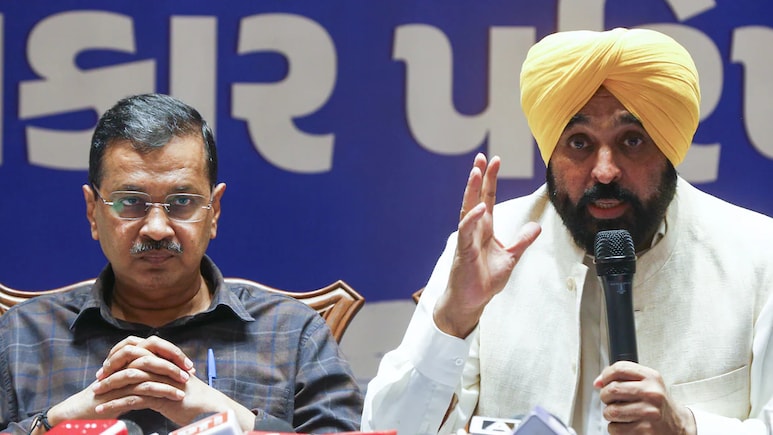
Chief Minister Bhagwant Mann and AAP supremo Arvind Kejriwal have always defended the guarantee. "300 units of free electricity per month are being provided to domestic consumers, and around 90% of households are receiving zero electricity bills. The scheme is given without bias, without discrimination. As long as AAP is in power, people will keep getting free power and 24x7 supply," Bhagwant Mann said.
Read | Charanjit Channi, Raja Warring Share Stage After 3 Months, Handshake Signals Thaw
Punjab Braces For Prolonged Outages
While the exchequer and the power grids were experiencing higher demand for power, the shortage of coal has prompted the state government to announce longer power cuts. The state's current power demand is about 15,900-16,000 MW. Own generation is only 4,200-4,900 MW; the rest, about 10,800-11,500 MW, is drawn from the northern grid. The state government claims it had purchased power to meet the demand, but there was a peak-hour gap of 1,500-2,000 MW, managed through cuts.
Coal-linked losses add about 1,850 MW: 1,193 MW less from central thermal stations and 660-670 MW shortage because the Rajpura power plant is at half load.
A blackout threat looms over Punjab based on the timeline flagged by Power Minister Tarunpreet Singh Sondh. Private thermal plants in the state have only about two days of coal left. If fresh supplies do not arrive in the next day or two, generation at these plants will stop.
Punjab Power Minister Blames Centre
Meanwhile, Punjab Power Minister Tarunpreet Sondh has blamed the Union Government for the power shortage in the state. "Over the past two to three days, I received numerous calls from industrial associations and farmer unions. As I explained in my press conference three days ago, some of the strain came from coal supply cuts by Coal India under the Central Government, along with a shortfall of nearly 1,000 MW from our entitled share in the central power pool. Power was also scarce in the open private market, even though we had kept Rs 2,000 crore reserved to buy electricity if needed," Sondh said while informing that the "state has already stocked sufficient coal from its own Pachhwara mines for the state's thermal units. Even then, unexpected technical faults occurred at the Talwandi Sabo and NPL Rajpura thermal plants."
Sondh, while sharing the previous year's power consumption data, said a delayed monsoon was also responsible for the increased power demand in the state.
"A remarkable trend was observed this September. In previous years, power demand during September typically hovered around 13,100 MW. This year, peak demand surged to 16,600 MW - an unprecedented rise of 3,500 MW in a single month. Whether one attributes it to El Nino or a delayed monsoon, this is a historic and remarkable milestone. Despite that sudden extra load of 3,500 MW, the PSPCL department navigated the challenge and overcame it. That is a major achievement for the Punjab Government," he said.
It is worth mentioning that the state's thermal plants have a combined generation capacity of 5,680 MW. Of this, three government-owned plants account for 2,300 MW, while two private plants can produce 3,380 MW. If the private plants shut down, the state government will be compelled to buy more power from the central pool.
Erratic power supply doesn't only affect domestic consumers. Industrialists have threatened to shut their units and shift business elsewhere. They also say that despite paying higher power tariffs compared to neighbouring states, unscheduled power cuts have hit production hard.
"Unscheduled power cuts range between three and 12 hours. Our night shifts have been hit. We have deferred the night shifts as there is no power. Our raw material gets damaged and labour sits idle," Pranay Kapoor, a Mohali-based industrialist, said.

