





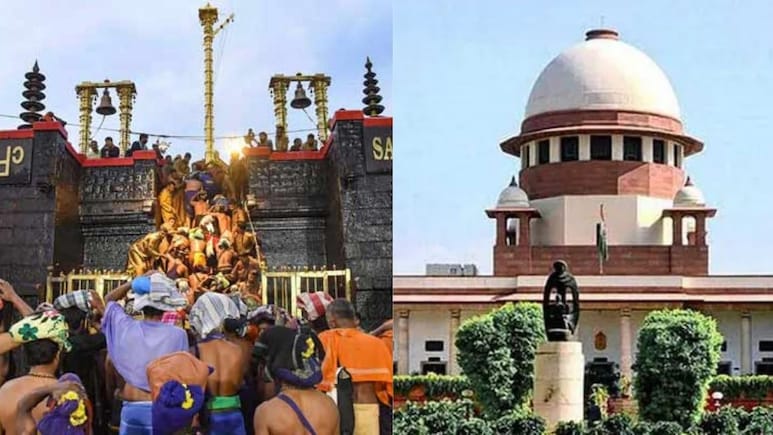
India has historically not only treated women equally but often placed them on a "higher pedestal", and concepts like patriarchy and gender stereotypes are not intrinsic to the country's civilisational ethos, the Centre told the Supreme Court on Tuesday, backing the restriction on the entry of women of menstruating age into Kerala's renowned Sabarimala temple.
The top court is currently hearing review petitions against its landmark 2018 verdict that had lifted the ban that prevented women between the ages of 10 and 50 from entering the Sabarimala Ayyappa temple and held that the centuries-old Hindu religious practice was illegal and unconstitutional.
-

-
 NDTV World Summit Day 2: Navigating A World In Transition
 -
 "US Protecting Its Interest": S Jaishankar On Trump's Oil Deal With Russia
 -
 S Jaishankar's 'Indira' Reminder After Rahul Gandhi's Marco Rubio Jibe
 -
 Best Of NDTV World Summit 2026 | Defining Conversations, Big Ideas
 -
 PM Modi Says 'Parasite' Congress Hurts 'Honest' Dissent Movements
 -
 "World That Relied On India's Brainpower Now Trusts Its Mindpower": PM Modi
 -
 Non-Oil Trade With India Went Up 50% In 3 Years: UAE Minister At NDTV Summit
 -
 "Some Dreaming Of Disorder": PM's "Failed Product Of Congress" Jibe At Rahul Gandhi
 -
 'Viksit Bharat Not Just For Us': PM Modi's Top Quotes At NDTV World Summit
 -
 Has Indian Cuisine Arrived At The Global Stage? What Vir Sanghvi Believes
Solicitor General Tushar Mehta, appearing for the Centre, said that India's traditions reflect deep respect for women, pointing to cultural and religious practices across the country.
"India, my Lords, has always not only treated women equally, but often placed them at a higher pedestal," Mehta submitted.
He added that ideas such as patriarchy and gender stereotyping, frequently cited in recent judicial pronouncements, were "not part of our civilisational ethos" and should not be "imported" into the discourse.
"We are, arguably, the only society which worships women," he said, noting that from the President and Prime Minister to judges of the Supreme Court, all bow before female deities.
Religious Practices Not Gender Discrimination: Centre
The Centre argued that restrictions on entry into places of worship are not necessarily rooted in gender discrimination, but arise from specific religious beliefs and the nature of the deity.
In its written submissions, the Centre said the restriction on women aged 10 to 50 at the temple is linked to the nature of Lord Ayyappa as a "Naishtika Brahmachari" (eternal celibate), and not based on notions of impurity or inferiority.
The Centre further argued that all religious practices cannot be examined solely through the lens of individual dignity or bodily autonomy.
"Every religious denomination's practices have to be respected. Everything is not related to dignity or bodily freedom," Mehta said.
Drawing parallels, the top law officer argued that certain customs such as covering one's head at a gurdwara or shrine are accepted as part of religious observance.
"If I go to a mazar or a gurdwara and have to cover my head, I cannot say my dignity or right or choice is taken away," he told the court.
The Supreme Court is expected to conclude hearings in the matter by April 22. At present, it is hearing arguments from those opposing the entry of women of menstruating age into the temple.
Track Latest News Live on NDTV.com and get news updates from India and around the world

