





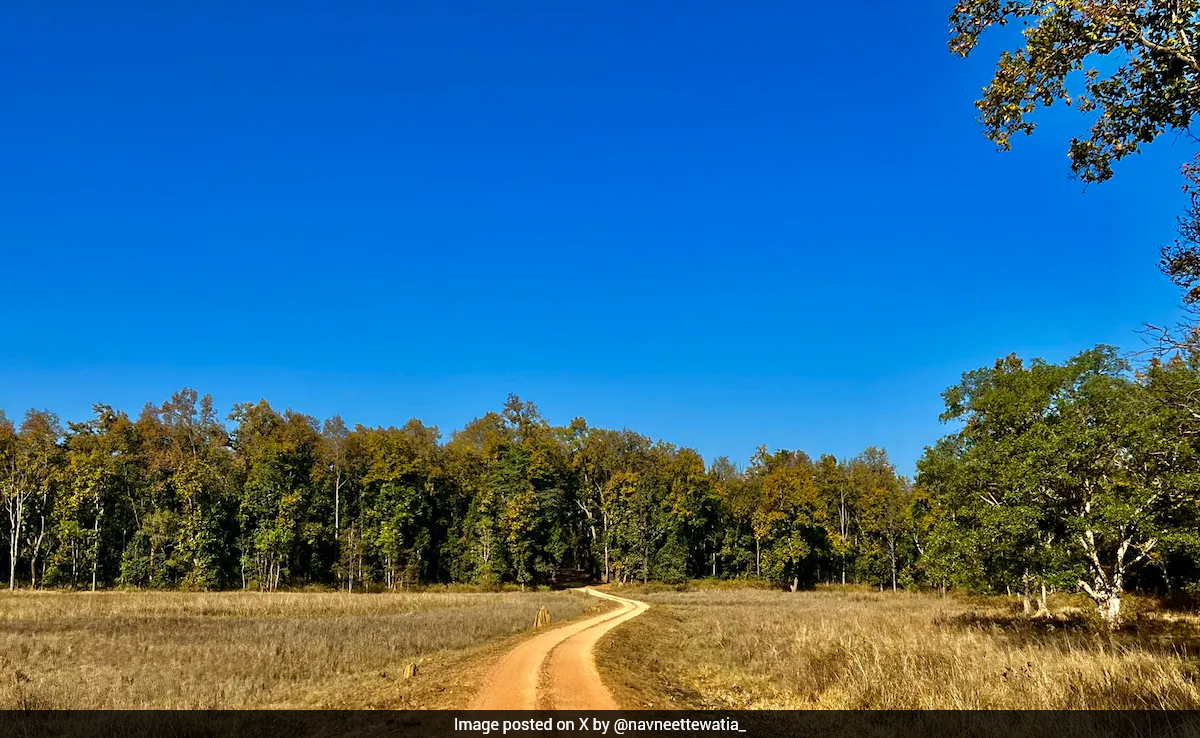
A forest route once whispered about as a safe passage for armed Maoist cadres in eastern Madhya Pradesh is now being recast as a gateway for wildlife revival. The Supkhar range of Kanha Tiger Reserve (KTR), earlier linked by security sources to the Maoists' KB division and its "expansion" plans towards Mandla, Dindori, Umaria and Anuppur up to the Amarkantak plateau, is preparing to receive the first batch of wild buffaloes, a species considered "extinct" in the state for over 100 years.
Forest officials say the first batch of 10 wild buffaloes from Assam could arrive by February-March 2026, marking the opening chapter of what is being projected as one of the most ambitious reintroduction exercises in the "Tiger State".
Security sources claim Supkhar's dense, non-tourist stretches were previously used as a movement corridor by the KB division, which at its peak allegedly had up to 60 armed cadres, split into three platoons: Khatiya Mocha, Bhoramdev and Borla. But with the elimination and surrender of CPI (Maoist) MMC zone cadres active in Madhya Pradesh in the first week of December 2025, officials say the ground situation now allows major forest department projects to move forward with greater confidence.
Wildlife Exchange Plan - Buffaloes In, Tigers Out
The planned translocation is part of a broader wildlife exchange programme between Assam and Madhya Pradesh. During a recently held meeting between the two Chief Ministers, Himanta Biswa Sarma and Dr Mohan Yadav, it was mutually agreed that 50 wild buffaloes will be brought from Assam to Madhya Pradesh, while a pair of rhinoceros and three cobras too will be brought to Madhya Pradesh. Assam will get a tiger pair and six crocodiles from Madhya Pradesh. Officials said the rhino pair and cobras will be housed at Van Vihar National Park, Bhopal, while Kanha will be the release site for the wild buffaloes.
Providing details of the plan, Puneet Goyal, DFO, said the department is designing the movement and settling protocol to maximise survival and future breeding.
"Every species has its own role in the ecology, and with this objective, the habitat here is being maintained," Goyal said, adding, "We will bring 50 animals in five years, 10 per year, by road... We will create an enclosure of 150 hectares, and the area can be expanded further. Transportation will take 2-3 days. We will have to coordinate with Assam and the states in between... We will bring animals of an age that can breed quickly... We will breed them and then release them. The conditions are suitable for wild buffaloes."
Goyal also said that the project has moved into an advanced stage of clearances. "Wild buffaloes were previously found in Madhya Pradesh but became extinct over time. Now the NTCA has approved it... A complete scientific study has been conducted in this regard," he said.
Forest officials indicated that the process of approvals from the Central Zoo Authority and the central government is almost complete, after which the reintroduction will proceed in a phased manner.
Officials said a scientific assessment by the Wildlife Institute of India (WII) identified Kanha Tiger Reserve as the most suitable site for the reintroduction based on the quality of grasslands, availability of water sources and minimal human intervention. The idea is to establish a stable, breeding population over time, starting with secured enclosures, monitored acclimatisation, and gradual release.
Conservation experts note that reintroducing wild buffalo isn't just a symbolic return of a "lost" species; it can reshape the grassland-wetland ecosystem. Wild buffaloes are seen as crucial for grassland and wetland health. Their grazing regenerates vegetation, curbs shrub and tree encroachment, supports nutrient cycling, and improves habitat conditions for other herbivores, especially deer species. They also strengthen the food chain by serving as potential prey for apex predators like tigers, supporting ecological balance.
For Kanha's Supkhar range, the contrast is stark from a forest belt once spoken of in the language of insurgency routes and platoons, to a landscape now being mapped for enclosures, breeding-age selection, and conservation logistics. If the February-March 2026 timeline holds, the first convoy of wild buffaloes will not just cross state borders, it will cross a century of absence, turning an old corridor of conflict into a new corridor of recovery.
Track Latest News Live on NDTV.com and get news updates from India and around the world

