





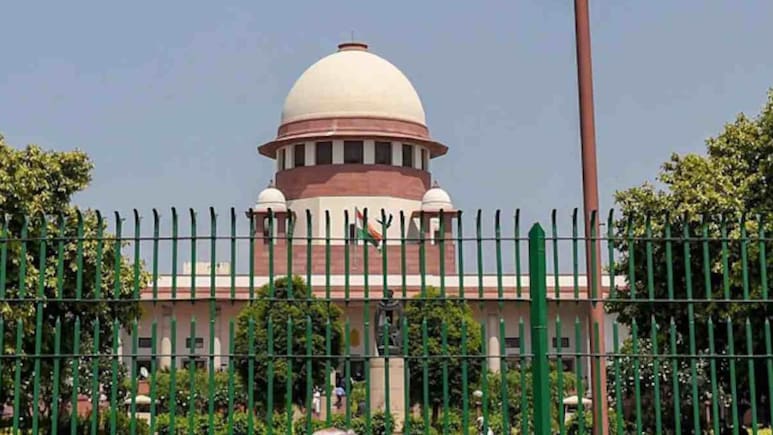
- Chief Justice Surya Kant raised concerns over delays in judgment delivery by some high court judges
- Chief Justice noted judges either work hard or delay judgments, calling it a systemic flaw
- The Supreme Court will discuss solutions and guidelines in the next hearing
Chief Justice of India Surya Kant has expressed concerns over what he pointed out was the tendency of some high court judges who, after reserving a case, don't deliver judgment for a long period of time.
A Supreme Court bench of Chief Justice Kant and Justices Joymalya Bagchi and Vipul M Pancholi was hearing a petition that said the Jharkhand High Court orally pronounced a judgment while dismissing a petition in December last year, but had not uploaded the verdict online yet.
Taking note of the matter, Chief Justice Kant made a point about "two types of judges".
"One type is extremely hardworking, hears many cases, reserves them for judgment, and writes judgments according to their writing abilities. Unfortunately, there are also some judges who don't deliver judgments at all. This is what gives rise to the problem," Chief Justice Kant said.
He said he would raise this issue at the conference of high court chief justices scheduled on February 7-8. "This is already on our agenda and will be discussed in detail," he added.
Four convicts filed the petition alleging they have been suffering due to the high court not delivering judgment for over three years.
While the high court eventually delivered the judgment after the Supreme Court's intervention, the Supreme Court expanded the scope of the matter to all high courts, and sought reports from them on reserved judgments that are pending final verdicts.
Amicus curiae (friend of the court) Fauzia Shakil on Tuesday gave the Supreme Court the reports received from the high courts.
Senior lawyer Mukul Rohatgi, who appeared in a related matter, said a high court judge delivered a judgment orally on December 4, but it has not yet been uploaded on the website.
"This is against the dignity of the court. What answer should we give to our clients? This kind of situation harms the institution's reputation," Rohatgi said.
This led to the Chief Justice making the observation about "two types of judges". He clarified it was not a comment on any individual, but was an identifiable flaw in the justice delivery system that needs to be addressed.
When Rohatgi sought a direction to set a time limit for delivering judgments, Justice Bagchi said guidelines on this matter already exist in several previous judgments.
The Chief Justice then pointed out another worrying trend: instead of reserving judgment after hearings are completed, some judges keep listing cases in the main cause list and repeatedly adjourn it.
The Chief Justice told lawyers to suggest solutions for this.
Chief Justice Kanta also clarified that "special emergencies" could include cases like demolitions and bail matters, but even in such cases, the full judgment should be made available within two months.
The Supreme Court will hear this matter next on February 16.
Track Latest News Live on NDTV.com and get news updates from India and around the world

