



- India's data centre industry is expanding rapidly due to growing AI and digital demands
- Nirmala Sitharaman announces tax holiday till 2047 for foreign cloud service providers in India
- Yotta Data Services builds massive campuses requiring up to 2,000 MW, akin to city power needs
India's data centre industry is on the cusp of exponential expansion as the country embraces artificial intelligence at population scale. From smartphones and digital payments to real-time language translation and large AI models, India's data appetite is growing faster than almost anywhere else in the world. But this digital surge comes with a formidable challenge: power.
As data centres multiply and AI workloads intensify, electricity demand will soar, forcing the industry to look beyond conventional energy sources toward green power and, eventually, nuclear energy as the only viable long-term solutions.
Finance Minister Nirmala Sitharaman in her Union Budget 2026 speech made major announcements for data centres saying, "recognising the need to enable critical infrastructure and boost investment in data centres, I propose to provide a tax holiday till 2047 to any foreign company that provides cloud services to customers globally by using data centre services from India. It will, however, need to provide services to Indian customers through an Indian reseller entity. I also propose to provide a safe harbour of 15 per cent on cost in case the company providing data centre services from India is a related entity."
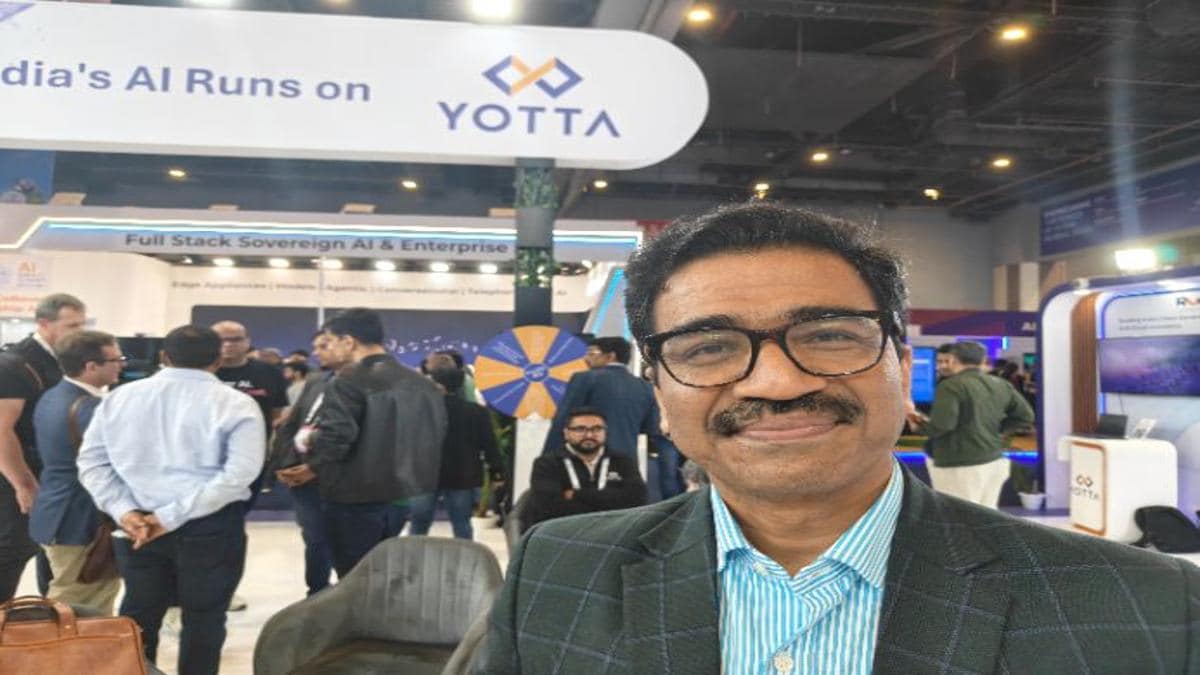
At the recently concluded AI Summit, Sunil Gupta, CEO of Yotta Data Services, one of India's largest data centre operators, speaking to NDTV laid out a vision in which data centres become strategic national infrastructure, on par with highways, ports, and power plants, essential for India's digital sovereignty and AI ambitions. Incidentally in the metric system of numbering "Yotta" is the largest decimal unit prefix which is also called the International System of Units (SI), and Yotta represents a factor of one septillion, or a trillion-trillion, which would mean 10 raised to the power of 24. So one can imagine how Yotta is a futuristic company catering to the country with the largest population in the world.
Scale Of India's Data Explosion
India's digital adoption has few parallels globally. Nearly one billion Indians now carry smartphones connected to the internet, creating and consuming data every minute. According to Gupta, India's per capita data consumption is about 32 gigabytes per month per user, almost double the global average. "The per capita consumption of data of India is almost twice the per capita consumption of data of anywhere else in the world," he said.
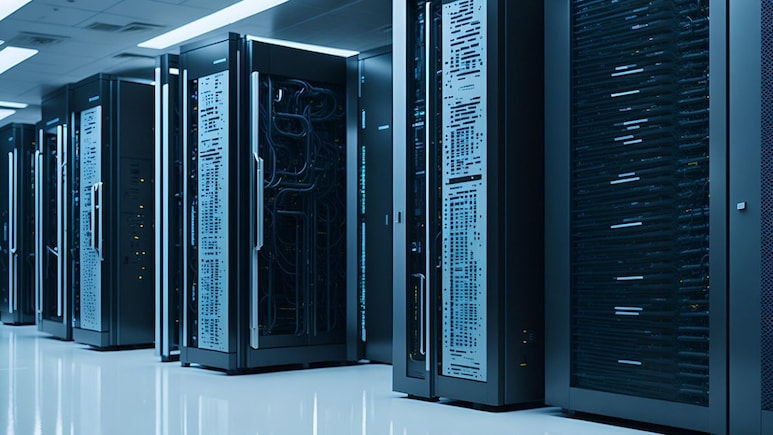
This relentless flow of data does not exist in the abstract cloud. "The cloud is not there in the sky," Gupta said. "It is on the ground. It is a physical building which we call a data centre." These facilities house vast arrays of servers, storage systems, central processing units or CPUs and graphics processing units or GPUs, all running continuously, all consuming enormous amounts of electricity and generating intense heat.
As AI becomes mainstream, powering chat bots, translation platforms, analytics, healthcare, finance and governance, the computational intensity increases dramatically. Traditional cloud workloads pale in comparison to the energy demands of AI training and inference. The result is a looming surge in demand for data centre capacity across India.
Mega Campuses And City-Scale Power Demand
To meet this demand, Yotta has opted for scale rather than fragmentation. Instead of scattering small facilities across dozens of cities, the company has built massive data centre campuses capable of housing multiple buildings and supporting enormous power loads.
One such campus near Navi Mumbai spans nearly 100 acres and is designed for up to 2,000 megawatts of power capacity. "Data centre capacity nowadays in the industry is measured in terms of how much power you can give to that building," Gupta said. "These equipment are electricity guzzlers."
To put the figure in perspective, 2,000 megawatts is roughly the electricity required to power a large city. Delhi, for example, peaks at around 6,000 megawatts. Yotta's campus alone would consume about one-third of that. The company also operates a 250-megawatt campus in Greater Noida, along with boutique data centres in locations such as GIFT City in Gujarat. Recently, Prime Minister Narendra Modi opened a satellite centre in Guwahati to cater to the data needs of the northeast region.
This concentration of power demand highlights why data centres are increasingly viewed as critical infrastructure, and why energy strategy is now inseparable from digital strategy.

AI, Sovereign Cloud And National Security
Beyond physical infrastructure, Yotta has moved up the value chain into cloud services, with a sharp focus on sovereignty. Gupta argues that data localisation alone is insufficient in a geopolitically volatile world.
"People talk about data localisation. But the point is, do you have complete control on the machinery, on the computing infrastructure in which your data is stored and processed?" he asked.
Seven years ago, Yotta set out to build an end-to-end sovereign cloud using open-source technologies and in-house engineering teams. Today, critical government workloads run on Yotta-operated infrastructure, including data centres belonging to the National Informatics Centre (NIC) and the Software Technology Parks of India (STPI), operated under a public-private partnership model.
This sovereign approach gained fresh relevance amid global incidents where companies or countries found digital services switched off due to geopolitical developments. "Countries should never get into a position where a single external country or a single external company can start dictating your digital future," Gupta said.
Bhashini: AI At National Scale
Perhaps the most striking example of India's AI-driven data centre demand is Bhashini, the government-owned real-time language translation platform. Used during major national events, including when the PM Modi addresses audiences in one language and is heard simultaneously in many others, Bhashini is a mission-critical AI system.
Initially, the platform faced performance and cost challenges and relied heavily on foreign hyper-scalers. Under the mandate of the India AI Mission, Yotta provided GPUs and re-architected the entire stack to run on sovereign infrastructure.
"The complete capability of Bhashini today is running on Yotta," Gupta said. The results were dramatic: performance improved 40 times, costs dropped 25 to 30 times, and monthly queries jumped from about one million to over 25 million.
The system was stress-tested at the Mahakumbh, the world's largest human gathering, where millions of real-time queries were handled simultaneously. "That was the biggest validation that if we can support that type of workload, Indian infrastructure can deliver," Gupta said.
Power Problem And Green Transition
As data centres proliferate, power consumption is becoming the industry's defining challenge. Data centres already consume power on a scale comparable to the global airline industry, Gupta noted, and with AI, that share is expected to rise sharply.
The challenge has two dimensions: reducing the amount of power consumed per unit of computation, and ensuring that the power used is clean.
On efficiency, chipmakers and software developers play a crucial role. Newer GPUs deliver more performance per watt, while better code and models reduce unnecessary computation. On the infrastructure side, data centres are moving away from traditional air cooling toward liquid and direct-to-chip cooling. "Water is the best conductor," Gupta said. "It extracts the heat right then and there, and that's how you save energy."
On the energy mix, India has an advantage. Nearly 45 per cent of India's installed power generation capacity is already green, and the government plans to expand it further. Yotta has gone a step ahead: about 80 per cent of the power used at its Mumbai campus is green, and 100 per cent of the power at its Noida campus is green, sourced from solar, wind, hydro and gas.
Intermittency remains an issue, solar and wind are not available round the clock, but solutions such as grid banking, storage, and hydro power contracts help provide 24x7 reliability. "I was lucky to contract with some hydro power plants in Himachal," Gupta said, noting that hydro provides a stable green base load.
Nuclear Energy: The Long-Term Answer
Despite progress in renewables, Gupta believes the ultimate solution for large-scale data centres lies in nuclear energy, particularly small modular reactors (SMRs). "The best solution for power in data centres would be nuclear plants," he said. "You are able to generate huge amounts of green power, you are not damaging the environment, and you are not damaging the grid."
Nuclear power plants could be located near data centre campuses, supplying dedicated, off-grid, low-carbon power around the clock. While the small modular reactors are still several years away from commercial deployment in India, recent legislative moves to open nuclear energy to greater private participation could accelerate adoption.
For an industry where power demand is concentrated and continuous, nuclear energy offers something renewables struggle to provide: predictable, high-density, 24x7 electricity without carbon emissions.
Looking Ahead: AI, Energy And Sovereignty
The trajectory is clear. India's data centre industry is set to expand exponentially, driven by AI adoption across government, business and society. This expansion will dramatically increase power demand, forcing hard choices about energy sources, efficiency and sustainability.
Gupta is optimistic that India can meet the challenge. "India needs its own data centres, its own chips, its own servers, its own sovereign clouds, its own data sets and its own models," he said.
With coordinated effort from industry and government, he believes India can not only meet domestic AI needs but also emerge as a global exporter of AI services. At the heart of this vision lies a simple truth: in the AI age, compute is power, and power is destiny. How India generates and manages that power, cleanly, securely and at scale, will shape its digital future for decades to come.
Track Latest News Live on NDTV.com and get news updates from India and around the world

