





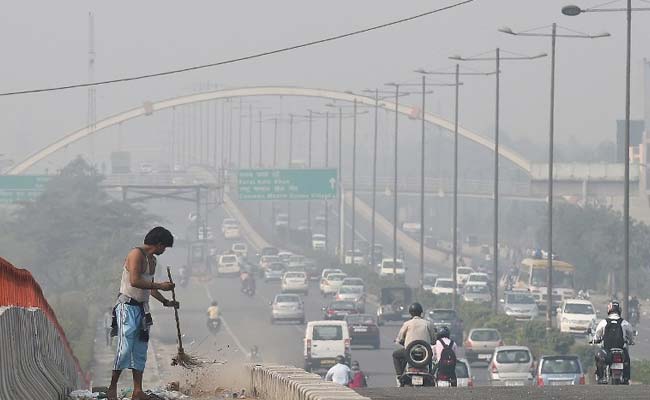
The Delhi government on Thursday rolled out its "toughest-ever" anti-pollution drive in the capital -- deploying mist spray technology, tightening enforcement, and warning officials of strict action.
The action comes after a high-level committee attended by Lieutenant Governor VK Saxena and the Chief Minister to counter pollution.
Chief Minister Rekha Gupta said work is underway to install 305 mist sprayers at nine pollution hotspots in the city.
Senior officials from the Delhi Development Authority (DDA), Municipal Corporation of Delhi (MCD), Delhi Pollution Control Committee (DPCC), and other departments were pulled up as the Lieutenant Governor and the Chief Minister demanded coordinated, on-ground action with zero tolerance for negligence.
Agencies were told to immediately intensify dust suppression, clear waste piles, and stop illegal dumping -- long-standing trouble spots that routinely worsen winter pollution.
The DDA has been ordered to clear vacant plots of debris and prevent repeat dumping, while MCD must conduct an "intensive, citywide cleanliness and anti-dust drive" across zones. Road-cleaning mechanisms, often criticised for patchy performance and limited coverage, were also flagged in the meeting.

Gupta further directed that District Magistrates must personally oversee all pollution-control measures and may enter adverse remarks in the Annual Confidential Reports (ACR) of any officer found negligent. A new high-level review committee, chaired by the Chief Secretary, will conduct daily inspections and issue binding directives to all agencies.
The Chief Minister warned that even government departments will be issued fines for breaching pollution norms, and First Information Reports (FIR) will be registered against those responsible for unauthorised road digging or failure to properly restore excavated stretches.
Earlier in the day, Gupta inspected mist sprayers installed at ITO.
Mist sprayers are an effective solution against pollution, Gupta said, adding that trials in some of the areas under the jurisdiction of the New Delhi Municipal Council (NDMC) areas have shown positive results.
Mist spray technology is specifically designed to control dust and airborne pollutants. The system is mounted on electricity poles and equipped with high-pressure pumps and nozzles that turn treated water into mist that traps suspended pollutant particles, said a statement issued by the Chief Minister's office.
However, past winter seasons have shown that such spot interventions often lose momentum without sustained oversight.
To widen public participation, the government has urged residents to use the revamped MCD-311 app to flag dust, potholes, waste dumping, and other issues. Departments have been told to resolve citizen complaints within 72 hours, a deadline that, if implemented, could significantly improve ground conditions but has historically seen mixed results.
Reiterating that "no agency, government or private, will be spared," Gupta said the focus is now on long-term solutions, not temporary fixes.
As Delhi enters another harsh pollution season, much will depend on whether the city's latest high-powered push can translate into measurable, visible change and not become yet another wintertime crackdown that fades with the season.
Track Latest News Live on NDTV.com and get news updates from India and around the world

