





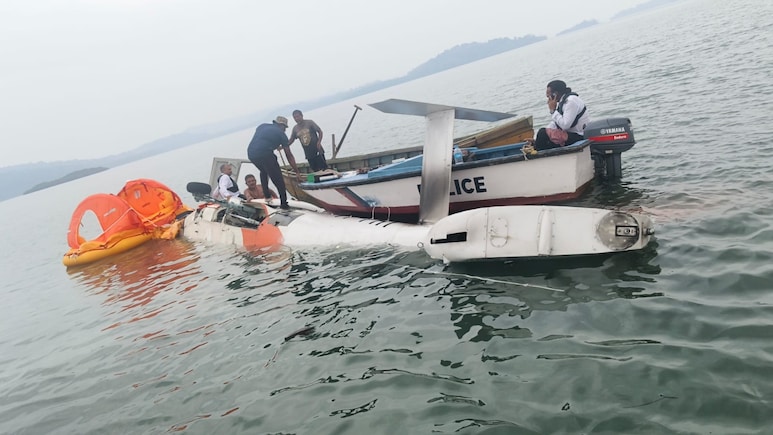
- The helicopter crashed near Mayabunder in the Andaman and Nicobar Islands in February, killing a passenger
- Investigators have found no evidence of any technical malfunction prior to the flight
- The Aircraft Accident Investigation Bureau has recommended the aviation regulator strengthen oversight
A failure to arm emergency floats and gaps in weather briefings have been identified as the major lapses in the Pawan Hans helicopter crash near Mayabunder in the Andaman and Nicobar Islands on February 24, according to a preliminary report. One person was killed in the accident.
The Aircraft Accident Investigation Bureau (AAIB), in its initial findings, said the helicopter crash-landed into the sea during approach, and the situation was exacerbated because the flotation system did not activate. The report underlined that its findings are "preliminary and subject to change" and are aimed at preventing future accidents.
At the centre of the investigation is a crucial procedural lapse. The report states that "the floats were not armed in the cockpit during the approach although the same is required by the Standard Operating Procedure (SOP)". Investigators confirmed this during wreckage examination, noting that the "float switch was found to be in the off position".
As a result, when the helicopter hit the water, the floats failed to deploy and the aircraft toppled onto its right in shallow waters, about four to five feet deep, significantly impacting survivability conditions.
There were seven people on board, including two crew members and five passengers. All of them were rescued after the crash, but one passenger died on the third day due to injuries. Two others, including an infant, sustained serious injuries and were treated.
Weather Briefing Incomplete
The probe has also raised concerns about missing weather inputs. According to the report, the official briefing sheet "did not contain any details of weather for Rangat and Mayabunder helipad" on the day of the crash.
This gap becomes significant given the conditions encountered during the flight, suggesting that the crew may not have had access to complete or recorded weather information before take-off.
While flying towards Mayabunder, the crew "encountered haze and reduced visibility" during the climb and subsequently chose to follow the coastline to continue towards the destination.
Such a decision is typically taken in low-visibility situations.
Crash During Final Approach
The accident occurred during the final approach phase, one of the most sensitive stages of flight. The co-pilot was handling the controls at the time. After turning on finals (the phase of flight where the aircraft aligns with the runway or landing spot for the final approach), the helicopter experienced a "high rate of descent and crash-landed into the sea" around 9.45 am, approximately 1.6 km from the Mayabunder helipad.
The helicopter departed Sri Vijaya Puram, the capital of the Andaman and Nicobar Islands, around 8.40 am and climbed to 3,500 feet before landing uneventfully at Rangat. After a brief stop, it took off again for Mayabunder around 9.10 am. During this leg, the crew encountered haze and reduced visibility. The final approach began around 9:40 am and the helicopter crashed into the sea within minutes.
Aircraft Was Airworthy
Investigators have found no evidence of any technical malfunction prior to the flight. The report notes that "there was no defect pending for rectification on the aircraft before operating the flight", and all airworthiness and maintenance certifications were valid. The helicopter had undergone a routine inspection just two days before the accident.
The report does highlight lapses in passenger safety compliance. While the crew were wearing full safety harnesses, passengers were secured only with lap belts and not shoulder straps, which are part of recommended safety measures.
Based on these findings, the AAIB has recommended that the Directorate General of Civil Aviation (DGCA) strengthen oversight. This includes ensuring strict adherence to passenger restraint usage and reinforcing compliance with procedures such as arming floats during water operations.
Track Latest News Live on NDTV.com and get news updates from India and around the world

