



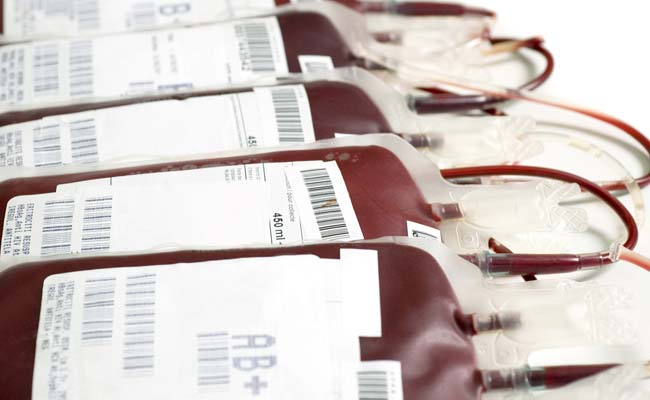
Four children, suffering from thalassemia, have tested HIV positive after receiving blood transfusions at the District Hospital blood bank in Madhya Pradesh's Satna. The incident reportedly took place around four months ago but came to light recently, triggering panic among families and raising serious questions over blood safety protocols.
Children suffering from thalassemia require regular and life-long blood transfusions to survive. The affected children received blood transfusions on multiple occasions as part of routine treatment. However, during subsequent medical check-ups, all four children were found to be HIV positive. The families have alleged that the infection was transmitted through contaminated blood supplied by the blood bank.
Testing blood for HIV, Hepatitis B, Hepatitis C, and other infections before transfusion is mandatory under national guidelines. It is being suspected that either the blood units were not properly screened or the testing kits used at the time were not sensitive enough to detect early stage infections.
Sources revealed that blood for these children was sourced not only from Satna District Hospital but also from other hospitals in Rewa and other locations across the state, complicating efforts to pinpoint the exact source of infection.
As per protocol, donor tracing was initiated immediately after the HIV cases were detected. But the process to trace donors has been hindered by incorrect mobile numbers, incomplete addresses, and outdated records. So far, only about 50 percent of the donors have been identified and contacted. None of them have yet been conclusively linked to the infection.
Taking serious cognisance of the matter, Satna Collector Dr Satish Kumar S has sought a detailed report from the Chief Medical and Health Officer (CMHO). Instructions have been issued to conduct a comprehensive investigation into the entire blood transfusion process, including sourcing, testing, storage and record maintenance.
Responding to the allegations, District Hospital Blood Bank in-charge Dr Devendra Patel said that thalassemia patients undergo frequent transfusions, which inherently increases their exposure risk. "During routine follow-up tests, it was found that these children were initially HIV-negative and later tested positive," Dr Patel said. He added that earlier, rapid test kits were used for blood screening, whereas now ELISA-based testing is being done, which has higher sensitivity.
Dr Patel acknowledged that even ELISA tests have a window period of 20 to 90 days, during which early HIV infections may not be detected. He also clarified that the parents of all four children have been tested and found HIV-negative. "The process of identifying and testing donors is ongoing," he said.
The National AIDS Control Organization (NACO) had recently written to the State AIDS Control Society, warning that without swift and focused action, the national goal of eliminating AIDS by 2030 could be at risk. According to NACO, Madhya Pradesh has approximately 70,000 HIV-positive patients, with an adult prevalence rate of 0.10 percent. The infection rate among injecting drug users has surged to 4.2 percent.
The Centre has identified seven districts - Ashoknagar, Bhopal, Guna, Jabalpur, Narsinghpur, Sheopur, and Shivpuri - as high-risk zones, directing authorities to intensify testing and launch special awareness campaigns.
Data from the Madhya Pradesh AIDS Control Society further highlights a worrying trend, while the HIV prevalence rate stood at 0.08 percent in 2021, it rose sharply to 0.43 percent in 2023.
Track Latest News Live on NDTV.com and get news updates from India and around the world

