





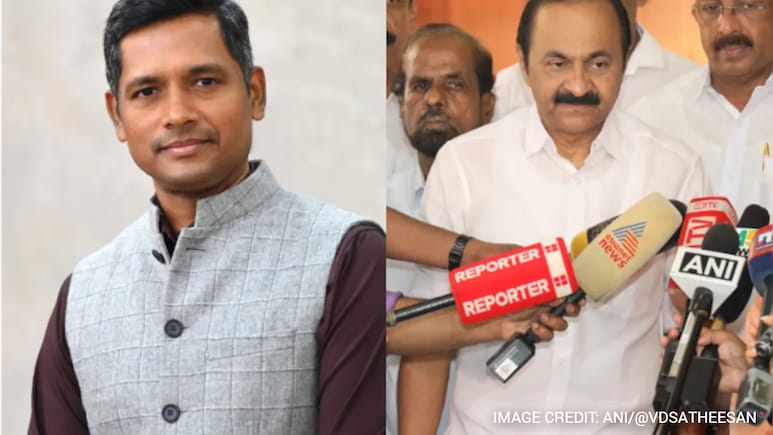
The Congress-led UDF government in Kerala appointed ex-Chief Electoral Officer Dr Rathan U Kelkar as secretary to new Chief Minister VD Satheesan, triggering a political storm over optics.
A 2003-batch Kerala cadre IAS officer who supervised the recent election that brought the UDF to power, Kelkar was transferred via an order issued soon after the result was announced.
But opposition parties have argued that moving the officer who oversaw the election directly into the Chief Minister's Office undermines perceptions of electoral neutrality.
The CPIM – which leads the LDF that was beaten in the election – and the BJP have alleged the transfer is a “reward” for services rendered and have questioned the credibility of the election.
It must be said, though, that no proof of malpractice or manipulation has been produced.
'I want him in my team'
Satheesan – who was sworn in as Chief Minister after the Congress eventually picked him over rival KC Venugopal for the top post – has questioned the need for a furore over Kelkar's pick.
“What is the problem with the appointment… does CEO (i.e., the chief electoral officer) take ‘voluntary retirement' after that (the election is completed)? He has to re-join the service.”
Satheesan also noted Kelkar “has a track record of being a secretary”, having worked with the former Kerala Finance Minister. “That is why I want him in my team,” he said.
The message of support was echoed by his colleague, K Muraleedharan, who said: “Kelkar is an able officer. When we were in the opposition we did not raise issues against him. The LDF also did not complain against him. It is the chief minister's prerogative to choose his secretary.”
The Bengal case, Muraleedharan said, was “different” because of voter deletions, i.e., the removal of nearly 91 lakh names from electoral rolls by the Election Commission as part of the Special Intensive Revision, a process the beaten Trinamool Congress and other opposition parties said had contributed to the BJP's win by removing people who might vote against it.
The Bengal precedent
The Bengal incident saw then-Chief Electoral Officer Manoj Agarwal made Chief Secretary after the election that saw the BJP register a thumping win over the Trinamool Congress.
Congress MP Rahul Gandhi and other party leaders had attacked the BJP and the Election Commission then, declaring it an instance of “vote theft”. The Congress and other opposition parties have repeatedly accused the BJP and the EC of colluding to influence poll results, with the Special Intensive Revision of voter lists before recent elections a key factor in its argument.
But the BJP and the EC have denied any hint of collusion. And now, with the opportunity to launch an identical counter, the BJP is trying to flip the narrative by using those very lines to accuse the Congress of “selective outrage” and double standards in Kerala.
The political stakes
The dispute is not about the rules – under which such a transfer is allowed – and more about narrative, i.e., whether it is “institutional capture” or just a routine bureaucratic reshuffle.
For the CPIM and BJP, it is a useful tool with which to counterattack a Congress that recorded a big Kerala poll win, particularly since Rahul Gandhi reacted differently to the Bengal incident.
For the Congress, this is an early challenge as it tries to operationalise its new government.
What tweak, if any, do you want next: tightening to exactly 400 words, adding one attribution graf, or sharpening for TV copy?
Track Latest News Live on NDTV.com and get news updates from India and around the world

