Analysis: The 'Good Girl' Trap That Killed Twisha Sharma
In the Twisha Sharma death case - the latest focal point of national media - there were "indications" from the very start that she was in a toxic marriage.

A woman leaves her father's home in a 'doli' (palanquin) and her husband's on an 'arthi' (bier) - the belief long popularised by Bollywood movies defines what makes a good girl and good wife. A divorced daughter is often seen as a social failure, while a suffering one is deemed virtuous. She doesn't complain, she endures, she handles it. The parents who tell her to adjust a little more are not villains, they are the product of the same system and also its enforcers.
In the Twisha Sharma death case - the latest focal point of national media - there were "indications" from the very start that she was in a toxic marriage, her father, Navnidhi Sharma, told NDTV. "Twisha told her brother that her husband, Samarth Singh, shoved her when they were on their honeymoon. But no one thinks of scrapping a marriage because of one mistake. Parents and the daughters do everything to save the marriage. This is our Hindu tradition."
And, the telling signs were trounced by "traditions".
Sorry, but ZERO sympathy for parents who ask their daughters to ‘adjust' despite multiple red flags.
— Shiv Aroor (@ShivAroor) May 19, 2026
Twisha was assaulted by her husband on their honeymoon. Dowry-type demands. Anguished texts.
“Adjust”.
My interview with Twisha Sharma's father: pic.twitter.com/SJlkcrC35p
Dr Mimansa Singh Tanwar, senior clinical psychologist at Adayu and Fortis Healthcare, said that when a person is pressured to keep adjusting even in the face of an abusive situation, they start to question their own actions.
"This concept is called double-bind coercive control... So the affected person thinks that maybe this is something they need to work on. And at the same time, it also affects their attachment or their ability to feel that sense of comfort from their family as well. Because the choice has been completely taken away," she said.
WhatsApp chats between Twisha and her mother, Swati Sharma, claim that the 33-year-old felt "trapped" and repeatedly expressed her desire to return to her maternal home. But her parents insisted that she should try and adjust till she can. In another interview, Twisha's father said, "We should have pulled her out of that place. We shouldn't have left her in that house".

Twisha Sharma found dead nearly five months into her marriage.
But they didn't, and in their wish to save the marriage - where their own daughter was being mentally tortured - they delayed her escape until it was too late. To conform to society's stand on marriage, they ignored every warning bell.
Dr Singh said the sense of a lack of a support system leads to a major psychological impact for the victim, where they begin to lose their sense of self.
"They are not given the choice to take the right decision to step out or the right kind of support to end this. At the same time, they are made to believe that they can change the scenario when it is not in their hands. And this leads to the thought process that, either way, they will be the ones to blame. And so it takes away the ability to see that there is an escape," she said.
Twisha got married in December. She was found hanging in suspicious circumstances at her in-laws' house in Bhopal barely five months later, on May 12.
The 'Log Kya Kahenge' Trap
Ambika Chopra, a Noida-based social scientist, explained why families - even the highly educated and financially stable ones - pressure the daughters to compromise and stay in abusive marriages.
"In India, the idea of the unit of family is not just the immediate unit of family in the biological sense, which is parents and kids, but it's also the larger family unit as a society. For example, you will see in the Indian culture that the whole village is a family or the whole community is a family."
She opined that the "shame" of failing in front of this family is what drives the parents to just let their daughters be in abusive relationships.
Twisha Sharma stayed true to the society's image of a good daughter by suffering - almost in silence - but even in her death, she couldn't be a good wife and a good daughter-in-law.
Definition Of The 'Good' Indian Marriage
Twisha's mother-in-law, Giribala Singh, has been loudly defining what a good marriage should look like and how Twisha was an anomaly to that image. Through her indignant remarks against her dead daughter-in-law, Singh, a retired judge who spent her career interpreting the law, reverted to a moral police chief: "Twisha never watered plants, never prayed, never supervised in the kitchen, didn't want to bear children and was too liberal".
In the Indian value system, according to Chopra, the "bar is really low" as far as what constitutes a good marriage.
"Marriage is the duty that you have to fulfil, having children is the duty you have to fulfil and maintaining the sanctity of that marital unit is a duty that you have to fulfil. And all of the weight of fulfilling these duties is on the woman's shoulder and not on the man's shoulder, so the onus is on her to maintain this sanctity," she said.
Giribala Singh used Twisha's alleged distress about her pregnancy and the ensuing abortion as a character point against her, calling it "cruelty", in turn stripping her of bodily autonomy.
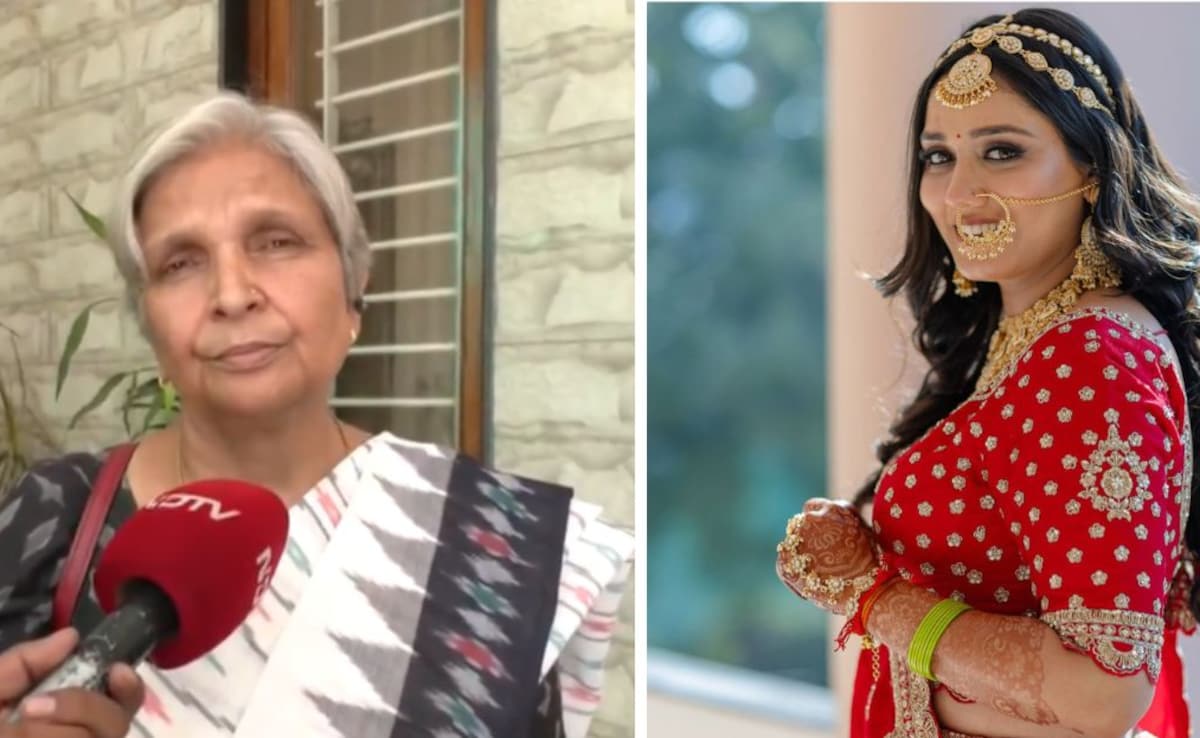
In one of the many media interactions, she said, "The news of the child was a turning point. She didn't want to become a mother... Having your first child is a matter of great happiness, but she didn't let us feel even a moment of that," seeming to grieve for the unborn child, at a press conference on the probe into Twisha Sharma's death.
Giribala Singh said, "Women take this action, they die by hanging. Irresponsible conduct. Since men don't do the same, we are treated as criminals".
#WATCH | Bhopal, MP | Twisha Sharma death case | Mother-in-law of the victim and retired judge Giribala Singh says, "When she started the first course of the MTP (Medical Termination of Pregnancy), she said she wanted to reverse this, which I knew was not possible... She didn't… pic.twitter.com/o5SFx4AeGN
— ANI (@ANI) May 18, 2026
Stripping A Dead Woman Of Her Credibility
She called Twisha Sharma "a product of her own troubled personality". At the press briefing nearly a week after Twisha's death, Singh - with a lawyer by her side - disclosed details of her daughter-in-law's alleged mental diagnosis.
She accused Twisha - a former actor and model - of using drugs, suffering from a "dual personality" and "schizophrenia".
According to Dr Tanwar, "Nobody, apart from a psychiatrist, can talk about the diagnosis of a mental illness. Any other speculation outside of that holds no validity."
"And it's also important to understand why sometimes these things are done. Mental illness, for decades, has had a stigma attached to it, where people with mental illness are perceived as unstable. And when that is used in circumstances like this, it is just to set a certain narrative," she said.
In chats with her mother, Twisha claimed her husband suspected infidelity behind her decision to abort the pregnancy: "He is asking me whose child it was, and you expect me to just ignore it? He has crossed every limit. How am I supposed to live with him?"

Giribala Singh's claims against Twisha Sharma: "She never watered plants, never prayed, didn't want to become mother, was too liberal."
Giribala Singh dismissed the chats as musings of someone under psychiatric treatment: "What weightage would you give to the statement of a woman under treatment?"
The ravings of Singh are not that of a grieving mother, experts claim it could be a pre-trial character brief to dismantle a victim by a woman who spent decades in a courtroom.
"In matrimonial cruelty or dowry death cases, when a woman dies unnaturally within a specified period of marriage and evidence of cruelty exists, courts presume culpability against the husband or relatives. The defence creates reasonable doubt - such as deceased's depression, addiction, emotional instability, extramarital relationships or impulsive tendencies - to neutralise or dilute the statutory presumption," said Saroj Tripathi, advocate-on-record, Supreme Court.
She also asserted that even though character assassination impacts the case, it is not legally decisive by itself.
So, when Giribala Singh speaks about Twisha denying doing basic chores or "creeping out on the terrace without informing anyone", she is not stating facts that explain a death. She is constructing a perception of reasonable doubt.
"Influential families often try to dilute the facts of the incident to avoid severe sections and make the allegations lighter... The institution also hesitates to contradict powerful networks initially. The procedure has immense evidentiary value, and the lapses can permanently affect the prosecution's case, impacting the overall trial, allowing the defence an early narrative advantage," said the senior lawyer.
Psychological Surveillance - Means Of Evolved Domestic ControlOne of the most disturbing revelations in the case is a leaked audio tape of an alleged conversation between Twisha's brother, Major Harshit Sharma, and her mother-in-law. In the audio, whose veracity NDTV cannot independently confirm, Singh can be heard defending her questions to Twisha about her past relationships. When Major Sharma challenged her, her response was direct: "Why can't I question my daughter-in-law's past conduct? She had more than one (boyfriend)."
Singh was also heard demanding "assurances" that Twisha would not have any such relationships after marriage, shockingly saying, "promiscuity can be a habit and any promiscuous behaviour after marriage will not be tolerated".
Giribala Singh has approached a court in Bhopal, claiming the clip was fabricated. Twisha's brother stands by it: "There is no lie here. She indeed made those statements, luckily it was on record."
#WATCH | Bhopal: On viral audio of his conversation with Twisha Sharma's mother-in-law Giribala Singh, Twisha's brother Major Harshit Sharma says, "There is only truth in this. There is no lie here. She indeed made those statements, luckily it was on record. It was indeed a… pic.twitter.com/smWgb9h86N
— ANI (@ANI) May 22, 2026
If authentic, the conversation exposes a belief that upon marriage, a woman becomes the property of the matrimonial home. Her privacy, her past and her dignity, no longer hers to protect.
Chopra explains that in urban, educated homes, the form of control has evolved, but the instinct hasn't: "With financial independence comes all of these risks of a woman being able to make decisions for herself, a woman being able to access men in a non-surveilled manner and hence the relationships she can have even before she's tied into this one social marital unit, so the auditing is still there. But what can be categorised as good or bad has now changed a little bit."
"So, in urban India, education, going to college is good, but wearing short skirts or talking to men is still not good. So, the fundamental is that they continue to want to control the woman's sexuality and the woman's body, but they do it in a manner which kind of gives them some economic independence and some economic contribution as well".
Twisha Sharma was cremated on Sunday (May 24), thirteen days after her death, thirteen days after her body went through two post-mortems, and a blizzard of remarks that catalogued her virtues and alleged flaws than explaining her death. Her body became one last site of contestation, held in legal limbo while the living argued what kind of woman she had been.
-
Opinion | The Last Bet? What Trump's 'Mother Of All Bombs' Could Actually Do To Iran

Can an MOAB deliver a decisive blow to Iran that may force it to surrender immediately, as Japan did after Hiroshima and Nagasaki in World War 2?
-
Hit Songs, Empty Pockets: The Hidden Math Behind India's Viral Music Boom
Over 80,000 brands and five lakh creators in India make branded content. The opportunity is worth around Rs 1,500 crore.
-
Opinion | Great 'Exceptions': How The Oil India Was Attacked For Is The Oil Trump Now Seeks
A law written to punish the buyers of Russian oil was suspended by the US to protect a purchase of Russian oil. India spent fourteen months being lectured for less.
-
Opinion | Louis Vuitton Loot, Torched Cars: France Protests Have An Unlikely Beneficiary
It's an unbelievable moment. Crowds looting the most exclusive stores in Paris, including the famed Luis Vuitton. But what's behind this meltdown?
-
Blog: Kolkata Didn't Learn From 2015. Eleven Years Later, It Proved To Be Fatal
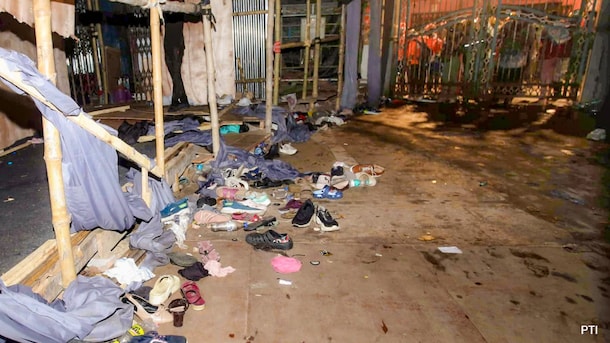
The City of Joy isn't a stranger to crowd control. Be it during Pujo or Christmas at Park Street, Eden Gardens cricket matches, or Derbies between Mohun Bagan and East Bengal. But during Pujo, the entire city is on alert.
-
Opinion | Slurs, Threats, Now A Temple Attack Plot: When Did America Become So Hostile To Indians?
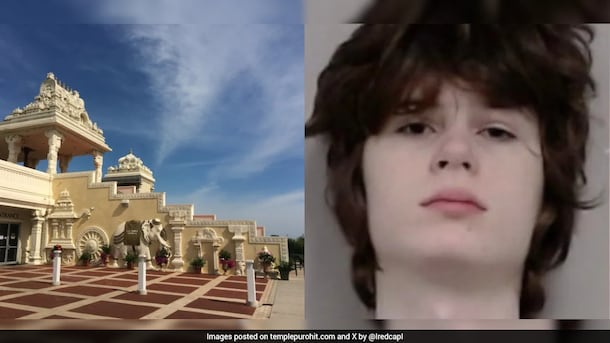
The rising tide of anti-India, anti-Hindu, and racist attacks serves as a stark reminder that economic prosperity does not automatically guarantee social immunity from bigotry.
-
A Step Behind Neha Bora: What Rahul Gandhi's Gesture Says About Congress' Gen-Z Pitch
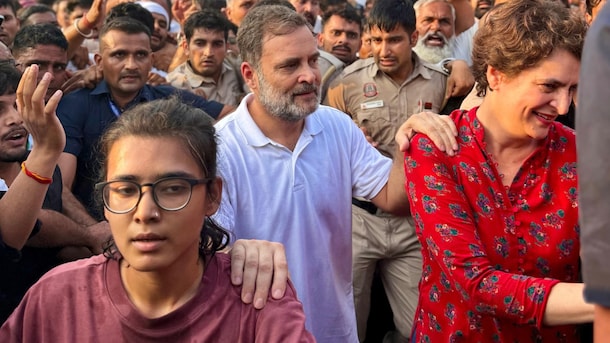
At INDIA bloc's march to Supreme Court, Rahul Gandhi placed himself a step behind two women, hands resting on their shoulders. One was his sister Priyanka. The one on his right was Neha Bora. Here's what the image means for the protest wave now, and for Rahul's politics in general.
-
Opinion | Imran Khan, And The Perils Of Having An 'Opinion' In Bollywood
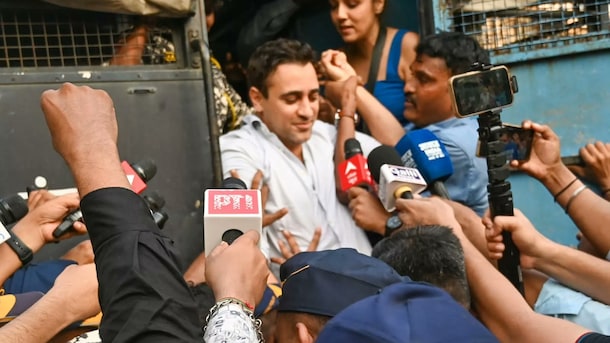
The reality of the industry is quite grimy. More often than not, its inhabitants have been fairweather friends, happy to sing the praises of whoever is in a position of authority.
-
Exclusive: India's Food Safety Problem Goes Beyond Just Dirty Kitchens - By Tukaram Mundhe
On World Food Day, Maharashtra's Commissioner of Food Safety explains why instead of taking stopgap measures, the entire supply chain in India needs to be held accountable and made transparent.
-
Opinion | India Has Enough Coal. So Why Are Power Plants Running Short? A 76 Million 'Crunch'
As of October 5, as many as 82 of the 191 thermal plants monitored by the Central Electricity Authority were in the 'critical' category