





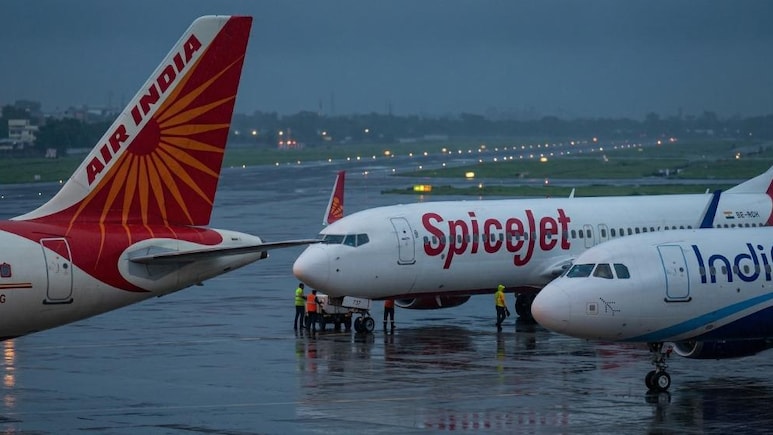
India's aviation sector is heading into turbulence, with a sharp global spike in jet fuel prices threatening to drive up airfares from April 1 and squeeze airline finances. Triggered by escalating tensions in the Middle East and the removal of airfare caps by the government, the surge is expected to translate into higher ticket prices across domestic and international routes, even as airlines warn there is limited room to pass on the burden without hurting demand.
Why Fuel Costs Matter So Much?
Aviation Turbine Fuel (ATF) typically accounts for around 30 to 40 per cent of an airline's operating costs. In a worst-case scenario, industry estimates suggest this share could rise to nearly 80 per cent if global prices remain elevated and domestic rates catch up. This is because jet fuel prices globally have surged dramatically in recent weeks amid supply concerns linked to the Middle East conflict, particularly around critical oil transit routes such as the Strait of Hormuz.
April 1 Price Reset Key
So far, the full impact of this global spike has not been felt in India. Domestic ATF prices have seen only a marginal increase, largely because oil marketing companies have held back sharper revisions. However, that cushion may not last much longer. Fuel prices are revised at the start of every month, and from April 1, companies are expected to align domestic ATF rates more closely with global benchmarks. Since jet fuel pricing is deregulated in India, government intervention is limited, making airlines more vulnerable to sudden price swings.
Government Closely Watching
Civil Aviation Minister Ram Mohan Naidu has acknowledged the situation, indicating that the impact of rising fuel prices is likely to become visible soon. “The impact might be visible from April 1,” he said, adding that the government is closely monitoring developments and holding consultations with airlines and other stakeholders to assess the situation.
Airlines Warn Of Tough Times
Airlines, meanwhile, are already preparing for the fallout. Campbell Wilson, the Chief Executive Officer of Air India, has cautioned that while global fuel prices have surged, the real financial hit is yet to be fully reflected in airline balance sheets. “The financial impact is yet to be fully felt,” he said, warning that there is only so much airlines can pass on to passengers. “There's a limit to fare increases,” he added, pointing to the risk that excessively high-ticket prices could dampen demand.
Fare Hike vs Demand
This creates a delicate balancing act for airlines. On the one hand, rising fuel costs are forcing carriers to increase fares and introduce fuel surcharges. On the other hand, pricing too aggressively could lead to lower passenger demand, especially on price-sensitive routes. In such a scenario, airlines may be forced to cut capacity or reduce frequencies, particularly on long-haul international routes where fuel costs form a larger share of total expenses.
Which Routes Will Be Hit The Most
The impact is expected to vary across routes. Short-haul domestic flights may see moderate fare increases, while medium-haul international sectors, especially those linked to the Middle East, could face sharper hikes due to longer flight paths caused by airspace restrictions. Long-haul routes to destinations such as North America and Europe are likely to witness the most significant increases, given their heavy dependence on fuel.
Operational Challenges Add To The Strain
Operational challenges are adding to the pressure. Airspace restrictions linked to the conflict are forcing airlines to take longer routes, increasing fuel burn and costs. At the same time, a weakening rupee is making fuel imports more expensive, compounding the financial strain on Indian carriers. Market signals reflect this stress, with shares of InterGlobe Aviation, the parent of IndiGo, already under pressure amid concerns over rising costs and profitability.
Risk Of Supply Disruptions
There is also a broader risk looming over the sector. Any disruption to key oil supply routes, particularly the Strait of Hormuz, could trigger not just price spikes but actual fuel shortages. In an extreme scenario, this could lead to flight disruptions or cancellations, especially during peak travel periods.
What Does This Mean For Passengers?
For passengers, the outcome is increasingly clear. Air travel is set to become more expensive in the coming weeks, with fares rising across domestic and international routes. While the extent of the increase will depend on how global fuel prices move, the direction is unmistakable.
India's aviation sector, already operating on thin margins, is now entering a period of heightened uncertainty, one where rising fuel costs, constrained pricing power, and geopolitical risks are combining to create turbulence both in the skies and on balance sheets.
Track Latest News Live on NDTV.com and get news updates from India and around the world

