





- India's GDP grew 7.8% in Q4 despite a Middle East energy shock
- Full year 2025-26 GDP growth estimated at 7.7% based on 2022-23 base
- RBI notes signs of sector moderation but says economy remains strong
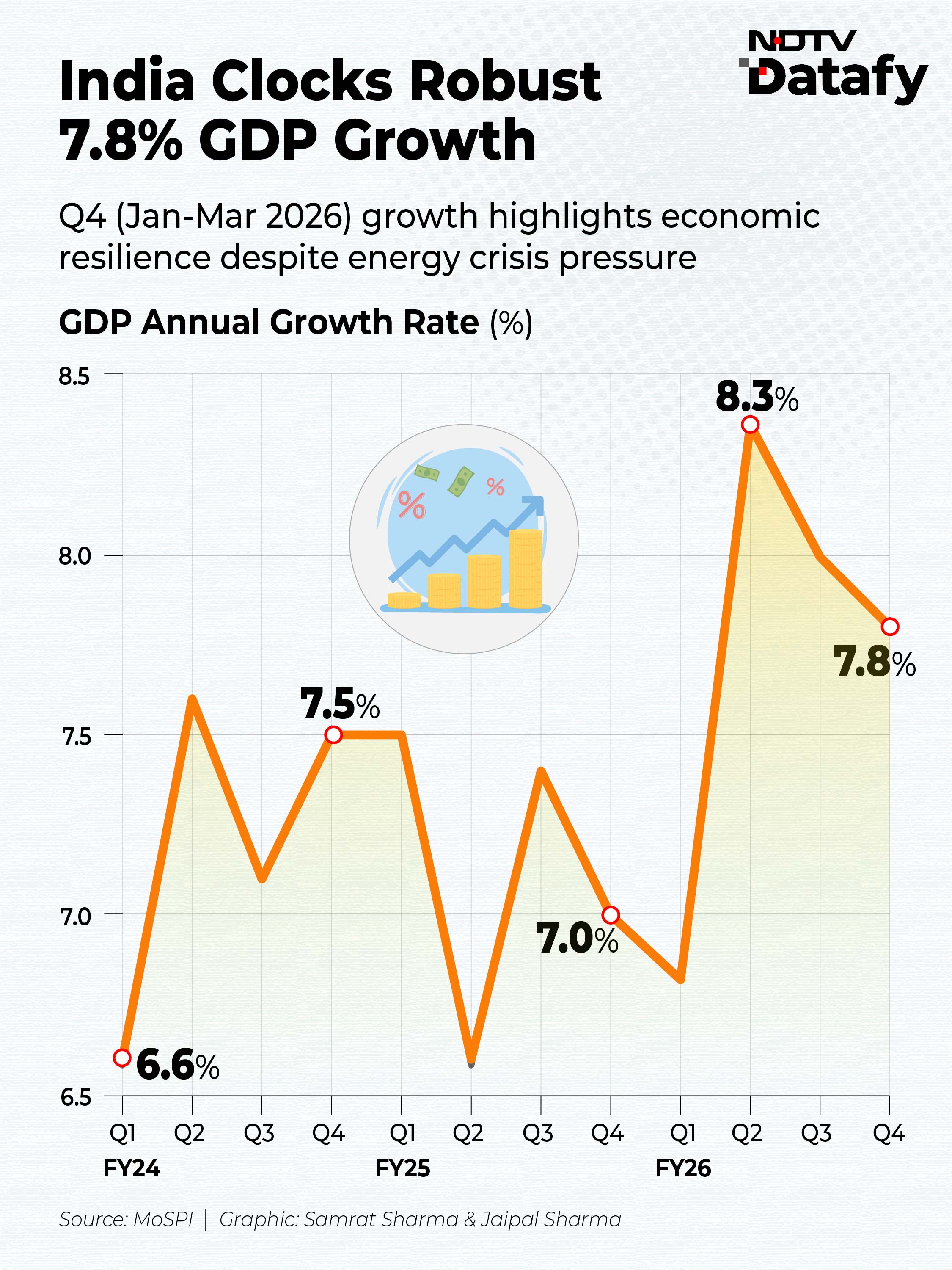
India's GDP growth rate in the January-March quarter stood at 7.8 per cent, signalling continued economic resilience despite an energy supply shock triggered by the Middle East war that began in late February. For the full financial year 2025-26, GDP growth is estimated to be 7.7 per cent. The latest estimates are based on the new base year 2022-23.
The world is steering through an energy supply shock and India is not immune. Even if the impact is not visible in the economy now, it may reflect in the April-June quarter.
"Elevated energy prices coupled with global supply constraints are having adverse spillovers on economic activity. While domestic demand remains resilient, and manufacturing and services sectors activity continues to expand, there are incipient signs of moderation in some sectors as suggested by high-frequency indicators," the Reserve Bank of India said in its Monetary Policy Committee (MPC) meet on June 5.
However, the RBI added that while these have adversely impacted the domestic growth-inflation outlook, the economy at this point is relatively strong. India's GDP growth has been strong even as many countries succumbed to the shock in direct or indirect ways.
Comparing Major Economies: December 2025 vs March 2026 Quarters
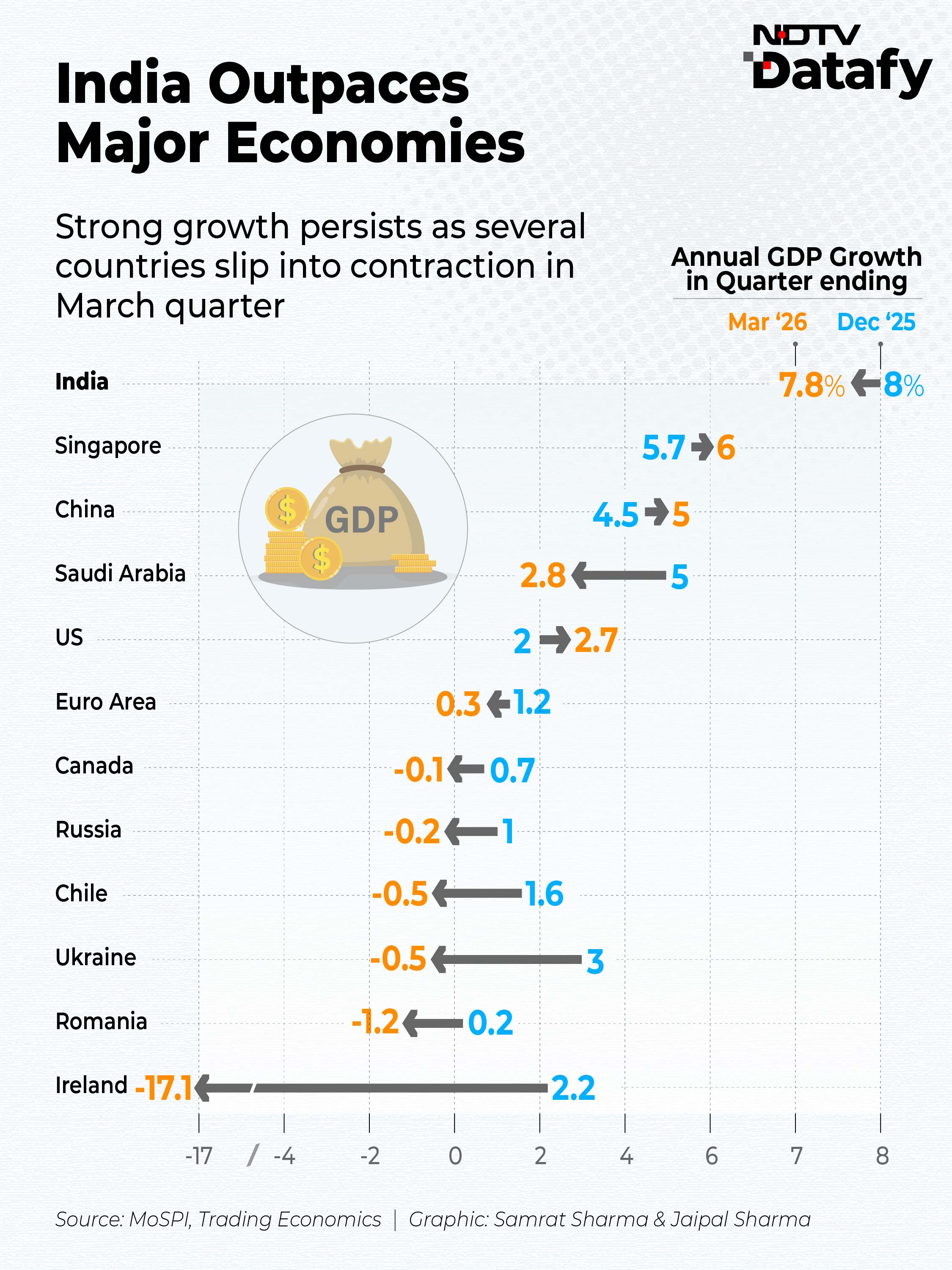
While India's annual GDP growth marginally decreased from 8.0 per cent in the December quarter to 7.8 per cent in the March quarter, Singapore's growth rose from 5.7 per cent to 6.0 per cent, China's economic growth rose from 4.5 per cent to 5.0 per cent and that of the US surged from 2.0 per cent to 2.7 per cent.
In contrast, Saudi Arabia's GDP fell 5.0 per cent to 2.8 per cent and that of the Euro Area shrank from 1.2 per cent to 0.3 per cent. At least six countries recorded an economic contraction, that is negative GDP growth. Canada, Russia, Chile, Ukraine, Romania and Ireland recorded a contraction with Ireland's economy shrinking by a massive 17.1 per cent in the Jan-Mar 2026 quarter.
How RBI is Handling the Stress
Despite the supply shock and emerging stress in the Indian economy, the RBI kept the policy rates unchanged, saying that it would wait and watch. Also, the war is not the only uncertainty ahead of India. A below-normal monsoon forecast and the potential impact of El Nino also pose a significant risk to food supply.
"There are considerable risks to the MPC's baseline assessment of inflation and growth due to the uncertainty about the duration and intensity of the conflict, magnitude of its spillover effects and the pace of restoration of supply chains. Additionally, the food outlook remains uncertain on account of the sub-normal south-west monsoon forecast and El Nino," the RBI MPC noted.
While inflation risks have risen, the MPC noted that it would be prudent to wait for greater clarity before taking further action.
Track Latest News Live on NDTV.com and get news updates from India and around the world

