





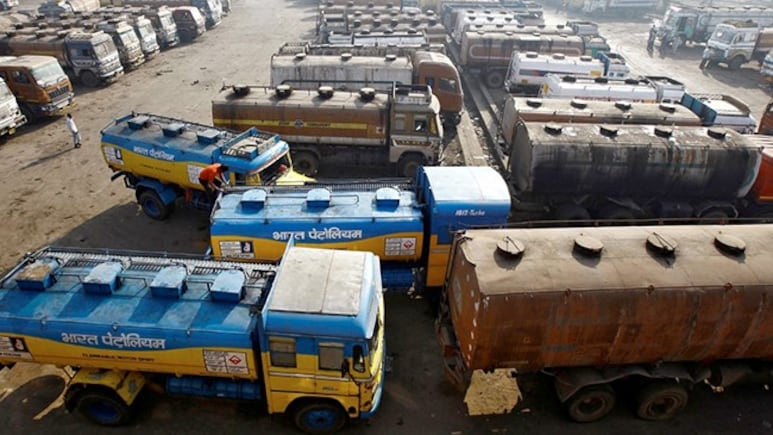
- India's strategic oil reserves hold 3.372 million tons, two-thirds of capacity, the Petroleum Minister said
- Total oil reserves provide 74 days of coverage including oil marketing company stocks, Suresh Gopi said
- SPR capacity is expanding by 6.5 million tons with new facilities in Odisha and Karnataka
India's three strategic reserves currently hold an estimated 3.372 million tons - or two-third its maximum capacity - junior Petroleum Minister Suresh Gopi told Parliament Monday, citing data released by the Indian Strategic Petroleum Reserve Ltd, the federal body that monitors SPRs. Actual SPR levels, though, will vary based on market conditions like supply and consumption, the minister cautioned, and are distinct from stocks of refined petroleum products, i.e., like petrol and diesel.
In addition, current total reserves - i.e., SPRs, which hold unrefined or crude oil, and ready-to-use fuel - are at 74 days, Gopi said, "... which includes stores with oil marketing companies". The minister also said India's SPR capacity is being expanded by 6.5 million tons, with a fourth facility in Odisha to store four million and storage in Karnataka being increased to 2.5 million.
India's SPRs - an underground facility in Andhra Pradesh and two more in Karnataka - can store of 5.33 million tonnes.
Assuming capacity at 100 per cent, these should provide cover for 9.5 days during disruptions such as the Iran war.
Supply of crude and gas from West Asia - a major source of both for India - has been a point of concern since the war crippled tankers transiting the Strait of Hormuz, the narrow waterway over which Iran exerts geographic control.
The Hormuz is a critical chokepoint for the world's seaborne energy trade. In 2024, for example, between 20 and 25 million barrels of crude oil - arund 20 per cent of the world's supply - passed through it every day.
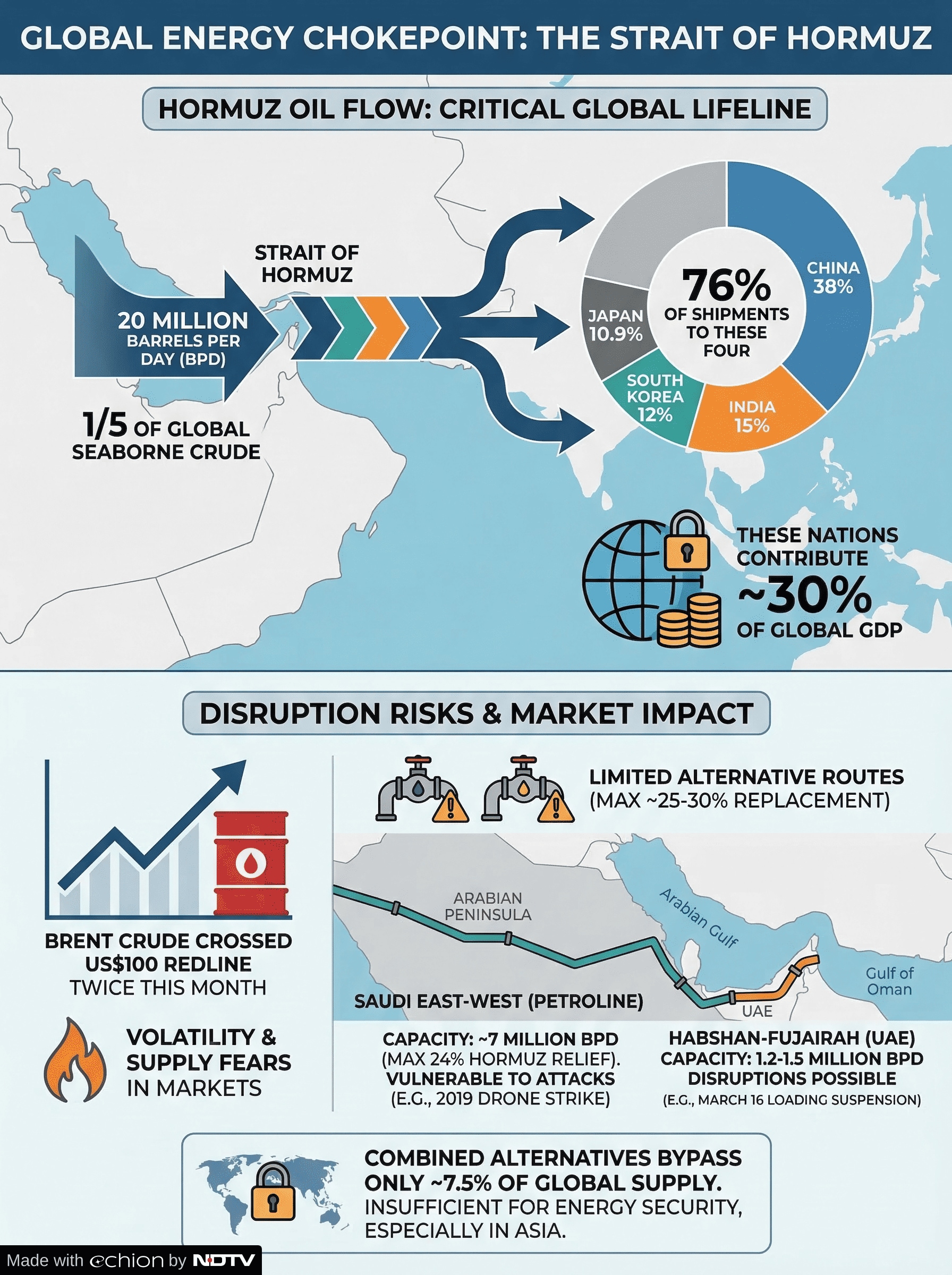
Saudi and UAE pipelines offer marginal relief for Hormuz oil chokehold.
The world's third largest energy consumer, its most populous country, and its fastest growing major economy, India relies heavily on exports to meet its crude oil needs.
Most estimates suggest India needs 5.5 to six million barrels of crude daily. The government has spent US$110 billion in FY26 so far to import 226 million tons or 88.7 per cent of those needs.
Pre-war, India imported around half that - 2.1 and 2.6 million barrels - from Gulf nations like Iraq, Saudi Arabia, the UAE, and Kuwait. Shipped via the Hormuz, this worked out to around 40 per cent of crude imports of 4.8 to five million barrels per day.
RECAP | Hormuz Shutdown Affects Asia's Crude Oil Supply, Pipelines Can't Cover Loss
The fighting, though, snapped that supply line and prompted diversification of sources. Prime Minister Narendra Modi said: "In the last 11 years, we have diversified energy imports... earlier we used to import from 27 nations. Now we import from 41."
The new suppliers, Gopi told Parliament, included the US, Nigeria, Angola, Canada, Columbia, Brazil, and Mexico. Shipments from these do not need to cross the Hormuz to reach India.
However, crude via the Hormuz is still the most cost-effective supply line, and a quick end to the fighting, or at least separation of energy trade and hostilities is in the best interest of India and many Asian countries, including global giants China and Japan, that import via this route.
RECAP | Trump's 48-Hour Hormuz Deadline. 3 Options, And India's Energy Shock Brace
To that end, the PM emphasised the importance of keeping Hormuz shipping lanes open and secure despite the war during a conversation with Iran President Masoud Pezeshkian Saturday.
Safety of tankers navigating the Hormuz has been a major flashpoint in the war so far, with US President Donald Trump demanding support from Western allies to ensure that security. Iran, meanwhile, has insisted it will continue to weaponise the Hormuz to exert global pressure on Washington to force it, and ally Tel Aviv, to back down.
With input from agencies
NDTV is now available on WhatsApp channels. Click on the link to get all the latest updates from NDTV on your chat.
Track Latest News Live on NDTV.com and get news updates from India and around the world

